 Lorraine Williamson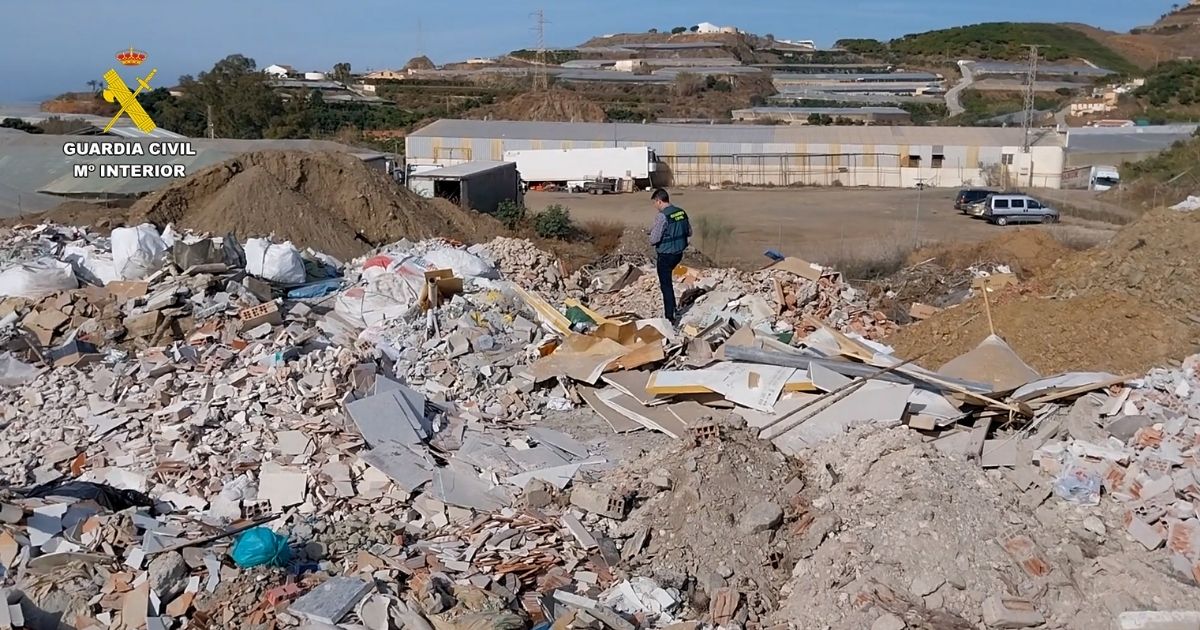
A major environmental investigation in Málaga has exposed what the Guardia Civil says was an illegal dumping operation in Axarquía involving 167,000 tonnes of construction waste, including dangerous material such as asbestos. Officers have investigated 12 individuals and three companies over alleged environmental offences linked to the case.
The case, known as Operation Cover, centres on rural plots in the Axarquía that investigators say were turned into illegal dumping grounds instead of sending waste to authorised treatment plants. According to Guardia Civil, the suspects worked in construction and earth-moving and are accused of bypassing the legal controls required for waste management in order to avoid the cost of proper disposal.
Why the case matters
This is not only a paperwork offence. Guardia Civil says the waste included hazardous materials, among them asbestos, raising the risk of environmental and public-health damage if the material was handled or left exposed improperly. The force warned that poorly managed dumping of this kind can create serious fire risks through the build-up of combustible material, contaminate aquifers through toxic run-off, and release harmful fibres if asbestos cement is broken or disturbed.
That gives the story a wider significance for the Costa del Sol and inland Málaga. Axarquía is not just a rural dumping ground on the edge of nowhere. It is a comarca with growing housing pressure, agricultural land, villages, tourism traffic and water-sensitive terrain. An illegal operation on this scale raises obvious questions about land control, enforcement and the environmental cost of the construction economy. This inference is based on the location and the environmental risks described by Guardia Civil.
How the alleged scheme worked
The central accusation is that authorised waste treatment was deliberately avoided.
Guardia Civil says the suspects allegedly used rustic plots in the Axarquía to dispose of construction debris outside the legal system. In practice, that meant transforming rural land into illegal landfill sites while cutting out the cost and control involved in sending waste to approved plants. Cadena SER’s Málaga report says the people under investigation were linked to the construction and earth-moving sectors and are accused of environmental crimes.
The scale of the tonnage matters here. 167,000 tonnes is not a small fly-tipping case or a one-off local scandal. It suggests a sustained operation with enough movement of material to alter land, create significant cleanup challenges and expose gaps in oversight. That characterisation is an inference from the reported volume and the number of people and companies investigated.
Asbestos raises the stakes
Among the most serious elements in the case is the reported presence of asbestos.
Asbestos is heavily regulated because of the health risks associated with inhaling fibres released when materials deteriorate or are broken. Guardia Civil specifically highlighted the danger of “fibras nocivas” from improper handling of fibrocement, making this more serious than a standard waste-disposal breach.
That is likely to sharpen scrutiny from prosecutors. Guardia Civil says the case files have been handed to the Málaga environmental prosecutor’s office, meaning the investigation is now moving into the prosecutorial phase.
A familiar pressure point in Málaga province
The story also taps into a wider Costa del Sol concern: what happens when intense construction activity meets weak environmental controls.
Málaga province continues to face pressure from development, infrastructure works and land-use change. When waste regulation fails, the consequences are not only visual. They can affect fire prevention, water quality, rural land, biodiversity and nearby communities. In a region already highly sensitive to drought and land-use pressure, illegal dumping on this scale is especially serious. This is a contextual inference based on the reported risks and the location in rural Axarquía.
Isolated crackdown or the start of wider enforcement?
For now, the people and companies involved have been investigated, not convicted. The case will now move forward through the legal system after the Guardia Civil submitted its findings to the environmental prosecutor in Málaga.
The bigger question is whether Operation Cover proves to be an isolated crackdown or the start of wider enforcement around waste disposal in Málaga’s construction sector. If prosecutors pursue the case aggressively, the Axarquía dumping scandal could become an important test of how seriously Spain treats environmental crime tied to development and land movement.