 Lorraine Williamson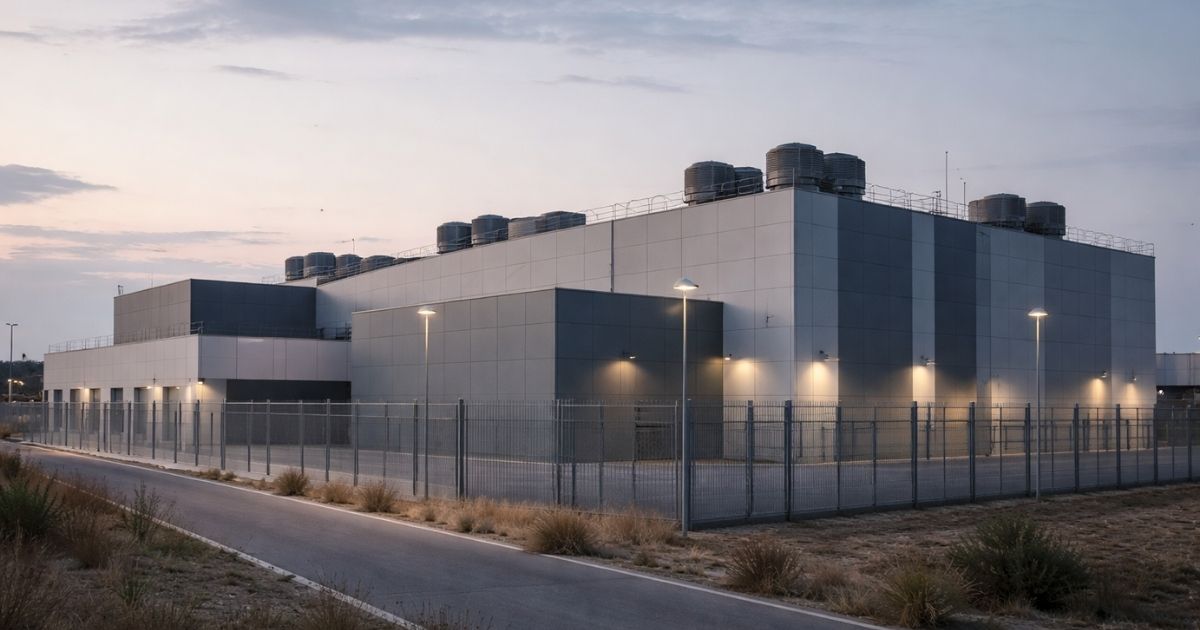
Amazon has announced a fresh multibillion-euro bet on Spain’s data centre boom, saying it will invest an additional €18 billion to expand infrastructure in Aragón and accelerate artificial intelligence development for customers across Europe.
The move lifts Amazon’s total planned investment in the country to €33.7 billion, with the announcement made during Mobile World Congress after a meeting between Prime Minister Pedro Sánchez and Amazon executive David Zapolsky.
Why this is bigger than a single company announcement
Spain has been talking for years about becoming a serious European technology hub. What it has often lacked is the physical layer that makes digital ambition real: large-scale compute, reliable power capacity, and the ecosystem of suppliers that arrives when a hyperscaler commits to the long term.
Amazon is now explicitly framing Spain as a centre of gravity for its European AI plans. Reuters reported Zapolsky describing the new investment as supporting up to 30,000 jobs through 2035, and positioning Spain as a European AI hub for the company’s cloud strategy.
Aragón becomes a front line in Europe’s AI race
The investment is focused on Aragón, where Amazon Web Services had already committed €15.7 billion previously for data centre development. The additional €18 billion expands that footprint and extends the timeline, reinforcing the region’s role as an infrastructure base for cloud and AI services.
Cadena SER reporting adds that the expansion includes new sites in Huesca and Zaragoza and, for the first time, a project in Teruel, alongside plans for facilities linked to server assembly and repair. The regional message is clear: this is being sold not only as tech investment, but as industrial investment, with knock-on work for construction, maintenance, logistics and specialist services.
A jobs story, but also an energy story
These announcements always come with big employment numbers, and they are politically attractive for that reason. But they also raise a harder question that Spain is beginning to face more openly: can the electricity grid and renewable rollout keep pace with the demand that data centres bring?
Local reporting notes that the pace of expansion will still depend on wider decisions, particularly around energy. In other words, the investment is real, but the delivery is tied to infrastructure capacity that no single company controls.
What Sánchez gets from this — and what critics will ask
For Sánchez, the optics are strong. MWC is where Spain wants to present itself as stable, modern and investable. A headline figure of €33.7 billion is the sort of number that travels globally and fits a pro-investment narrative.
But there is a second conversation Spain can’t dodge for long. Data centres create skilled jobs and significant local spending, but they also consume land, water and power. Communities will want clarity on what is built, where, and how benefits are shared locally, especially in areas already under pressure from housing costs and infrastructure strain.
The wider trend Spain is riding
Across Europe, governments are competing to attract data centre and AI infrastructure. The reasons are obvious: jobs, tax revenue, and the strategic value of hosting the compute layer behind modern economies. Aragón’s pitch, like other regions, has been its location, logistics, connectivity and renewable potential.
Amazon’s new commitment is a signal that Spain is winning a share of that race. The question now is whether the country can turn high-profile announcements into a long-term industrial strategy, rather than a scatter of projects that stretch local resources.
What happens next on the ground
The next milestones will be practical rather than political: planning permissions, grid upgrades, timelines for new sites, and clarity on the local supply chain. For readers, the tell will be how quickly “AI hub” rhetoric becomes visible in training programmes, subcontracting work and regional economic indicators.
Spain’s data centre boom is no longer theoretical. With Amazon doubling down, it is becoming one of the defining investment stories of the year — and a test of whether Spain’s infrastructure can match its ambition.