 Lorraine Williamson
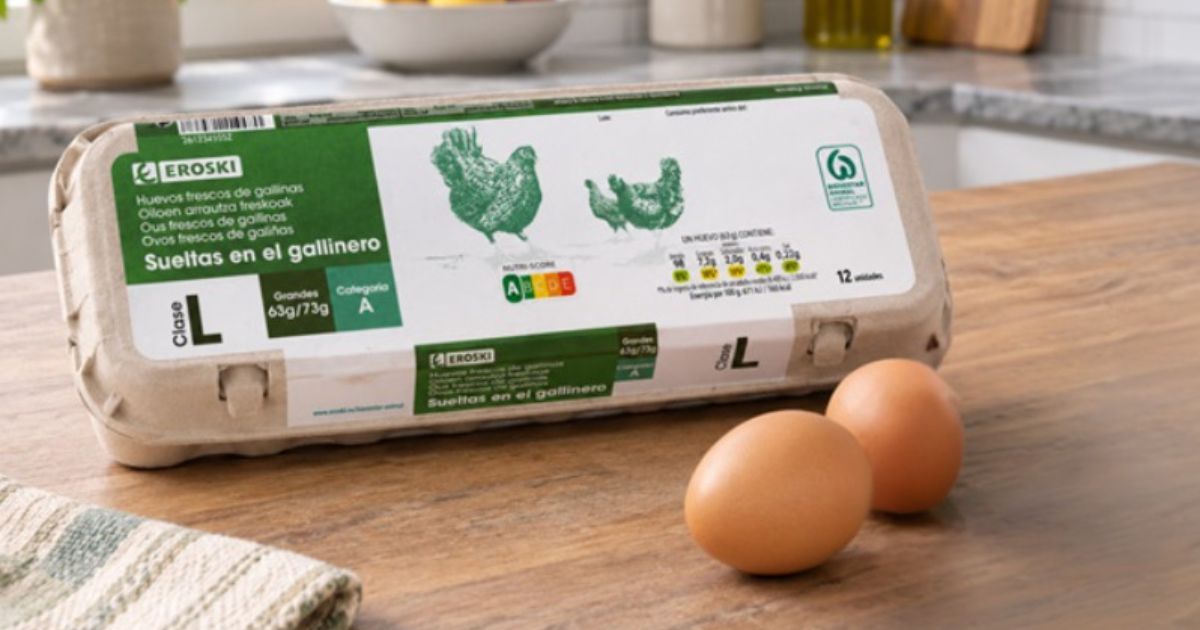
Spain’s food safety authorities have warned consumers not to eat certain batches of Eroski eggs due to possible contamination with Salmonella Enteritidis. The affected products were distributed across several regions, including Andalucia, Madrid and Murcia, with some carrying best-before dates as late as 1 December 2026.
The Spanish Agency for Food Safety and Nutrition (AESAN) expanded its warning on Friday, 20 November, providing additional information to help shoppers identify the affected products. Spain’s consumer organisation, OCU, reinforced the warning on Monday, advising customers to return the eggs to the supermarket for a refund.
Although the affected batches have been withdrawn from sale, some households may still have them in their kitchens. Consumers who have already discarded the original packaging can identify the eggs by checking the code stamped directly onto the shell.
Which Eroski eggs are affected?
The warning concerns fresh eggs from barn-reared hens, sold under the Eroski brand in medium, large and extra-large sizes. They were available in boxes containing six, 12, or 18 eggs.
Consumers should check for the following information:
Brand: Eroski
Product: Huevos frescos de gallinas sueltas en el gallinero
Batch number: 0222F XXXX
Best-before dates: 22 November to 1 December 2026 inclusive
Code printed on the eggshell: 2ES4803810
AESAN has also identified five affected product barcodes:
| Product | Barcode (EAN) |
|---|---|
| Huevo fresco L suelo | 8480010184778 |
| Huevo fresco M suelo | 8480010184785 |
| Huevo suelo L | 8480010190106 |
| Huevo suelo M/L | 8480010190076 |
| Huevo fresco suelo L/XL | 8480010196733 |
The warning applies specifically to the batches identified by the authorities, rather than all eggs sold by Eroski.
Eggs distributed across eight Spanish regions
The affected products were initially distributed in Andalucia, Castilla-La Mancha, Castilla y León, La Rioja, Navarra, Madrid, Murcia and the Basque Country. However, food safety authorities have not ruled out the possibility that some batches reached other parts of Spain.
Regional health departments have been informed through Spain’s national food safety alert network. The system allows authorities to coordinate product withdrawals and communicate potential health risks to consumers.
Customers can claim a full refund
According to OCU, Eroski has confirmed that customers can return the affected products to any of its supermarkets to receive their money back. Anyone who discovers eggs matching the warning should avoid eating them, even if they appear fresh and remain within their best-before date.
Salmonella cannot reliably be identified by the appearance, smell or taste of food. Consumers should therefore rely on the batch information and shell markings rather than attempting to determine whether the eggs are safe themselves.
What are the symptoms of salmonella poisoning?
Salmonellosis is one of the most common foodborne infections and can cause abdominal pain, diarrhoea, vomiting, fever and headaches. Although many people recover without specific medical treatment, the infection can be more serious among young children, older adults and people with weakened immune systems.
AESAN advises anyone who has eaten eggs from the affected batches and subsequently develops symptoms to visit their local health centre. Maintaining good kitchen hygiene is also important, particularly washing hands and cleaning utensils or surfaces that may have come into contact with raw eggs.
For shoppers, the most important step is to check any recently purchased Eroski eggs before using them. With some affected batches carrying best-before dates into December, the warning remains relevant even though the products have been removed from supermarket shelves.