 Lorraine Williamson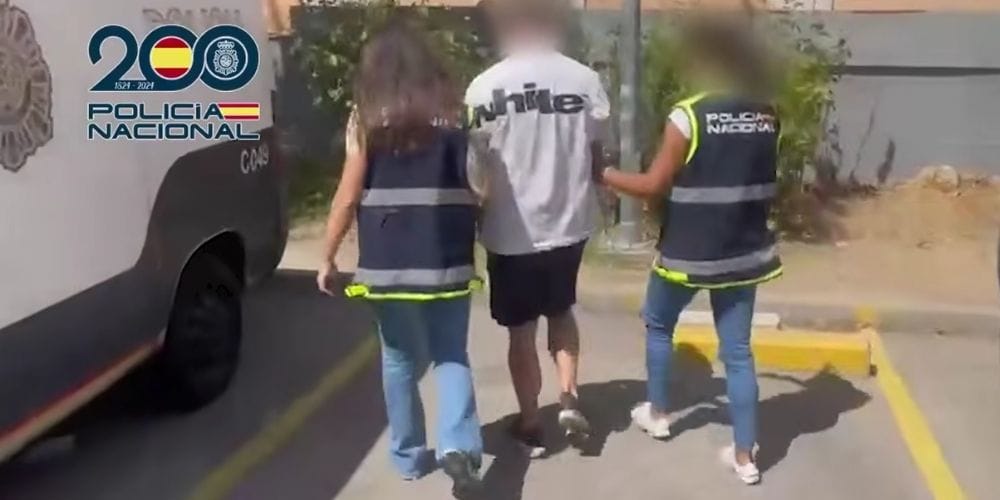
Spanish police have dismantled the financial structure of a major international cocaine-trafficking network, arresting 21 people and targeting millions of euros in property, bank accounts, luxury vehicles and other assets.
The Policía Nacional says the operation has struck at some of the alleged leading figures in international drug trafficking and money laundering, including a key figure connected to the clandestine financial network known as the “Banca de Dubái” – or “Dubai Bank”.
The investigation uncovered an organisation allegedly capable of arranging cocaine shipments from South America to Europe, financing those operations through clandestine money-transfer systems and then moving the profits into the legitimate economy through complex financial and property transactions.
Among the 21 people arrested is an alleged leader of the Dubai-based underground banking operation, whom Spanish police link to numerous cocaine shipments around the world. The case is being investigated by the Audiencia Nacional and coordinated by its Special Anti-Drug Prosecutor’s Office.
A ship carrying tonnes of cocaine led to the investigation
The investigation stretches back to January 2021, when two cocaine shipments were loaded in South America aboard the Nehir before the vessel began its journey towards Spain.
The plan, according to investigators, was to transfer the cocaine at sea onto fast boats that would then bring it ashore in Spain. The organisation allegedly had Galician speedboat crews ready to recover and land the drugs.
Spanish authorities intercepted 1,835kg of cocaine and arrested all nine members of the vessel’s crew. After the suspects and drugs had been taken ashore, the Nehir was towed into the Port of Gijón, where it eventually sank following a water leak that police say had been caused by the captain.
But that was not the end of the cocaine aboard the vessel.
Investigators subsequently discovered that the Nehir had been carrying another hidden shipment weighing approximately 1,650kg. According to Policía Nacional, members of the criminal organisation later entered the sunken vessel inside the port and recovered the cocaine themselves, despite the considerable danger involved.
The trail leads to the ‘Banca de Dubái’
As investigators followed the organisation behind the shipments, they uncovered the involvement of members of the so-called Banca de Dubái, a clandestine money-transfer structure allegedly used to finance international drug-trafficking operations.
The system allowed criminal organisations to obtain substantial sums of money in different countries within very short periods, providing traffickers with the financial infrastructure needed to organise major cocaine shipments without relying on conventional international bank transfers.
Spanish police describe the investigation as particularly significant because it resulted in the first arrest in Spain of a member of this alleged Dubai narcobanking network. Officers seized approximately €8,000, $1,400 and 1,200 UAE dirhams during that arrest, together with mobile phones and high-value watches.
The investigation ultimately moved well beyond the cocaine itself. Detectives began examining the financial systems that allowed the trafficking organisations to pay for shipments, move criminal proceeds internationally and eventually introduce those profits into the legitimate economy.
Crypto investigation helps trace payment for cocaine
A significant part of the case involved cryptocurrency.
Policía Nacional launched what it describes as a pioneering specialist investigation to trace and analyse cryptoassets used by the principal suspects. International working sessions brought together specialists from Europol and law-enforcement agencies in the Netherlands, Belgium, the US, and the UK through Europol’s Operational Task Force TOKEN.
That work allowed investigators to identify the payment for the cocaine shipment carried aboard the Nehir, according to Spanish police.
The case illustrates the changing financial methods being examined in major organised-crime investigations. Detectives increasingly have to follow not only conventional money transfers and physical cash but also digital assets moving across borders.
14 arrests in July and 19 international warrants
The investigation culminated in a major operation on 22 July, when 14 people were arrested on suspicion of offences including membership of a criminal organisation, crimes against public health and money laundering. Police also searched a property in Madrid.
Among those detained was a man investigators describe as the principal broker for the clandestine banking operation, who was subsequently remanded in custody.
At the same time, Spain issued 19 international arrest warrants for other alleged members of the organisation living outside the country. Seven have so far been executed with Interpol’s assistance: four in the United Arab Emirates and one each in Egypt, the Netherlands and Sweden.
Bank accounts, homes and luxury assets blocked
The financial results of the investigation are substantial.
Police say more than €39,000 in cash has been seized, while high-end vehicles worth more than €1.6 million have been judicially frozen. Officers have also seized luxury watches, jewellery, designer handbags and numerous mobile phones.
Investigators have additionally frozen 121 bank accounts containing €2.3 million and blocked 48 properties valued at more than €14 million.
Together, those figures provide a clearer picture of why investigators have focused so heavily on the financial infrastructure surrounding the cocaine trade. Disrupting the ability to finance shipments and move the resulting profits can potentially affect numerous trafficking operations rather than a single consignment.
More arrests could follow
The investigation remains open and Policía Nacional says further operations and arrests are possible, both in Spain and abroad.
What began with tonnes of cocaine travelling from South America towards the Spanish coast has developed into a multinational investigation involving underground banking, cryptocurrency, luxury assets and suspects across several countries.
For investigators, dismantling the trafficking organisation has meant going beyond the drugs themselves and targeting the financial system that allegedly allowed it to operate on an international scale.