 Lorraine Williamson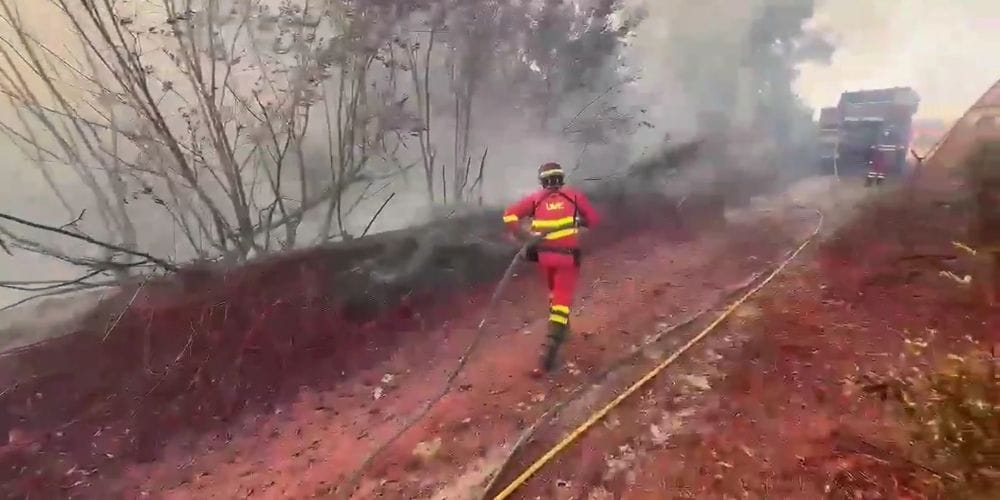
The wildfire burning near Niebla in Huelva province has now affected more than 4,000 hectares, with over 400 people evacuated as emergency crews battle rapidly changing conditions. Firefighters have made progress in parts of the perimeter, but repeated changes in wind direction continue to make the operation difficult and unpredictable.
The latest large-scale evacuation was ordered on Saturday evening, when Andalucía’s Emergency Management Agency sent an ES-Alert instructing around 340 people to leave Berrocal, Marigenta, El Membrillo and El Pozuelo as a precaution. Together with earlier evacuations, more than 400 people have now been moved away from areas threatened by the fire.
The fire, which began on Thursday in the Raboconejo area of Niebla, remains under Operational Situation 2 of Andalucía’s wildfire emergency plan. That level allows extraordinary resources to be mobilised when a fire presents a significant risk beyond the forest itself.
Firefighting resources include forest brigades, environmental officers, specialist machinery, emergency medical teams and aerial support when conditions allow. The Spanish government has also reinforced the Military Emergency Unit deployment, taking the number of UME personnel assigned to the operation to around 250.
Wind remains the biggest challenge
The affected area has grown beyond 4,000 hectares, although authorities have stressed that not every part of the land inside the fire perimeter will necessarily have been completely burned. The blaze has affected areas of eucalyptus, pine woodland and dehesa while generating a smoke plume visible from considerable distances across Huelva and neighbouring areas.
Firefighters reported progress on parts of the perimeter during Saturday, particularly at the rear of the fire, but constantly changing winds have repeatedly forced commanders to adjust their strategy. New fronts can develop when the wind changes direction, while difficult conditions can also limit the safe use of aircraft and put crews working on the ground at greater risk.
Two firefighters were injured during the operation but have since been discharged from hospital, according to the latest reports. Emergency teams continued working through the night in an attempt to consolidate the advances made during Saturday and move the fire closer to stabilisation.
Evacuated residents wait to return
Berrocal, Marigenta, El Membrillo and El Pozuelo are among the communities affected by the latest evacuation order, while residents of other rural properties were moved earlier in the emergency. Some of those unable to return home have been provided with temporary accommodation.
Authorities have not given a firm timetable for residents to return. Decisions will depend on the progress of firefighting operations, wind conditions and whether roads and properties can be accessed safely.
Several roads in the affected area have also been disrupted during the emergency, including the HU-3106 and A-493. Anyone planning to travel through the area should check current traffic information and follow instructions from emergency personnel rather than attempting to enter closed roads or evacuated zones.
High fire danger continues across Spain
The Niebla emergency comes during an exceptionally serious wildfire season in Spain, with prolonged heat, dry vegetation and repeated episodes of strong or changing winds increasing the danger of rapid fire spread.
AEMET publishes daily wildfire danger assessments based on predicted weather conditions alongside factors including vegetation, land use and soil moisture. Residents and visitors travelling through rural areas can check the current official AEMET wildfire danger map before setting out.
For crews at Niebla, Sunday will be another important day. Progress made overnight offers some encouragement, but until the perimeter can be secured and the wind becomes more favourable, emergency services remain focused on protecting communities and preventing the fire from opening new fronts.