 Lorraine Williamson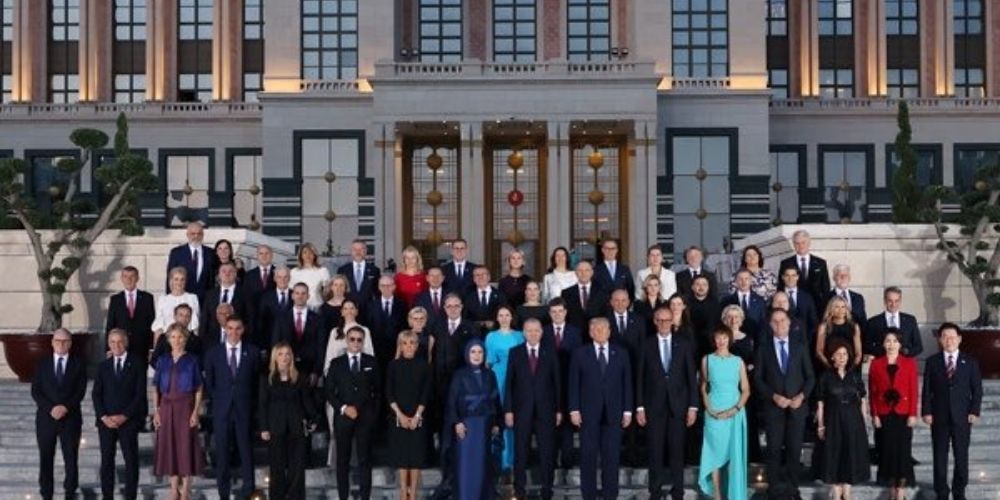
Donald Trump has escalated his dispute with Spain, saying he wants to cut off trade with the country after renewed criticism of Madrid over NATO defence spending and the Iran war.
Speaking at the NATO summit in Ankara, the US president described Spain as a “terrible partner” and said he had instructed Treasury Secretary Scott Bessent to halt commerce with the country. Reuters reports that Spanish Prime Minister Pedro Sánchez played down the clash, saying he had held a “very cordial” conversation with Trump during the summit, while his office stressed that EU trade rules prevent individual member states from being singled out in customs and trade policy.
Why Spain is being targeted
The dispute is not new. Trump has repeatedly criticised Spain for refusing to commit to NATO’s new defence spending target of 5% of GDP, and he has also expressed frustration over Spain’s refusal to allow the US use of its airspace or military bases for missions linked to the Iran war.
Sánchez had already framed Spain’s position before the summit, writing on X that European security is built through the unity of allies and that Spain would continue meeting the capabilities required by NATO “without cutting a centimetre” from its welfare state. He added that security and prosperity “can and must go hand in hand.”
That is the political line Madrid is trying to hold: Spain says it remains committed to NATO, but argues that defence spending should not come at the cost of public services, social protection or domestic priorities.
The disagreement has become one of the sharpest public rifts inside NATO, especially because it comes at a summit where European leaders had hoped to show unity.
Can Trump actually cut off all trade?
The threat is dramatic, but the practical and legal picture is more complicated. Reuters explains that a full US trade embargo against Spain would be difficult to impose, because Washington would normally need to justify it under emergency powers and show that Spain presented an unusual or extraordinary threat to US national security, foreign policy or the economy. It also notes that trade talks with Spain are handled through the European Union, not bilaterally with Madrid, because Spain is part of the EU customs area.
That does not mean there is no risk. A US president has more room to impose targeted tariffs or other trade measures than to cut off all trade entirely. For businesses, exporters and investors, the uncertainty itself can still matter.
EU says it will defend member states
The European Commission has said it will defend the interests of the European Union and its member states after Trump’s comments. A Commission spokesperson said the EU supports stable, predictable and mutually beneficial transatlantic trade, and called on the United States to honour the commitments made under its trade agreement with the EU.
For Spain, that EU layer is important. Even if Trump’s criticism is aimed directly at Madrid, trade rules are negotiated through Brussels. Any major action against Spain alone could quickly become an EU-US issue, not just a Spain-US dispute.
Markets react to the threat
Spanish markets did react to the renewed threat. Reuters reported that Spanish stocks and bonds came under pressure on Wednesday, with the IBEX falling in afternoon trading and major Spanish companies including Banco Santander, BBVA, Inditex and Telefónica losing ground. The same report noted that Trump had made a similar threat earlier this year, but bilateral trade between the US and Spain had continued normally.
That reaction shows why the comments matter, even if the legal route to a full trade cutoff is unclear. Markets dislike uncertainty, especially when it involves a major economy, NATO tensions and the possibility of tariffs.
What it could mean for Spain
For now, there is no confirmed full trade cutoff in force. The immediate effect is diplomatic and political, with possible economic consequences if the threat is followed by formal measures.
The United States and Spain have significant trade and investment links. Spain exports products including olive oil, wine, auto parts, steel, chemicals and other goods to the US, while American companies and investors have major interests in Spain.
There is also the question of tourism and travel. Some reports have highlighted Trump’s comments about not wanting “anything to do” with Spain, including visits, but any move affecting travel would be highly unusual and would need to be treated separately from trade policy.
A dispute with wider consequences
The timing makes the row more sensitive. It comes during a NATO summit, against the background of the Iran war, European defence spending arguments, and wider tensions over how much European allies should contribute to collective security.
For people living in Spain, the key point is not that trade has already stopped. It has not been clearly shown that any full cutoff is in force. The key point is that the US president has again publicly targeted Spain, this time with language that has unsettled markets and forced both Madrid and Brussels to respond.
The next question is whether the threat remains political theatre, becomes targeted tariffs, or develops into a wider EU-US trade dispute. For now, Spain is trying to keep the response calm, while the European Commission signals that any attack on one member state will be treated as a matter for the whole bloc.