 Lorraine Williamson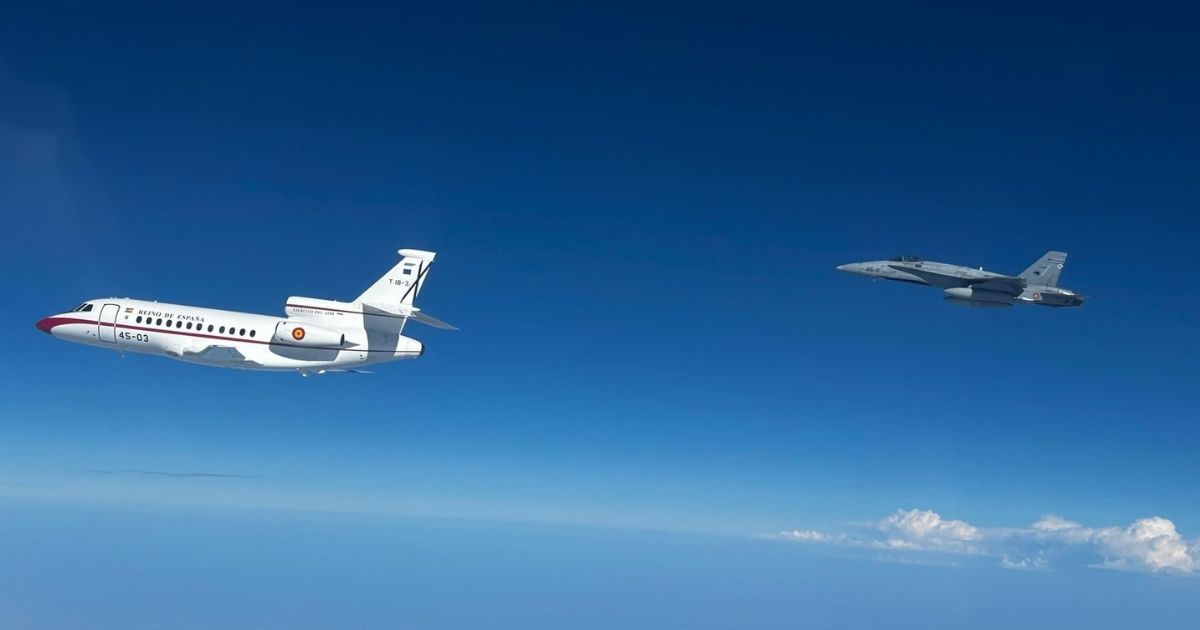
Pope Leo XIV’s week-long visit to Spain ended in Tenerife with a powerful message on migration, a final Mass in the Canary Islands and an unexpected return to Rome on a Spanish Air Force Falcon after a technical problem with his original plane.
The Pope had been due to fly back to the Vatican on an Iberia aircraft from Tenerife North airport. Instead, after a technical issue was detected, he returned to the terminal and later boarded a Falcon jet provided by King Felipe VI.
Spain visit ends with an unexpected aircraft change
The aircraft incident came at the very end of Pope Leo XIV’s visit, shortly after King Felipe VI had accompanied him for the official farewell at Tenerife North airport.
According to Spanish reports, the Iberia-operated plane suffered a technical issue before departure. The Pope disembarked and was later transferred to a Falcon from the Spanish Air Force’s 45 Group, normally used for official state travel.
The Falcon took off for Rome on Friday evening, while members of the wider Vatican delegation and accompanying journalists were due to travel separately on another aircraft arranged by Iberia.
The incident added an unusual final twist to a visit that had already taken the Pope from Madrid to Barcelona, Gran Canaria and Tenerife.
Tenerife puts migration at the centre of the final day
Before leaving Spain, Pope Leo XIV used the final day of his trip to focus on migration, one of the most sensitive issues facing the Canary Islands.
In Tenerife, he met migrants and organisations working with people who arrive on the islands after dangerous Atlantic crossings. The meeting formed part of a wider Canary Islands stage that had already included a visit to the port of Arguineguín in Gran Canaria, a symbolic point on one of Europe’s deadliest migration routes.
During the Canary Islands visit, the Pope urged a more humane response to migration and warned against becoming accustomed to the suffering of people who risk their lives at sea.
“All of us are migrants”
The Pope’s strongest message came around the idea that migration is not an isolated problem affecting only some people.
The Guardian reported that he told those gathered in Tenerife that “all of us are migrants”, using the phrase to underline the shared human experience of movement, displacement and the search for safety.
The message carried particular weight in the Canary Islands, where thousands of people have arrived by boat in recent years after attempting the Atlantic route from West Africa.
The islands have repeatedly been at the centre of Spain’s migration debate, with local authorities, charities and emergency services calling for more support to manage arrivals, reception, transfers and long-term integration.
A Canary Islands visit shaped by migration and crowds
The Pope arrived in Gran Canaria on Thursday before travelling to Tenerife on Friday morning for the final leg of the journey. Vatican News said his aircraft left Gran Canaria-Gando Air Base at 8.56 am local time and landed at Tenerife North-Los Rodeos at 9.15 am.
The Canary Islands programme included religious events, meetings with community and church representatives, and large public gatherings that required major traffic and security planning.
Spanish authorities and the DGT had warned in advance of traffic disruption in Gran Canaria and Tenerife because of the scale of the visit, with drivers urged to avoid unnecessary journeys during the busiest periods.
From Madrid to Barcelona and the Canary Islands
Pope Leo XIV’s visit to Spain began in Madrid before moving to Barcelona and then the Canary Islands.
In Madrid, the visit brought major crowds and a large economic boost, with regional authorities estimating the impact at more than €120 million. The capital’s hotels, restaurants, shops and visitor services all saw high demand during the papal stay. Source: Infobae
In Barcelona, the visit was marked by events around the Sagrada Família, public gatherings and major transport disruption, including changes around the basilica and city-centre routes.
The final Canary Islands stage gave the visit a different tone, shifting attention from crowds and ceremony towards migration, vulnerability and Europe’s responsibility towards people arriving at its borders.
Why the final stop mattered
The decision to end the visit in the Canary Islands was highly symbolic.
The archipelago sits on one of the main irregular migration routes into Spain. The Atlantic crossing is long and dangerous, and many people who attempt it have already travelled through multiple countries before boarding small boats.
By placing migrants at the centre of the final day, Pope Leo XIV turned the closing stage of his visit to Spain into a pastoral and political message. It was not framed as party politics, but as a moral challenge: how should Europe respond to people arriving in desperation?
His words came as Spain and the European Union continue to debate migration rules, border controls, asylum procedures and solidarity between member states.
An unusual ending to a closely watched visit
The aircraft problem at Tenerife North may be remembered as the unexpected final image of the trip. Yet the central message of the final day was migration.
Pope Leo XIV left Spain after a journey that moved through royal ceremony, major city crowds, transport disruption, economic impact, religious gatherings and one of the country’s most sensitive humanitarian issues.
The Falcon flight gave the visit a memorable ending. The Tenerife message gave it its final meaning.