 Lorraine Williamson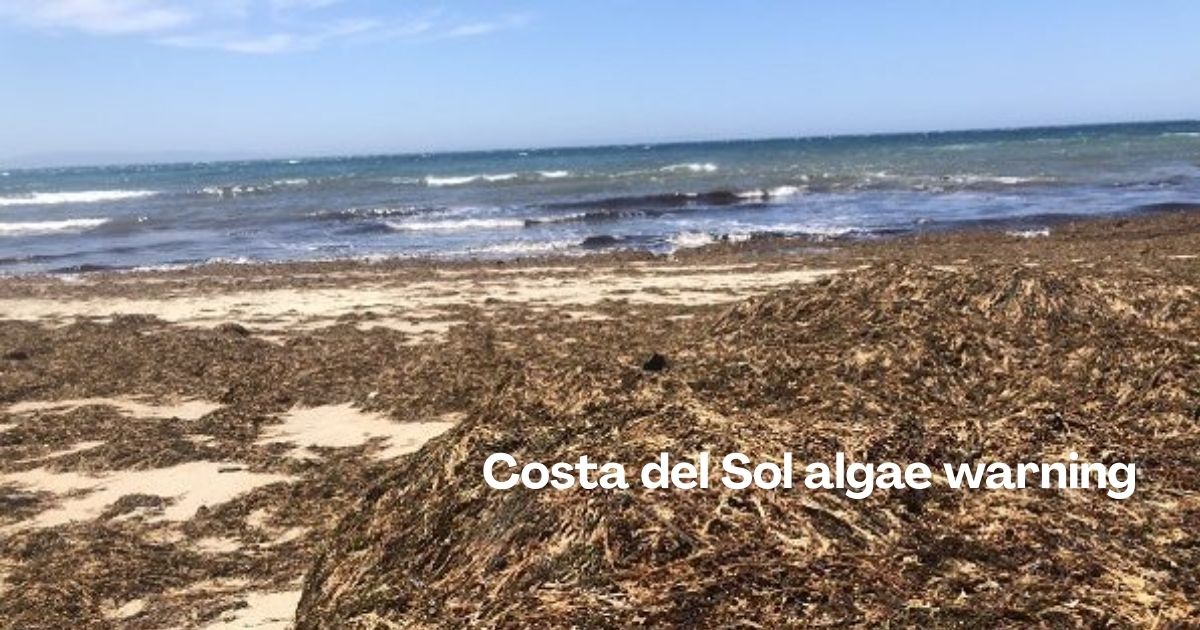
The Costa del Sol algae problem is no longer a seasonal inconvenience. It has become one of the most stubborn environmental challenges facing southern Spain’s beaches, fishing communities, and coastal councils.
Málaga province is now expected to be one of the worst-affected areas in Andalucia during 2026. According to figures reported from the Junta de Andalucía, between 8,000 and 12,000 tonnes of the invasive algae could wash up along the province’s coastline this year.
The species, Rugulopteryx okamurae, has spread rapidly since it was first identified around the Strait of Gibraltar in 2016. The Junta has now described its arrival on Andalucian beaches as a situation of “force majeure and extreme necessity”, allowing coastal councils to seek relief from landfill tax costs linked to the algae’s removal.
At a glance
- The invasive algae is expected to affect much of the Málaga coastline in 2026.
- Málaga could receive between 8,000 and 12,000 tonnes, making it one of Andalucia’s hardest-hit provinces.
- The algae is not considered toxic to beachgoers, but large amounts can smell, rot and disrupt swimming areas.
- Councils face rising costs for collection, transport and landfill treatment.
Why Málaga beaches are under pressure
The affected stretch includes much of the Costa del Sol, from Manilva, Estepona and Marbella to Mijas, Fuengirola, Benalmádena, Torremolinos, Málaga city, Rincón de la Victoria, Vélez-Málaga, Torrox and Nerja.
The algae does not usually arrive evenly or predictably. Winds, currents and sea conditions can push large quantities ashore in one area while nearby beaches remain relatively clear.
That makes planning difficult for councils. Beach-cleaning teams may have to respond quickly, particularly during hot weather and peak tourism periods.
The Junta says the algae now affects all five coastal provinces of Andalucia: Cádiz, Huelva, Málaga, Granada and Almería. Pressure is especially intense in Cádiz and the western part of Málaga.
Tarifa turns invasive seaweed into energy and fertiliser with innovative project
A problem that can no longer be eradicated
Scientists and environmental authorities now regard eradication as unrealistic in the short to medium term.
The Junta says the species has shown an extraordinary capacity to spread, displacing native marine species and producing large volumes of biomass. The official BOJA notice says the algae has caused major changes in marine ecosystems and now affects fishing, tourism and biodiversity.
Spain’s Ministry for Ecological Transition lists Rugulopteryx okamurae in the Spanish Catalogue of Invasive Alien Species. MITECO also has a national strategy for managing, controlling and, where possible, limiting the species.
What beachgoers may notice this summer
For swimmers and visitors, the issue is mainly practical rather than toxic.
There is no indication that the algae poses a direct health risk through ordinary beach contact. However, once large quantities wash ashore, they can decompose quickly in the heat.
That can create strong smells, affect the appearance of beaches and make some swimming areas less pleasant. In severe cases, councils may need to remove thick layers before beaches are fully usable again.
The Junta has warned that accumulations on bathing beaches can create sanitation problems, bad odours and liquid run-off as the algae ferments and decomposes. It also says this can affect the landscape, tourism and local beach activity.
Fishing crews face a daily battle
The fishing sector has been among the hardest hit.
The algae can clog nets, damage gear and force crews to spend time clearing equipment instead of fishing. Small-scale coastal fleets are especially exposed because they depend on traditional methods and short working windows.
The Junta says the algae makes some fishing practices significantly more difficult, including traditional and trawling operations, because it blocks fish from entering nets and forces crews to haul gear to the surface for cleaning and repair.
Invasive seaweed in Andalucia becomes sustainable fertiliser for farmers
Councils left with a costly clean-up
For municipalities, the problem is also financial.
Once the algae is removed from beaches, it must be transported and treated as waste. The Junta says current options for reuse remain limited because of salt, sand and the need to prevent any further spread of the invasive species. For now, landfill is still the most viable route in many cases.
That is why Andalucia has declared the situation one of force majeure. The measure is designed to ease the pressure on councils by allowing an exemption from the state landfill tax, which the Junta says would otherwise add a significant burden to local authorities.
Why this matters before summer
The Costa del Sol depends heavily on its beaches. Even a temporary disruption can affect visitors, beach businesses and municipal services.
The arrival of invasive algae does not mean beaches are unsafe. But it does mean councils may face another demanding summer of rapid clean-ups, rising costs and difficult environmental management.
For residents and visitors, the best advice is simple: check local council updates before heading to affected beaches, especially after strong winds or storms.