 Lorraine Williamson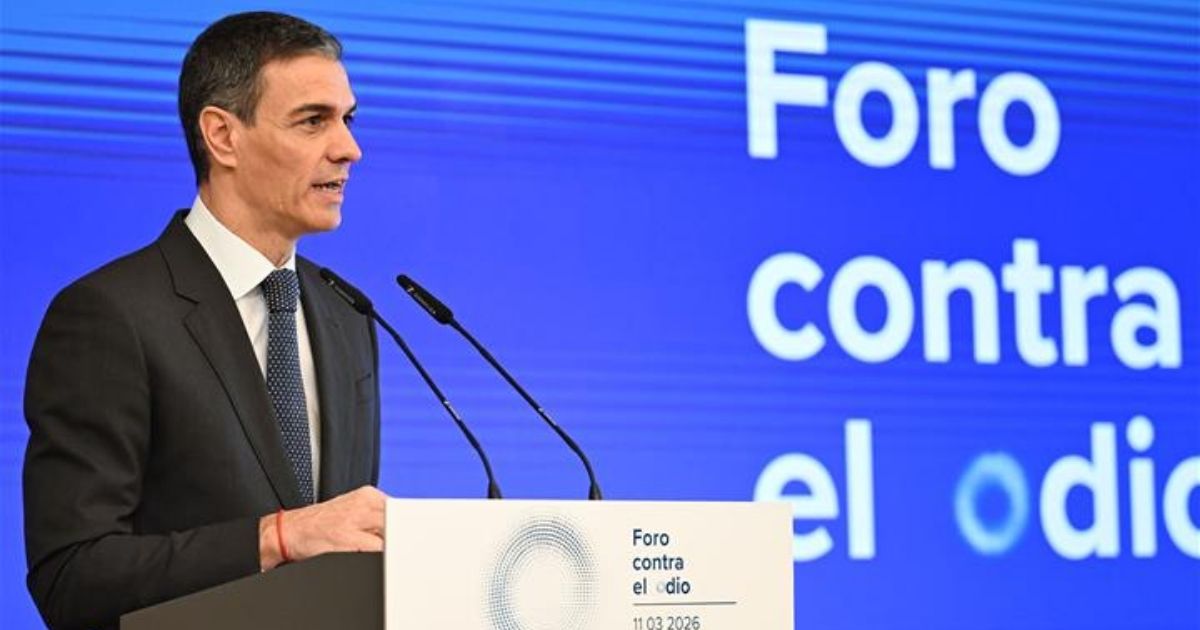
Spain has unveiled a new tool called HODIO to measure hate speech and polarisation on social media, in the latest step in Pedro Sánchez’s drive to tighten scrutiny of major digital platforms.
The announcement was made on Wednesday, with Reuters reporting that the government wants the system to track the spread and impact of hate online and make the findings public. El País says the tool will operate through the Spanish Observatory of Racism and Xenophobia, known as Oberaxe, and will combine academic analysis with expert review to assess how platforms deal with hateful content.
Sánchez also promoted the initiative on X, saying HODIO — short for Huella del Odio y la Polarización — will measure the presence, evolution, and reach of hate speech on digital platforms. He said the aim is to bring hate “out of the shadows”, make it visible, and demand accountability from those who fail to act.
That matters because the plan goes further than a simple internal monitoring exercise. According to Reuters, Sánchez wants the results published so that platforms can be judged on whether they suppress hate, ignore it, or profit from it. El País adds that the system is intended to produce public rankings showing which platforms are more exposed to hateful content and polarising dynamics.
A wider clampdown on social media
HODIO does not stand alone. Reuters says it forms part of a broader government strategy to regulate digital platforms more tightly, including proposals affecting younger users and greater accountability for tech executives when illegal or hateful content is allowed to circulate. Sánchez argued that online hate is deepening social division and compared the need to measure it with the way societies track a carbon footprint.
El País reports that the initiative also sits alongside existing Spanish tools such as Alertodio and FARO, but is designed to go further by systematically measuring the scale and reach of hate speech across platforms, including Instagram, TikTok, X, YouTube, and Facebook. That gives the project a broader ambition than simply reacting to individual complaints.
Why this is politically significant
The story is likely to trigger a strong reaction in Spain because it sits at the crossroads of several live debates at once: online safety, freedom of expression, disinformation and the growing power of social-media companies. Supporters will argue that the state needs better tools to identify and expose toxic digital ecosystems. Critics are likely to question where monitoring ends and overreach begins.
For the government, however, the message is clear. Reuters says Sánchez wants platform operators to be held accountable for how hateful content spreads on their services. Meanwhile, El País reports that Spain is also preparing new legal measures tied to the algorithmic amplification of hate. In other words, HODIO is being presented not as a one-off study but as part of a more assertive regulatory approach.
This is a story about more than party politics. It is about how Spain intends to respond to a digital environment that increasingly shapes public debate, especially among younger audiences. If HODIO becomes an influential public measure, it could affect how platforms are discussed, regulated and scrutinised in Spain in the months ahead.
It may also fuel a wider European conversation. Governments across the continent are already wrestling with how to handle online hate, disinformation and platform accountability without tipping into accusations of censorship. Spain is now trying to place itself at the sharper end of that debate.
The immediate test will be whether HODIO is seen as a credible transparency tool or as the start of a more contested political battle over speech online. Either way, today’s announcement makes one thing clear: Spain is no longer content to leave the issue of online hate entirely in the hands of the platforms themselves.