 Lorraine Williamson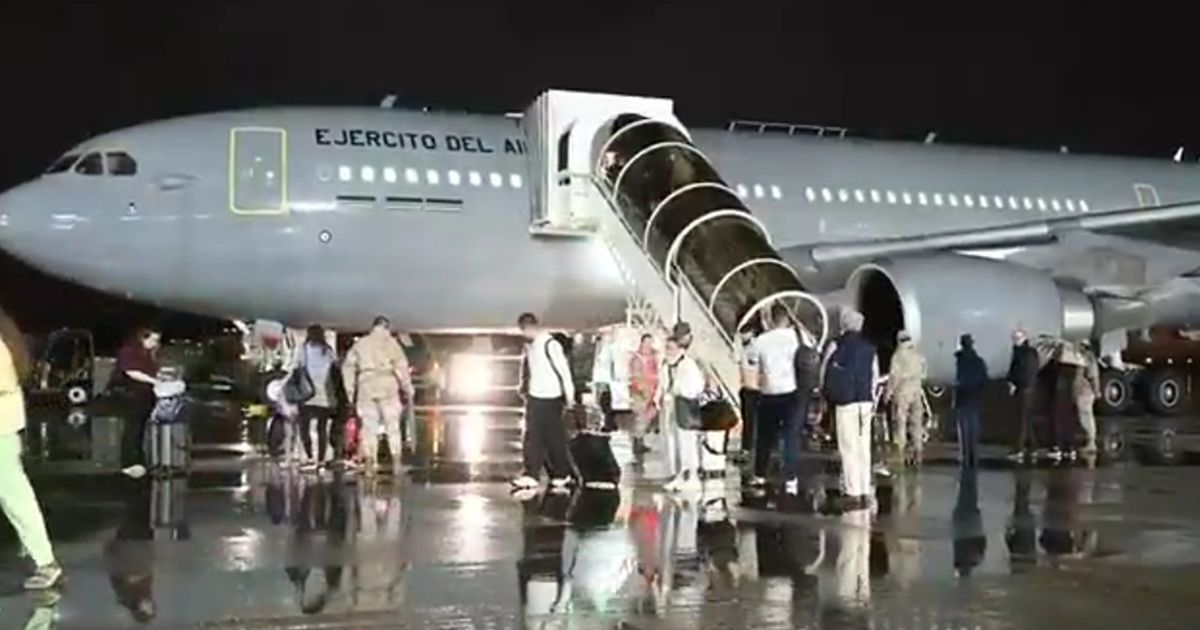
Spain is on course to evacuate almost 6000 nationals from the Middle East, as the government says repatriation operations are still underway and will continue for as long as any Spaniard wants to leave the conflict-hit region.
The latest update came from Foreign Minister José Manuel Albares after Tuesday’s Council of Ministers meeting, where he said the total number of evacuees would reach around 6000 by the end of the day. According to the figures he gave, 5685 Spaniards had already returned by Monday, with roughly 300 more expected to arrive yesterday.
It is one of the clearest signs yet of how seriously Madrid is treating the deteriorating security situation across the region. Albares said Spain aimed to repatriate every citizen who wants to leave and insisted that no Spaniard would be abandoned.
A major evacuation effort across several countries
The numbers also reveal the scale of the operation. Albares said there were around 31,000 Spaniards in the region when the conflict escalated. Since then, Spain has been organising departures by land and air, working through several neighbouring countries to bring people home safely.
The government says nine ground evacuations have already been carried out. These included routes from Tehran to Baku, Jerusalem to Amman, Tel Aviv to Cairo, Bahrain to Riyadh, and Kuwait to Riyadh. There have also been three air evacuations using Spanish military aircraft from Muscat, in Oman, with the latest flight arriving at Torrejón de Ardoz overnight.
That mix of land corridors and military airlifts underlines a wider point. This is no longer a routine consular operation. It has become a large and fast-moving emergency response, shaped by shifting conditions on the ground and by the need to keep routes open wherever possible.
Other nationalities are normally advised to seek assistance through their own foreign ministry and embassy network, as evacuation operations are usually handled according to nationality rather than residency.
Iran route now closed, but wider operations continue
One of the most significant details in Albares’ update was that Spain’s evacuation route out of Iran has now been completed. He said the embassy operation there ended successfully on Saturday and confirmed that the ambassador and the remaining essential staff had crossed into Azerbaijan safely.
The embassy in Tehran has now been evacuated definitively, although Albares said a very small number of Spaniards have chosen to remain in Iran voluntarily. Elsewhere in the region, however, Spanish diplomatic missions are still operating, and evacuation efforts remain active.
That matters because the crisis is clearly not over. Albares said it was impossible to predict when the operation would end, warning that the military escalation was continuing to worsen. In other words, Spain is still in response mode rather than winding anything down.
Why this matters for Spain
For InSpain.news readers, the story is not only about the headline number. It is also about what it says about Spain’s exposure to events far beyond its borders. Thousands of Spanish nationals live, work, or travel across the Middle East. When a conflict expands quickly, the pressure falls not only on embassies and consulates but also on military logistics, border coordination, and crisis diplomacy.
Spain’s response has also become part of a wider European picture, with governments across the continent racing to move citizens out of danger as airspace disruptions, border uncertainty, and security concerns spread across the region.
In practical terms, the message from Madrid is straightforward. The evacuation effort is still live. The routes are still being used where possible. And for now, the government is making clear that it will keep moving people out for as long as the crisis demands it.
Spain still faces an uncertain road ahead
The figure of almost 6,000 evacuated is striking in itself. But it is unlikely to be the final one. With the conflict still unstable and some routes more fragile than others, the operation may yet grow in the coming days.
For now, Spain has shown that it can move quickly at scale when events abroad suddenly threaten its citizens. The next question is how long that effort will need to continue.