 Lorraine Williamson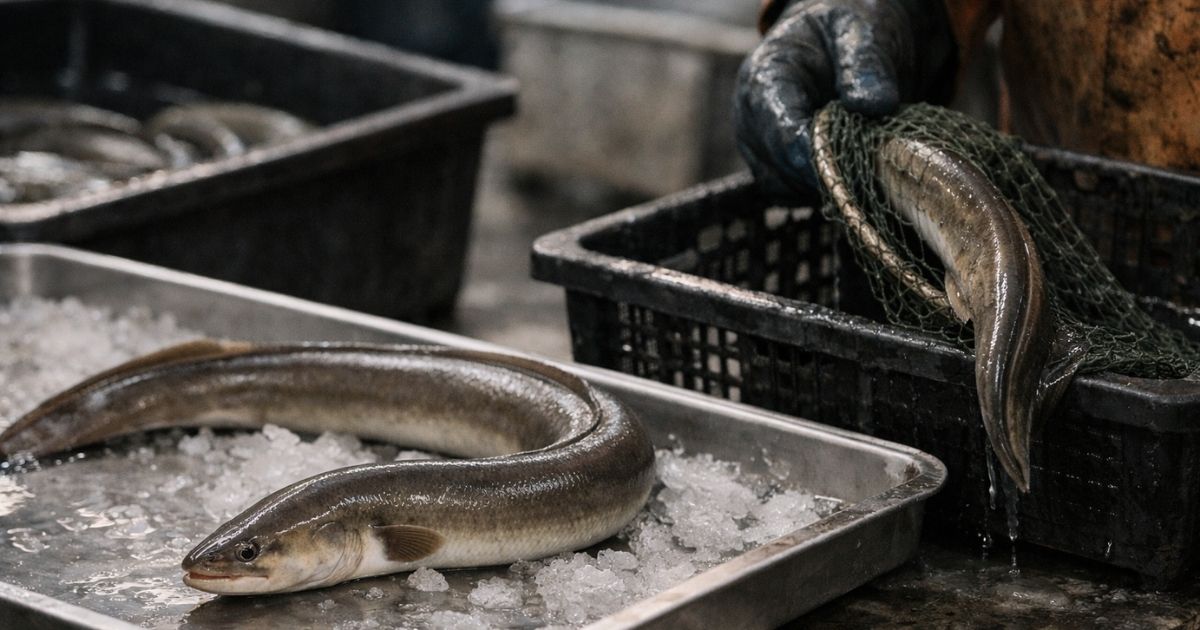
Spain has reached an uncomfortable point in the long-running battle over the European eel. While scientists say the species is in such a critical state that there should be zero catches in 2026, commercial fishing of both eel and glass eel is still continuing in parts of the country after Spain’s regions rejected a new push for stronger national protection. That leaves Spain defending a traditional and economically valuable fishery at the very moment the conservation warnings are becoming harder to ignore.
The issue is not only environmental. It also touches on food culture, regional politics, and the old argument over whether one country should act more aggressively and quickly if others are still catching the same species. RTVE reported on 25 February that the autonomous communities have now blocked, for the third time, the central government’s attempt to give the European eel stronger protected status in Spain. This move would have effectively prohibited catches.
A species still on the menu, but officially in danger
The European eel, Anguilla anguilla, has been listed as critically endangered on the IUCN Red List since 2008. The European Commission also states that the species is now in a critical situation and notes a major decline in the number of eels reaching European river systems over the past two decades. RTVE, citing expert concern, says the population has fallen by around 90% since the 1980s.
That collapse matters because eel is not just one more fish stock under pressure. Its life cycle is unusually fragile and unusually long. European eels are born in the Sargasso Sea, drift towards Europe as larvae, grow in rivers, estuaries and coastal waters, and later migrate back across the Atlantic to spawn. The European Commission says pressures include fishing, dams and other migration barriers, pollution, parasites and illegal exports to Asia.
The real flashpoint is the glass eel
Much of the controversy centres on the earliest stage of the species. In Spain, angula refers to the small, translucent juvenile eel that is still considered a delicacy in some regions and can command exceptionally high prices. Critics argue that catching the fish at that point makes recovery even harder because it removes animals before they can grow, migrate and reproduce.
That is also where the science has become most awkward for policymakers. The International Council for the Exploration of the Sea, one of the key scientific reference bodies for fisheries management, states that when the precautionary approach is applied, there should be zero catches in all habitats in 2026. Its advice explicitly includes both commercial and recreational catches and also covers glass eels for restocking and aquaculture.
Why Spain’s decision is drawing attention
Spain’s latest internal debate was not really about whether the eel is in trouble. That part is broadly acknowledged. The argument was over whether Spain should go further by adding the species to its national catalogue of threatened wildlife, tightening protection beyond the current management framework. RTVE reports that Galicia, Asturias, Cantabria, Murcia, the Valencian Community and the Balearic Islands voted against the proposal. Meanwhile, others, such as the Basque Country and Catalonia called for more information before backing a ban.
The Ministry for Ecological Transition took the opposite view. RTVE quotes Secretary of State Hugo Morán saying the choice is effectively one of being “with the science or against the science”, and he indicated the government will try again. That means the political fight is not over, even if the fishing continues for now.
Tradition, jobs and a shrinking margin of defence
Supporters of continued fishing tend to make a familiar case. In some coastal communities, eel and glass eel fishing are tied to local identity, seasonal earnings and regional gastronomy. They also argue that a tougher Spanish ban alone will not solve a Europe-wide problem if catches continue elsewhere. RTVE says that is one of the core arguments used by regions resisting stronger protection.
Yet that defence is becoming harder to sustain as the official advice sharpens. The European Commission says scientific assessments consistently confirm that eels are in critical condition at all stages of their life cycle. The EU already has an Eel Regulation designed to support recovery, has applied temporary fishing closures in marine and brackish waters since 2018, and prohibits the trade of European eel outside the EU. It also recognises poaching and illegal export to Asia as serious threats.
In other words, this is no longer a niche conservation argument. The regulatory framework already exists because the species is known to be in deep trouble. What is now being questioned is whether enforcement and national political will are matching the severity of the science.
A bigger question for Spain’s food culture
There is also a symbolic dimension here that goes beyond fisheries law. Spain is proud of defending its culinary heritage, regional produce and long-standing food traditions. Usually, that is a strength. But in this case, the heritage argument risks colliding with the fact that the species behind the delicacy is officially edging towards disappearance.
That makes eel a more difficult story than many other food debates. It is not simply a question of whether a dish is expensive, fashionable or old-fashioned. It is about whether a country should continue commercialising a species that its own science and Europe’s scientific advisers say is in critical condition.
How long can this continue?
For now, Spain’s eel fishing remains legal in some areas, and the government’s latest protection push has failed. But the political breathing space may be temporary. If catches keep falling, if enforcement against trafficking tightens further, or if public pressure grows around the idea of eating a critically endangered species, the room for compromise will narrow fast.
Spain has not yet chosen a definitive line. What it has done is postpone the hardest decision. The trouble is that postponement may be exactly what the European eel can least afford.