 Lorraine Williamson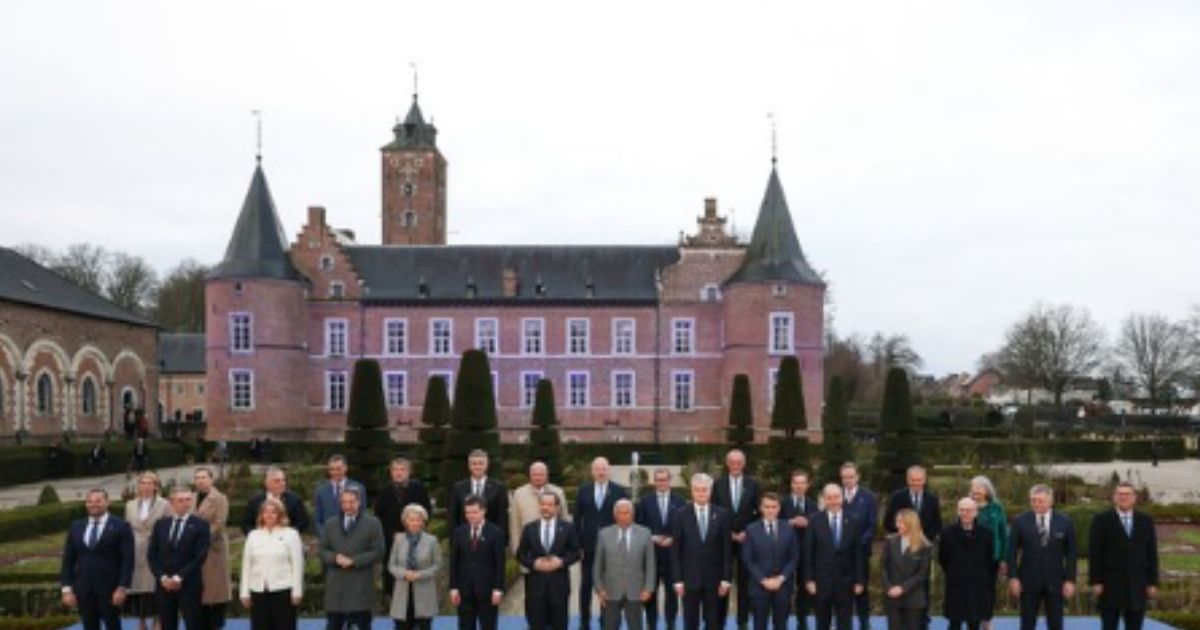
A quiet diplomatic disagreement between Spain and Italy has highlighted differing approaches to European decision-making after Madrid stayed out of an informal pre-summit meeting involving a large group of EU countries.
The episode unfolded in the run-up to an informal European gathering in Belgium, where several member states met ahead of official talks on competitiveness and economic strategy. Spain’s absence from the preliminary discussions drew attention in Brussels and underscored a growing difference in style between Prime Minister Pedro Sánchez and his Italian counterpart Giorgia Meloni.
Disagreement over informal meetings
The meeting, organised by Italy, Germany and Belgium before the official summit, brought together nearly twenty EU countries and the European Commission to discuss economic priorities and competitiveness.
Spain did not attend. According to government sources, Madrid objected in principle to holding smaller pre-summit gatherings that exclude some member states, arguing that key discussions should take place within the full European Council where all 27 countries participate on equal terms.
Spanish officials signalled discomfort with what they see as a growing trend towards “inner-circle” coordination ahead of formal EU meetings.
Not a formal diplomatic clash
Despite the disagreement, there has been no public confrontation between Sánchez and Meloni. The two leaders held private talks during the official summit and maintained a cordial tone.
Italian and Belgian officials have suggested that the preparatory meeting was intended as a practical coordination exercise rather than an exclusive forum. Some countries chose to attend, while others did not.
Belgian Prime Minister Bart De Wever acknowledged the format could appear unusual but said it was not meant to sideline any member state.
Different approaches to EU politics
The episode reflects broader differences in how European leaders approach negotiations. Spain has emphasised inclusive decision-making within the full EU framework, while Italy and several other countries are more open to smaller preparatory meetings among like-minded states.
Supporters of such meetings say they help streamline discussions and speed up agreements. Critics argue they risk shifting real decision-making to smaller groups before all member states are present.
For Madrid, the concern is less about this specific meeting and more about a wider trend. Spanish officials worry that if key positions are shaped in advance by smaller groups, countries not present may have less influence once formal talks begin.
A signal rather than a crisis
No formal decisions were taken at the preliminary meeting, and there has been no diplomatic rupture between Madrid and Rome. But the episode has drawn attention in Brussels as a sign of evolving dynamics within the EU.
As informal coordination among subsets of countries becomes more common, tensions may continue to surface between those who favour broader inclusion and those who prioritise efficiency.
For now, the disagreement remains largely symbolic — a reminder that even small moments in EU diplomacy can reveal deeper differences in how Europe’s leaders operate.