 Lorraine Williamson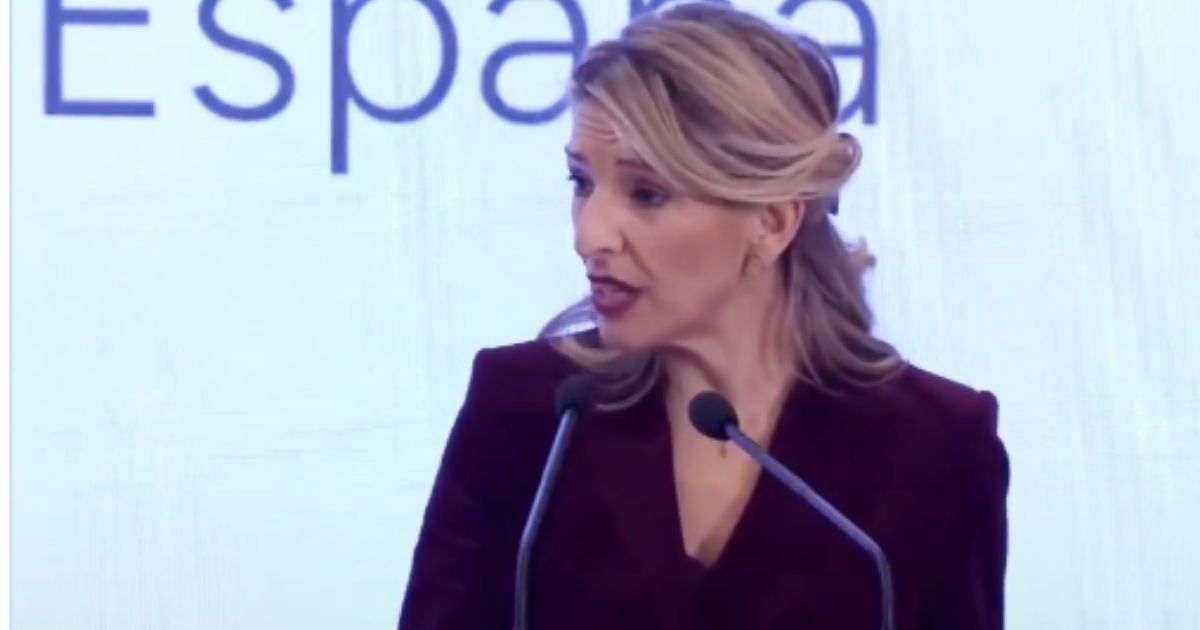
Yolanda Díaz has announced she will not be a candidate in Spain’s next general election, a move that lands as one of the biggest political shifts on the left this year. The decision does not mean an immediate exit from government, but it does force an early conversation about succession, strategy, and unity ahead of 2027.
Díaz announced in a public message and said the decision had been thought through and shared with her inner circle, her political space and Prime Minister Pedro Sánchez, according to reporting from El País and Cadena SER. Both outlets also report that she intends to remain in government for now.
For InSpain.news readers, the key point is this: the story is not only about one leader stepping back. It is about what happens next to the political space to the left of PSOE, and whether it can stay coherent without the figure who helped hold it together.
Why this matters more than a personal announcement
Spain’s coalition maths has made smaller left-wing parties strategically important in recent years. Reuters notes Díaz has been a key ally of Sánchez and an influential figure in labour policy, including minimum wage rises and labour reform. Her decision, therefore, creates uncertainty far beyond Sumar’s internal leadership question.
This matters especially because the left of PSOE has already gone through fragmentation, realignment and tense relations between parties. El País links Díaz’s announcement to the wider reorganisation of her political space and a new phase that leaves open the question of who leads next.
A fresh angle: this is a succession story disguised as a resignation story
The headline says Díaz will not run in 2027. The deeper story is that Spain’s alternative left now has to test whether it can build a durable project that is not dependent on one national figure.
That is a tougher challenge than it sounds. Díaz has been both a government minister and a coalition broker. Removing the electoral candidacy question may ease some internal tensions, but it also strips away the clearest face for voters. This is an inference based on Reuters and Spanish reporting describing her central role in Sumar and coalition politics.
What Díaz reportedly said — and what she did not say
Spanish media reports describe the decision as “very considered” and framed around opening a new stage, rather than a dramatic break. Cadena SER says Díaz spoke of the need for “new energy” on the left.
What remains less clear publicly is the exact roadmap for succession, the timeline for choosing a future candidate, and whether this helps or complicates attempts to unify the broader left. El País reports that the question of succession is now open.
What this could mean for Spain’s political map
If Díaz stays in government but leaves the 2027 candidacy field, Spain may enter a long pre-election period in which governing and campaigning become increasingly separated on the left. That can sometimes help a coalition reset. It can also expose internal rivalries sooner.
Reuters also highlights pressure on the governing bloc from conservative rivals and a fragmented left landscape, which makes leadership clarity more important, not less, in the run-up to the next general election.
For international readers, this is one of those moments that looks internal but has wider consequences. Spain’s coalition stability, reform agenda and parliamentary bargaining often depend on how strong — or divided — the parties to PSOE’s left are.
What to watch next after Díaz’s 2027 announcement
The next phase will be about names, alliances and tone. Watch for three things: who begins to emerge as a plausible future candidate, whether Sumar and allied groups can avoid another round of public fragmentation, and whether Díaz’s decision changes the balance inside government before the campaign cycle intensifies. This is forward-looking analysis based on the confirmed announcement and current coalition dynamics reported today.
Díaz’s announcement may have been written as a personal decision. In practice, it opens a strategic contest that could shape the left side of Spanish politics well before voters go to the polls in 2027.