 Lorraine Williamson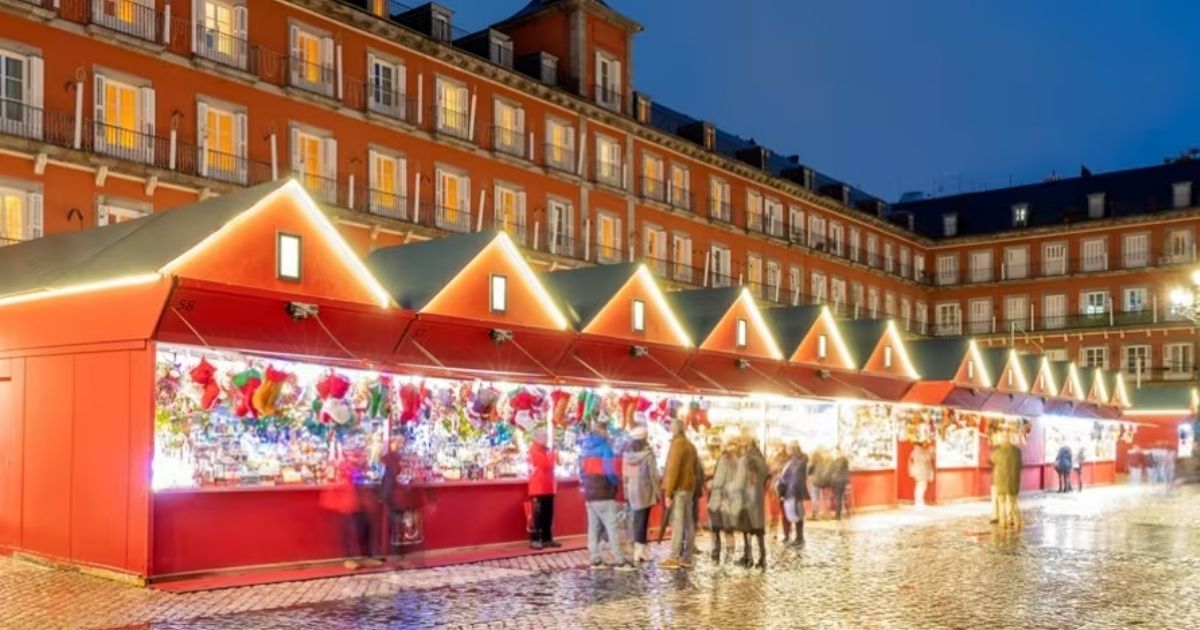
Spain’s festive season is anything but uniform. December brings a mosaic of winter rituals, each shaped by local customs and regional quirks. Rather than travelling from city to city, the best way to understand the season is to follow the themes that define it — craftsmanship, folklore, coastal light shows and the everyday intimacy of neighbourhood squares.
This Spanish Christmas markets guide brings those threads together in a way that shows how varied and vibrant the country’s celebrations truly are.
Markets that turn craftsmanship into theatre
Some Spanish cities make artisans the stars of their festive calendar. Nowhere is this clearer than in Seville, where the Feria del Belén transforms the historic centre into a living gallery of miniature worlds. Figurines carved by hand — shepherds, bakers, musicians — sit beside entire sets recreating Andalucian villages. Families take the craft seriously, adding new pieces each year and passing the tradition down through generations.
Further north, Zaragoza blends craft with spectacle. Its market in Plaza del Pilar has become a winter stage lined with regional products, nativity sculptures and ceramics. Once the sun sets, the basilica becomes the dramatic backdrop for one of Aragón’s most atmospheric light displays, drawing visitors from across the Ebro valley.
Coastal cities where Christmas meets the sea
Spain’s shoreline brings a different rhythm to the festive season — softer evenings, winter sunsets and waterfront markets that feel almost storybook-like.
San Sebastián delivers one of the most elegant settings. Its promenade becomes an illuminated walkway lined with cabins selling artisanal gifts, traditional Basque cakes and steaming drinks that cut through the seaside chill. Choral groups perform beside the bay, adding a gentle soundtrack to the celebrations.
Further south, Málaga has turned its seaside lights into an international attraction. Calle Larios, known for its nightly light shows, forms the city’s festive centrepiece. Nearby, the harbour market at Muelle Uno mixes handmade crafts with modern design stalls, framed by yachts and palm trees. The combination of winter warmth and dazzling displays makes Málaga one of Spain’s most visited Christmas destinations.
Cities that preserve folklore and storytelling
Some Christmas markets offer more than decorations — they keep centuries-old traditions alive.
Barcelona’s Fira de Santa Llúcia, held beside the cathedral since the eighteenth century, remains a testament to Catalan folklore. The market features two icons recognised across the region. The caganer, tucked discreetly into nativity scenes for good luck, and the tió de Nadal, a smiling log children feed with sweets before singing it into producing treats on Christmas Eve. With dancing, music and craft stalls surrounding the Gothic quarter, the market feels as much a cultural lesson as a festive outing.
Cities that celebrate Christmas through light and gathering
Other cities focus on atmosphere — places where light, sound and community create the spirit of the season.
Valencia’s mild Mediterranean evenings make its Christmas market a lively social ritual. Plaza de la Reina fills with ceramics, decorations and nougat stalls, while illuminated palm-lined streets give the city a warm glow. Residents often wander the historic centre after dark, turning the market into the heart of the city’s winter nightlife.
In contrast, Bilbao offers a northern style of festivity. Cabins line the river, blending Basque craftsmanship with urban energy. The reflections of the lights on the Nervión give the market an almost cinematic quality, and the city’s contemporary architecture provides a striking contrast to the traditional set-up.
Madrid: A capital that sets the tone for the season
While many Spanish cities reinvent tradition, Madrid embraces the scale of its celebrations. Plaza Mayor lies at the centre of it all. Wooden stalls, glowing lanterns and the scent of roasted chestnuts mark the start of winter for locals. Families shop for figurines, tourists sip hot chocolate, and performers drift through the arcades.
The capital’s market remains a touchstone — not because it is the oldest or the most ornate, but because it captures the feeling that the festive season has officially begun.
A country defined by its seasonal mood
Spanish Christmas markets are not simply places to shop. They are snapshots of how each region expresses identity — through artisanship, light shows, folklore or the sea.
Whether wandering under Málaga’s famous illuminations, watching children coax treats from a Catalan log, or exploring Seville’s miniature villages, the season reveals a country that treats December as a celebration of community.
Travellers seeking winter warmth, cultural depth and atmospheric evenings will find Spain’s markets offer something different at every turn — a festive season stitched together by light, tradition and the joy of being together.
Sources: Europa Press, Spain Info