 Lorraine Williamson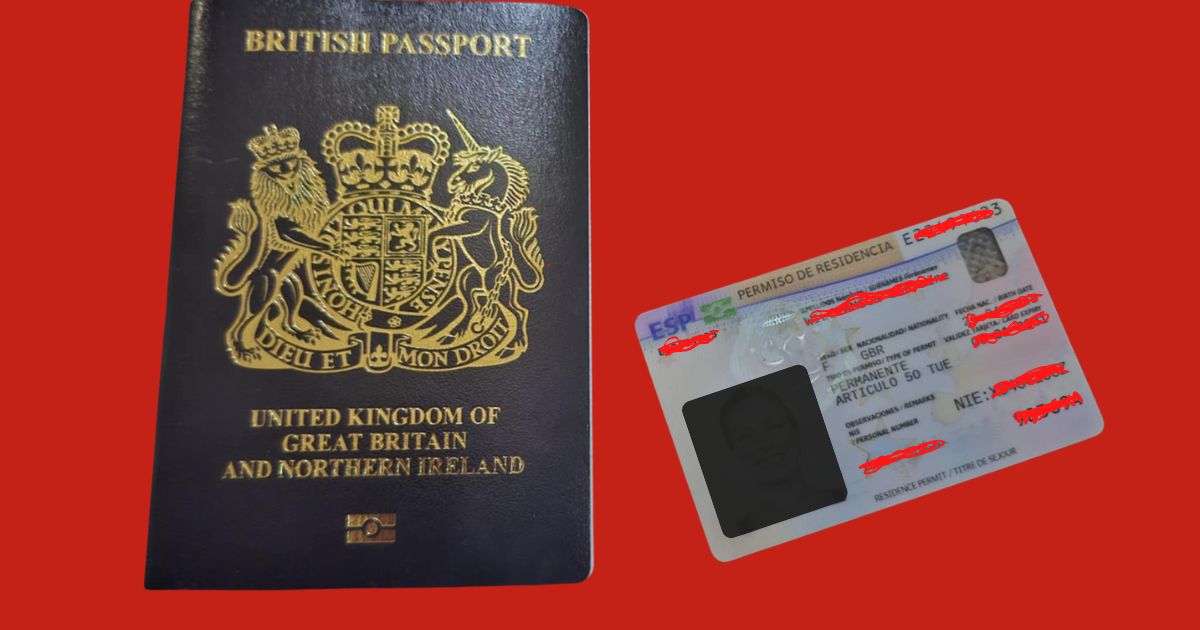
Spanish residency and TIE paperwork has always been a fact of life for British nationals here. But a fresh UK government update, published on 22 December 2025, makes the subtext explicit: the humble plastic card now carries border consequences too.
If you live in Spain, the essentials are two separate registrations. First, you register on the padrón at your town hall. Then you register on the central foreigners’ system to get (or renew) your TIE — the tarjeta de identidad de extranjero.
Why the TIE suddenly matters at the border
The EU’s Entry/Exit System (EES) began operating on 12 October 2025 and is being phased in, with full implementation expected by 10 April 2026. It replaces manual passport stamping with biometric registration for most non-EU travellers.
If you hold a valid TIE, you should be treated as a legal resident and exempt from having to register with EES when entering, leaving or travelling within Schengen. That’s the practical reason the UK guidance is pushing residents to make sure they have the right card in their wallet.
And yes, the timing is awkward. Airports across Europe have already reported long queues during the early rollout, with industry warnings about disruption as the system scales up in early 2026.
Step one: padrón — the town hall registration that unlocks everything
When you arrive (or if you’ve moved), Spain expects you to register on the padrón municipal, the local residents’ register held by your ayuntamiento. You register at your usual address, even if you rent or share. You can only be on the padrón at one address at a time. GOV.UK
Once registered, you’ll receive a certificado de empadronamiento (padrón certificate). It’s routinely requested for day-to-day admin, including access to public healthcare, school enrolment, and vehicle registration. GOV.UK
Be ready for the “fresh copy” rule. Spanish offices often ask for a padrón certificate issued in the last three months, so you may need to request an updated version even if nothing has changed.
Step two: the TIE — your residency card, fingerprints included
After the padrón comes the TIE process. You apply through your provincial Oficina de Extranjería or, depending on location and procedure, at a designated police station. The appointment normally includes fingerprinting, and you’ll need to bring the required paperwork (including your padrón certificate).
Applications can take weeks to process. Once approved, you collect the TIE from the foreigners’ office or police station, depending on where you applied.
A quick note for families: children also need their own TIE.
If you lived in Spain before 1 January 2021: green certificate vs TIE
Plenty of long-term residents still have the green certificate (the EU citizen registration document issued pre-Brexit). The UK government guidance is clear: it remains valid proof of rights under the Withdrawal Agreement within Spain, and there is even an official letter you can show if you face pushback.
But at Schengen borders, the green certificate is the wrong document for the EES era. It will not be accepted for EES purposes, and it does not exempt you from EES registration. The recommended fix is to exchange it for a TIE marked “Articulo 50 TUE”, which signals Withdrawal Agreement rights.
If you were living in Spain before 1 January 2021 but have neither a green certificate nor a TIE, the guidance says you’ll need to apply and provide evidence that you met the residency criteria at the time (for example, being on the padrón and having healthcare cover).
Renewals, address changes, and the “Autorización de Regreso” wrinkle
A TIE isn’t a once-and-done document. You must renew it when it expires, and you’re expected to update it if key personal details change, such as your address. GOV.UK
If you need to travel while your renewal is processing, Spain may require an Autorización de Regreso — permission to re-enter. It’s one of those admin details that only matters when it suddenly matters a lot.
When appointments are impossible: what the UK guidance suggests
Ask any Brit who’s tried to secure a cita previa lately, and you’ll hear the same story: refreshing booking pages, late-night logins, and the sense that the system is designed to test your will to live.
The UK government says the British Embassy and consulates have raised appointment availability with Spanish authorities. Meanwhile, the practical suggestions are to keep checking, try accessing systems using a digital ID (such as Cl@ve), and consider using a gestor or an immigration lawyer.
If you still can’t get traction, the guidance points to the formal complaint route: the central government representative in your province, and if necessary, Spain’s Defensor del Pueblo (Ombudsman).
Appeals: where the embassy steps back
If a residency application is refused, the refusal letter should explain the decision and appeal process. The UK government is blunt about its limits: consular teams can’t intervene in Spanish applications or appeals, and they can’t provide legal advice.
At that point, you’re into Spanish legal routes: a local bar association, an English-speaking lawyer, and (where relevant) specialist EU assistance services.
The simple risk to avoid as EES expands
Spain residency and TIE admin can feel like a loop: register, renew, update, repeat. But the bigger risk now is being treated like a visitor at the border because your documentation doesn’t match the system that’s taking over. With EES rolling forward towards full operation in April 2026, the least glamorous card in your wallet may be the one that saves you the most time — and the most stress — when you travel.
Source: UK Government