 Lorraine Williamson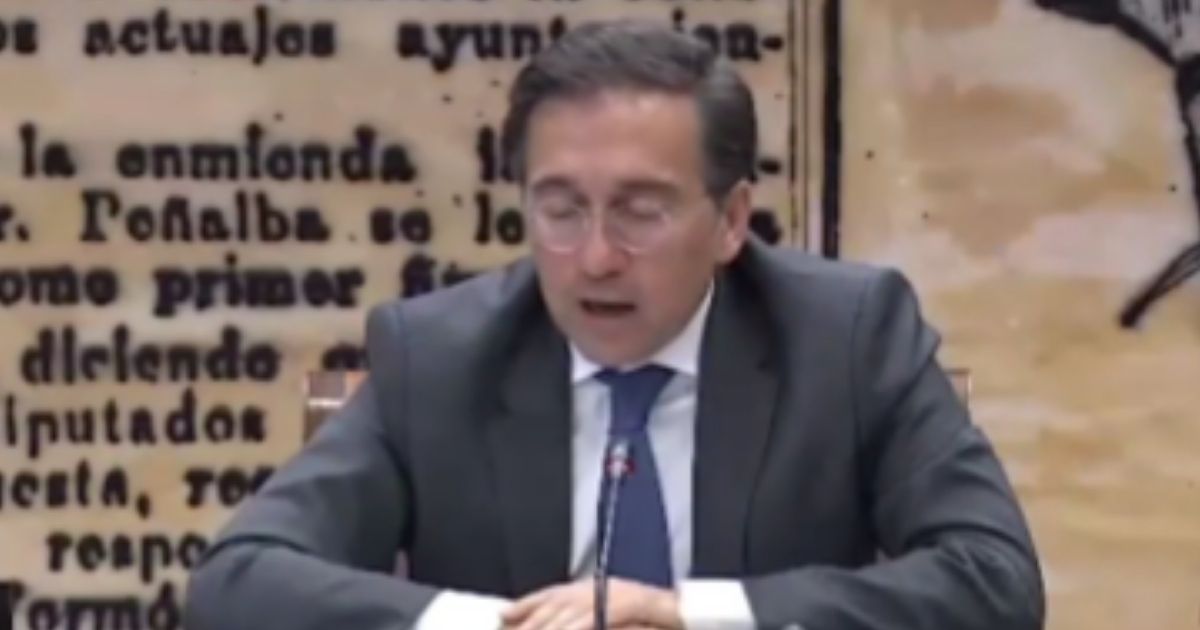
Spain has reopened its embassy in Tehran at the very moment it is sharpening its criticism of Israel’s strikes on Lebanon, a move that underlines just how far Pedro Sánchez’s government is prepared to go in setting out a distinct foreign-policy line. What might once have been treated as a routine diplomatic adjustment is now being read as something more pointed: Madrid wants a seat at the table in any push for de-escalation, and it no longer seems interested in softening its language to keep others comfortable.
Foreign minister José Manuel Albares said Spain was reopening its embassy in Iran as part of an effort to work “from all fronts” for peace, even as he condemned the latest Israeli attacks on Lebanon and accused Israel of violating international law and the newly brokered ceasefire. Reuters reported that Madrid’s decision comes as Spain continues to position itself as one of the most outspoken European critics of both the wider war involving Iran and the attacks now hitting Lebanon.
A diplomatic signal, not a routine consular move
The reopening matters because embassies are not just about visas and protocol. They are political signals. In this case, Spain is using its diplomatic presence in Tehran to show that it believes dialogue with Iran still matters, even while the region remains unstable and the ceasefire looks fragile. That is a different message from one based only on sanctions, distance, or rhetorical condemnation.
Pedro Sánchez has also kept up the pressure in public. In a post on X, he said Benjamin Netanyahu’s “contempt for life and international law is intolerable” and argued that Lebanon must be included in the ceasefire. He also renewed his call for the international community to stop looking away. That matters politically because Spain is not simply commenting on events abroad. It is trying to shape the European response.
Why Lebanon has pushed Madrid harder
Part of the answer lies in the scale of the violence. Reuters reported that Israeli strikes on Lebanon killed more than 250 people on Wednesday, prompting Albares to denounce the attacks as a breach of both international law and the truce that had raised hopes of a broader pause in the fighting. The deaths of peacekeepers and growing alarm over the humanitarian toll have made it harder for European capitals to fall back on familiar diplomatic caution.
For Spain, there is also a direct national angle. Madrid summoned Israel’s top envoy after a Spanish UNIFIL peacekeeper was briefly detained by the Israeli army in Lebanon, a case that pushed tensions beyond abstract foreign-policy disagreement and into a more immediate confrontation. That incident landed just as dozens of countries and the EU were condemning attacks on UN peacekeepers in Lebanon and warning that such acts could amount to war crimes.
Spain’s line is now broader than one crisis
This is no longer only about Lebanon. Spain has already closed its airspace to aircraft involved in the Iran conflict and has urged the European Union to suspend its association agreement with Israel. Those are not symbolic gestures. Together, they show a government trying to turn moral criticism into concrete diplomatic pressure, even if that leaves it out of step with parts of the European mainstream.
That stance has deepened strains with Washington. Reuters says Spain’s opposition to the war on Iran has worsened relations with Donald Trump’s administration, with some figures in Trump’s orbit openly calling for punitive steps against Madrid. Albares has responded by insisting Spain remains committed to NATO and transatlantic security, while also arguing that Europe may need to think more seriously about its own strategic autonomy.
Madrid is betting this line plays well at home
There is a domestic dimension too. Reuters reports that Sánchez’s anti-war position remains broadly popular in Spain, with polling suggesting strong public resistance to the conflict and a political boost for the Socialist-led government. In other words, Madrid is not only making a diplomatic calculation abroad. It is also leaning into a position that resonates at home, where many voters are more likely to reward calls for legality and restraint than demands for military alignment.
That does not make the strategy risk-free. Critics in other European capitals have accused Sánchez of grandstanding, while some allies worry that his tone complicates efforts to preserve NATO unity at a moment of wider instability. But from Madrid’s perspective, the greater risk may be silence. Reopening the embassy in Tehran while publicly condemning the strikes on Lebanon sends a clear message: Spain wants to be seen as one of the few Western governments still trying to combine diplomacy, pressure and principle in a conflict that is spilling across borders.
Why this story matters for Spain
For InSpain.news readers, this is more than a distant diplomatic row. It speaks to how Spain is defining itself internationally: less as a cautious middle-ranking EU state following the pack, and more as a country willing to take a visible, sometimes uncomfortable line on war, law and alliances. Whether that approach delivers influence or isolation will become clearer in the days ahead. For now, though, Madrid has chosen visibility over ambiguity.