 Lorraine Williamson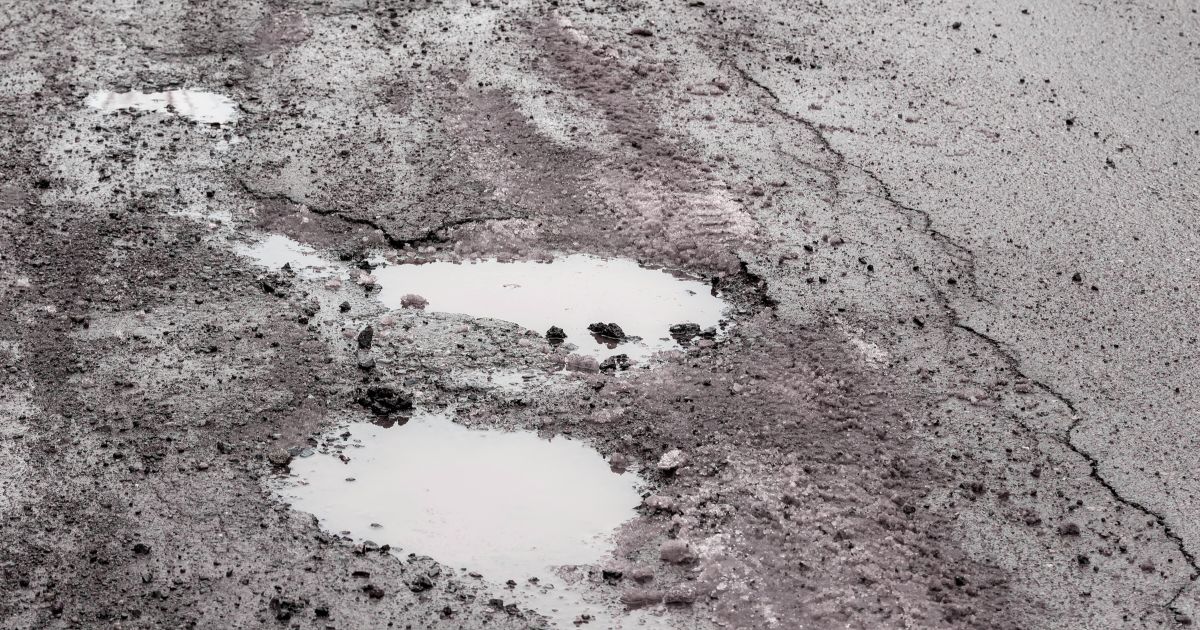
After weeks of intense rain and flooding, a new hazard is spreading across Spain’s road network: potholes that seem to appear overnight. It can feel baffling in a country known for smooth highways and well-maintained routes. But in prolonged wet spells, even good roads fail quickly.
This weekend’s disruption has been visible in the numbers. Spain’s traffic authority has been reporting widespread closures linked to flooding and snow, with dozens of roads still affected into Sunday morning.
Water gets under the surface, then traffic finishes the job
Asphalt isn’t a single slab. It’s a layered system: surface, binding layers, and a base beneath. During sustained downpours, water finds its way into tiny cracks, joints and edges. Once the lower layers are saturated, they lose strength. Heavy vehicles, braking and constant vibration then push the weakened patch past its limit.
That’s when you get the classic pattern: a soft spot forms, the surface fractures, and the first chunk breaks away. After that, it grows fast.
Drainage and shoulders are the weak points
Spain’s main roads are engineered to shed water. The problem comes when rainfall is persistent, and the drains can’t cope. Water pools at the edges, undermines the shoulder, and starts eroding from the outside in.
Flooding makes it worse. When water flows across the road, it can scour the surface, wash out verges and damage the foundations. Even when a route reopens, the structure underneath may still be compromised.
Live maps tracking storm-hit routes have shown how widespread closures and restrictions have been during Storm Marta, reinforcing the scale of stress on the network.
Heat damage from previous seasons plays a part
Spain’s climate creates a second ingredient. Long, hot summers expand and contract road materials. That can leave micro-cracks you never notice in dry weather. A wet winter then turns those cracks into water entry points.
The result is not just isolated potholes, but whole stretches of surface “breaking up”, especially on older secondary roads.
Where drivers are most at risk right now
Risk tends to spike on:
- secondary roads and rural routes
- roundabouts, junctions and braking zones
- road edges and lanes used heavily by lorries
- areas that have seen repeated flooding or standing water
In Andalucía, the regional government has been reporting hundreds of significant incidents on its road network during the storm sequence, underlining how rapidly damage can accumulate in a sustained event.
If you hit a pothole, what to do next
First, get to a safe place. Then document everything: the pothole itself (wide and close), your wheel/tyre damage, and the exact location. Report it promptly to the authority responsible for that road.
If you’re claiming, contact your insurer quickly and keep all evidence and receipts. Public consumer guidance in Spain also stresses the importance of documenting damage and notifying your insurer as soon as possible.
Who is responsible for repairs?
It depends on the road. State roads fall under the national highways authority, while regional or local administrations manage many others. If you need to make a formal maintenance-related submission on state roads, Transport’s e-office is the correct channel.
A safer week on the roads depends on one thing
When storms arrive back-to-back, potholes become a symptom of a bigger issue: waterlogged ground and infrastructure under pressure. The faster the weather stabilises, the faster repair teams can catch up.
Until then, the best advice is simple. Slow down on familiar roads. Treat puddles with suspicion. And assume that the smooth stretch you drove last week may not be the same road today.
Sources: EFE, El Diario, SEDE, Comunidad de Madrid