 Lorraine Williamson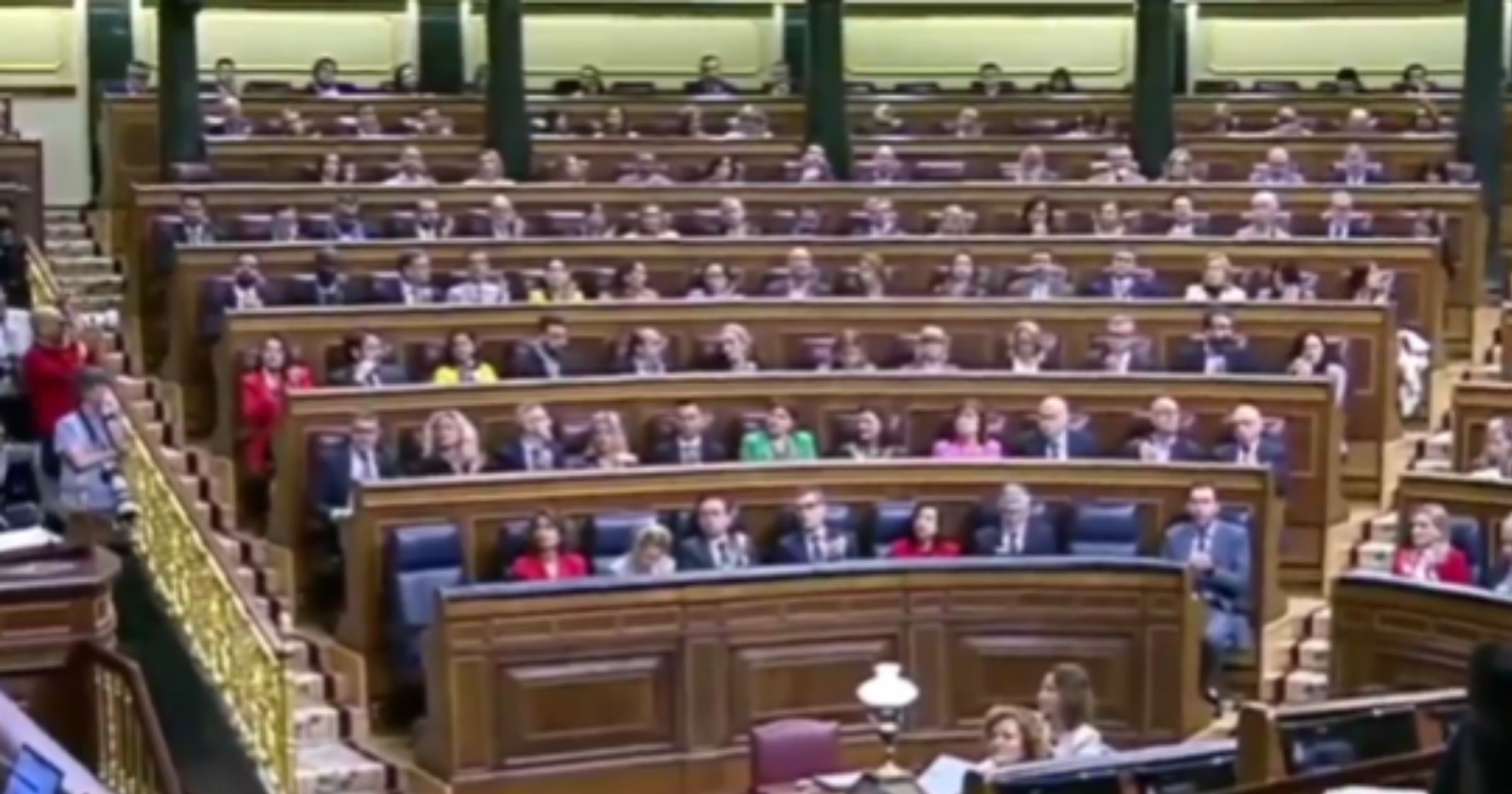
Pedro Sánchez used a combative appearance in Congress on Wednesday to defend both his rejection of the war involving Iran and the government’s €5 billion anti-crisis package, arguing that Spanish families and businesses should not be forced to pay the price for an international conflict they did not cause.
Reuters reported that the prime minister said global citizens should not bear the economic fallout of the war, while Spanish media described the session as one of the most politically charged debates of the week.
The clash in parliament was about more than foreign policy. It was also a battle over how Spain should respond at home, with the government defending temporary VAT cuts on fuel, electricity, and gas, along with subsidies for the sectors hit hardest by rising energy costs. The package, approved last week, includes 80 measures worth around €5 billion and is designed to cushion the impact of the Middle East conflict on households and the wider economy.
Congress turns into a political showdown
Sánchez went on the offensive in the chamber, according to El País, presenting himself as consistent in opposing what he described as an illegal war while accusing the right of ambiguity and political opportunism. He drew explicit comparisons with the Iraq war and argued that Spain should not repeat the mistakes of 2003. El País also reported that the debate was used by the government to underline a broader contrast with the PP and Vox on foreign policy, energy and the role of the state in protecting citizens from economic shocks.
Cadena SER said Sánchez accused the “promoters of the illegal war” of causing a “disaster” and criticised what he called the “cowardly silence” of PP and Vox. He also defended Spain’s refusal to allow the United States to use the military bases at Rota and Morón for offensive operations linked to the conflict, presenting that decision as an example of sovereign foreign policy grounded in international law.
Feijóo’s reply: “No to war and no to you”
The sharpest line of the afternoon came from PP leader Alberto Núñez Feijóo, who replied: “No a la guerra y no a usted.” El País and Cadena SER both reported that Feijóo rejected the war but also accused Sánchez of using the international crisis to distract from domestic weakness and unfinished business at home. He questioned the coherence of the government’s position and kept some distance from the decree that contains the emergency measures.
That exchange gave the session a familiar Spanish parliamentary rhythm: broad agreement on rejecting war, but bitter disagreement over everything around it. El País noted that the overwhelming majority of Congress opposed the conflict itself, yet the debate still descended into a fierce confrontation over political credibility, military policy, and who should pay for the economic consequences.
What the government package actually includes
The home-front measures remain central to the story because they are what most readers will feel directly. The government package includes a reduction of VAT to 10% on electricity, gas, petrol, and diesel, alongside other tax cuts and targeted fuel support for transport professionals, farmers, fishers, and other heavily exposed sectors. Vulnerable households are also covered by measures including the extension of the social electricity tariff and protections against energy disconnection.
Reuters reported that Sánchez linked the package directly to the price shock triggered by the conflict, saying the war had already wiped around €100 billion from the market value of Spanish companies and was pushing up the cost of energy. The government’s argument is simple: if the war is external, the first response at home should be to shield families, workers, and productive sectors from the inflationary hit.
Not everyone on the left is satisfied
The debate also exposed tension within and around the government’s broader parliamentary bloc. Cadena SER reported that some partners complained that the anti-crisis response relies too heavily on tax cuts and not enough on stronger intervention, such as caps on key prices or wider housing protections. That criticism matters because it shows Sánchez is not only fighting the opposition. He is also trying to keep his own support base aligned behind an emergency response assembled under pressure.
That leaves the package politically useful but not politically comfortable. It gives the government a practical answer to rising energy costs, but it also opens a second debate over whether temporary relief is enough, especially if the wider crisis drags on. That is an inference from the positions set out publicly by the government and its allies.
A debate shaped by war, but aimed at voters at home
By the end of the session, the big picture was clear. Sánchez wanted Congress — and the public — to see him as the leader saying no to war while trying to protect households from the blowback. Feijóo wanted voters to see a prime minister using international turmoil to mask political fragility. The result was a debate that may have started with Iran, but ended up being just as much about inflation, public trust, and the battle for the domestic narrative in Spain.