 Lorraine Williamson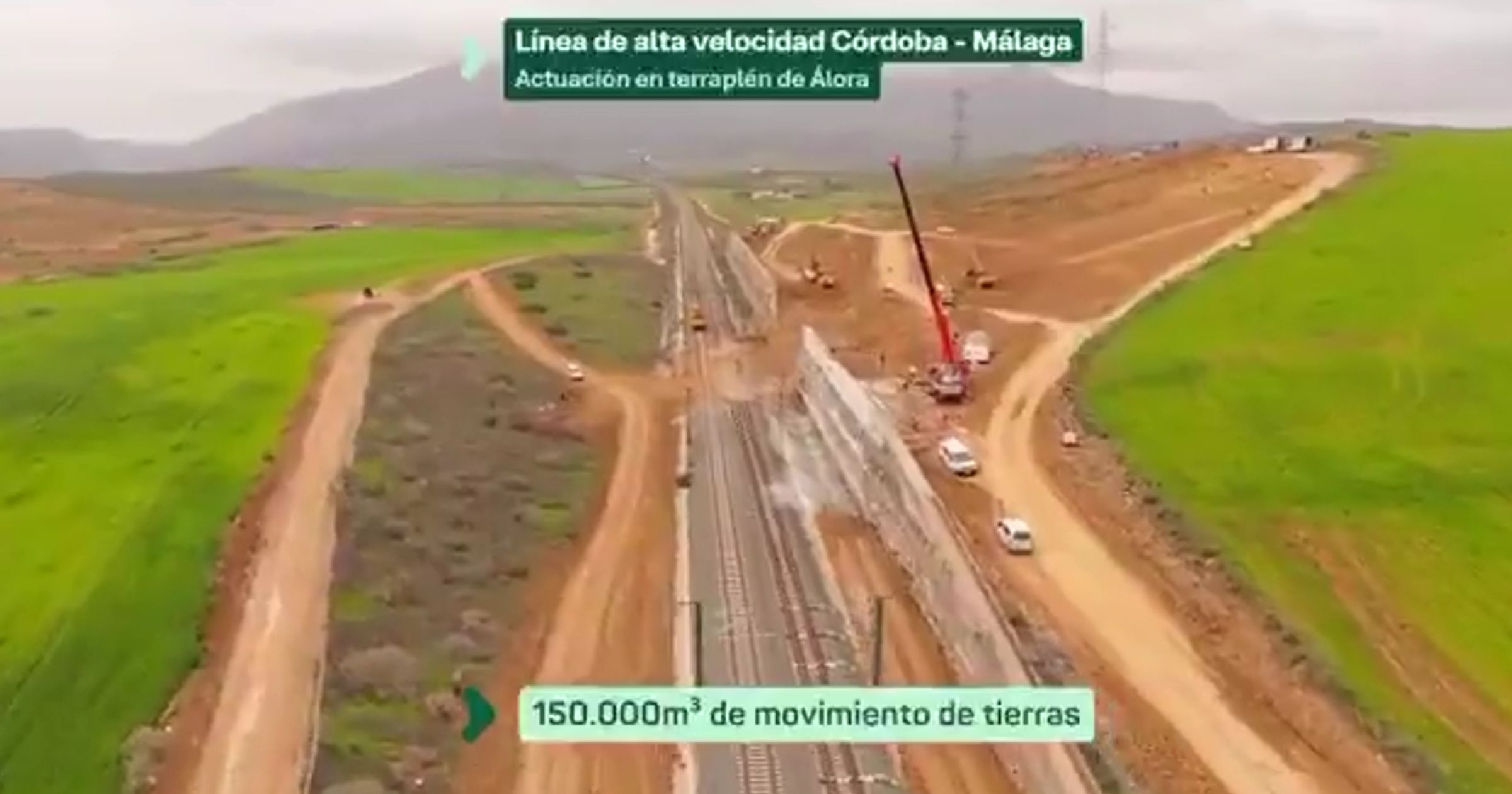
The row over the broken Madrid–Málaga high-speed link has sharpened again, with Transport Minister Óscar Puente publicly defending the repair works at Álora as pressure grows over the impact on Easter travel and the Costa del Sol economy.
Puente used social media on Sunday to publish videos and photos of the site, saying they showed the “magnitude and complexity” of the works. He also challenged Málaga mayor Francisco de la Torre to visit the site, prompting the mayor to reply that he had already been there earlier this month and would be happy to return.
Why is the Málaga AVE still not fully back?
Because the damage near Álora has proved more serious than first expected. Adif has already said the full reopening of the Madrid–Málaga high-speed line will not happen until the last week of April, after fresh complications linked to the collapse of a retaining wall and the instability of the surrounding ground. The infrastructure manager has defended the delay as a safety issue, not a political choice.
That is the core of the story. What began as a major rail disruption has now become a test of confidence in how Spain handles one of Andalucía’s most important transport routes.
The political fight is getting louder
What has changed since last week is the tone. The engineering problem is still the same, but the public argument has become more personal and more political.
According to Cadena SER and other Spanish outlets, Puente’s latest posts were meant to show that the works cannot simply be accelerated by demand or pressure. Reports say the operation involves around 150,000 cubic metres of earth, with 75 workers and 25 machines active around the clock. The minister’s point is that the scale of the repair explains the delay.
But in Málaga, that defence is not ending the criticism. The city, the province and the wider tourism sector are still asking why one of Spain’s most important high-speed routes will remain disrupted so deep into spring.
Why the timing matters so much
This is not just a rail story. It is an Easter story, a Costa del Sol story and a business story.
El País has reported that the delay is raising alarm across the tourism sector because the direct line will still not be fully restored for one of the busiest travel periods of the year. The disruption is especially sensitive because Málaga depends heavily on domestic visitors arriving quickly and conveniently from Madrid and other connected cities.
The impact goes beyond holidaymakers. Hotels, restaurants, short-let businesses and local operators all feel the loss of direct rail capacity, especially when uncertainty over tickets and timings makes travellers hesitate. That is why the argument has moved beyond inconvenience and into the language of economic damage.
Safety versus frustration
Adif’s case is clear: the works are difficult, the terrain is unstable, and reopening too early would be irresponsible. El País reported that the rail manager is reviewing progress every 15 days and insists the timeline is tied to physical and safety constraints at the site.
There are really two truths here. The works do appear technically complex. But the frustration in Málaga is also real, especially as Semana Santa approaches and no quick fix is in sight.
What travellers need to know now
For now, the key point is that the Madrid–Málaga AVE route is still operating with disruption, and full normality is not expected before late April. Travellers should continue to expect alternative arrangements on part of the journey and possible knock-on complications around one of the busiest periods in the spring calendar.
That practical reality matters more than the social media exchange. However sharp the political clash becomes, passengers still want the same answer: when the direct high-speed link will finally be fully back.