 Lorraine Williamson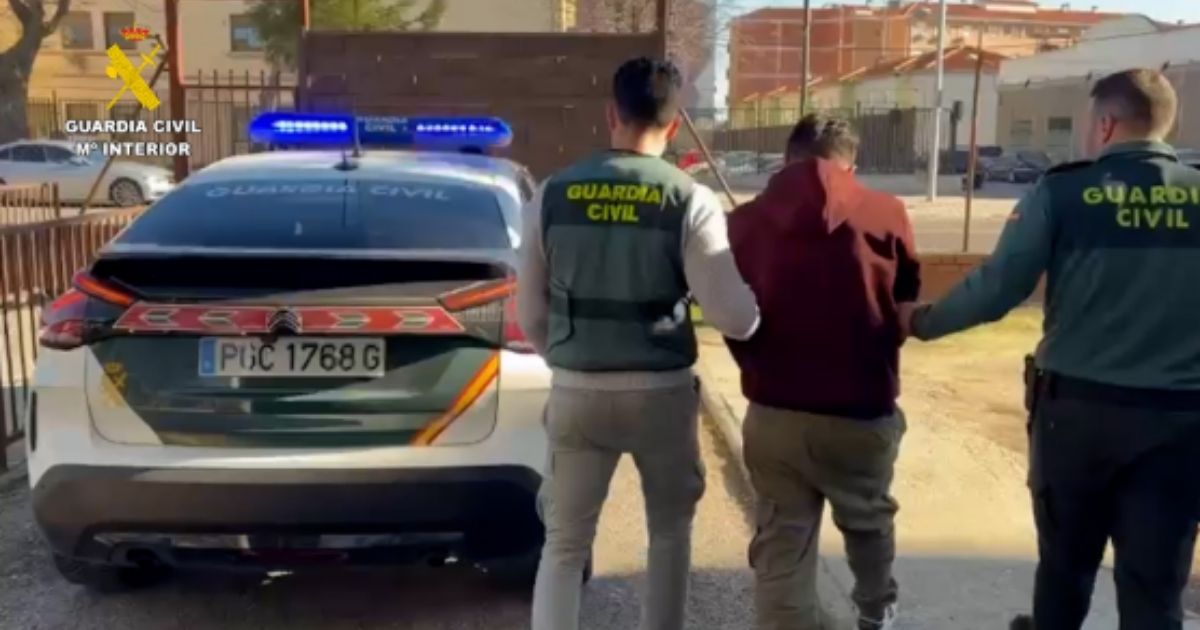
A violent criminal group that allegedly posed as parcel delivery drivers to enter occupied homes has been broken up in Spain, according to the Guardia Civil. The force said the suspects wore reflective vests, pretended to be delivery workers, and then forced their way inside properties before threatening residents with firearms and stealing cash, jewellery, and other valuables.
The case stands out because of the method. This was not a distraction theft or doorstep scam, but an alleged pattern of organised, violent break-ins aimed at catching people off guard in their own homes. The Guardia Civil said victims were surprised at the door and then intimidated once the group got inside.
Where the gang operated
Investigators say the group operated in Almería, Granada and Toledo. The official Guardia Civil note describes the suspects as an extremely violent group, while Spanish media reports say the arrest phase took place after investigators linked several robberies with the same method.
Three people have been arrested in total. According to the Guardia Civil, two were detained in Madrid and the third in Aguadulce-Roquetas de Mar, in Almería. Two of them have been remanded in provisional custody.
Guns, gags and stolen vehicles
The Guardia Civil says the suspects acted in a coordinated way and showed a high level of aggression towards the victims. Once inside homes, they allegedly used firearms and, in some cases, even gagged residents while they searched for valuables.
Investigators also say the group used stolen vehicles or cars fitted with false number plates to carry out the robberies. According to the official account, they also took extra measures to avoid police detection, including living in an office block not officially classed as housing, which made tracking and surveillance harder.
A routine moment exploited
There is an obvious public-interest reason this one will land with readers. Parcel deliveries have become such a normal part of everyday life that a person in a reflective vest at the door does not automatically raise suspicion. That is what makes the alleged method so unsettling. It exploited a routine moment that many households would normally treat as harmless. This is an inference based on the operational method described by the Guardia Civil.
It also gives the story a wider relevance beyond the provinces named in the case. Even readers far from Almería, Granada, or Toledo will recognise the basic set-up immediately: the ring at the door, the appearance of legitimacy, and the assumption that it is safe to open.
Investigation still open
The Guardia Civil says the investigation remains open and further arrests have not been ruled out. The detainees are being investigated for robbery with violence and intimidation in homes, illegal weapons possession, illegal detention, membership of a criminal group, theft, falsifying number plates, vehicle theft or unauthorised vehicle use, and other related offences.
For now, the case is another reminder that some of Spain’s most effective crime stories are the ones that tap directly into daily life. This one does exactly that: a familiar doorstep scenario turned, police say, into a violent entry point for armed robbery.
Violent gang arrested in Andalucia after luxury villa robberies