 Lorraine Williamson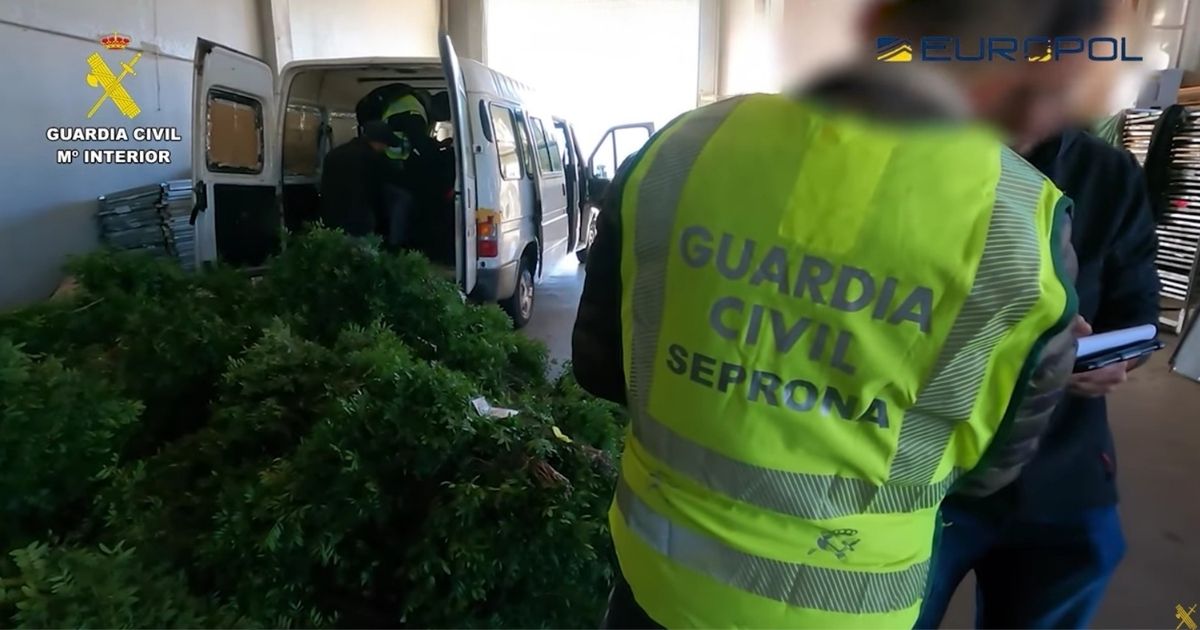
Spain’s environmental crime stories do not always begin with the kind of plant most people would struggle to name. Yet this week’s Guardia Civil operation in Catalonia shows how a native Mediterranean shrub became the centre of an alleged international criminal business worth almost €32 million.
Investigators say ten people were arrested after a long-running operation into the illegal extraction of lentisco from natural areas in Tarragona for export to the Netherlands.
What makes this case stand out is not only the money. It is the scale. Guardia Civil says the network allegedly removed at least 991 tonnes of lentisco between July 2020 and December 2023, though investigators believe the activity had been running since at least 2018. The plant was reportedly taken from areas including Baix Ebre, part of the Natura 2000 network, and the Serra de Llabería, a protected natural area.
A shrub with growing commercial value
Lentisco, or Pistacia lentiscus, is not a niche botanical footnote in Mediterranean ecosystems. Guardia Civil describes it as a shrub of high ecological value that provides food and shelter for birds and insects, while also being increasingly sought after in gardening, ornamental floral work and parts of the pharmaceutical sector because of its antimicrobial, healing and anti-inflammatory properties. That demand has helped turn it into what some Catalan coverage has effectively described as a form of “green gold”.
That commercial pull appears to have transformed a native plant into a profitable export commodity. According to investigators, the shrub was allegedly collected in large quantities and without authorisation, then transported by van to an industrial site in Reus, from where exports to the Netherlands were organised. Europol supported the operation, particularly in information-sharing with Dutch authorities to help identify the destination of the shipments.
From protected landscapes to an alleged laundering network
The case goes far beyond environmental damage. Guardia Civil says the group established a business and financial structure designed to conceal and launder the proceeds from the trade. During the operation, officers searched 11 homes and company premises in Barcelona and Tarragona, seized more than €160,000 in cash, blocked €1 million in accounts, and froze 22 cars and 23 properties linked to the suspects. Officers also found 6,500 kilos of lentisco at the industrial site where the plant was being received.
That breadth matters because it shifts the story from plant theft to organised economic crime. The allegation is not simply that protected land was being stripped. It is that an environmental resource was turned into a cross-border business model, with the profits allegedly moving through a corporate structure designed to disguise their origin.
The human cost behind the profits
Investigators also say the harvesting relied on small groups of workers, often people in vulnerable situations. Guardia Civil estimates that around 250 people may have carried out lentisco removal work for the companies involved without being registered with Spain’s Social Security system. The case also includes the investigation into the death of a man linked to the network in December 2025 while collecting lentisco.
That gives the case another layer. It is not only about illegal extraction from protected landscapes. It is also about the type of precarious labour that can flourish when environmental demand, weak oversight and organised profit intersect.
Why the ecological damage matters
The Guardia Civil release says an initial expert report by Seprona values the environmental damage at more than €3.77 million. Investigators argue that repeated extraction of lentisco contributes to habitat fragmentation, reduces carbon capture capacity and lowers biodiversity. They also warn that indiscriminate collection compacts soil, accelerates erosion and leaves waste that can raise wildfire risk.
That is a reminder that environmental crime in Spain is not always dramatic in visual terms. It can look like repeated removals of native species, year after year, until ecosystems are weakened and the losses become harder to reverse. In a region already dealing with drought pressure, land degradation and wildfire risk, those impacts are not minor.
A different kind of organised crime story
The Guardia Civil investigation began in late 2023, when Seprona inspected a warehouse in Reus, seized four tonnes of lentisco and gathered documents that helped map the group’s alleged modus operandi. What followed was Operation Lentina, a case that now reads less like a conventional nature offence and more like a hybrid of environmental looting, labour abuse and asset laundering.
For readers used to organised crime being framed around drugs, weapons or counterfeit goods, this case shows a different frontier. When protected natural resources become commercially valuable enough, landscapes themselves can become targets. And when demand comes from abroad, the damage may begin in Spanish scrubland, but the business quickly stops being local.
Why this case could resonate beyond Tarragona
This is one of those stories that may travel well beyond Catalonia because it touches several wider debates at once: environmental protection, exploitation of vulnerable labour, the black economy and Europe’s appetite for ornamental and specialist plant products. The alleged profits are large enough to attract attention. The ecological consequences are serious enough to make it more than a crime brief.
If the allegations are borne out, the case will stand as a stark example of how environmental crime in Spain can operate with the sophistication of any other illicit trade. The product just happened to be a shrub rather than a drug.