 Lorraine Williamson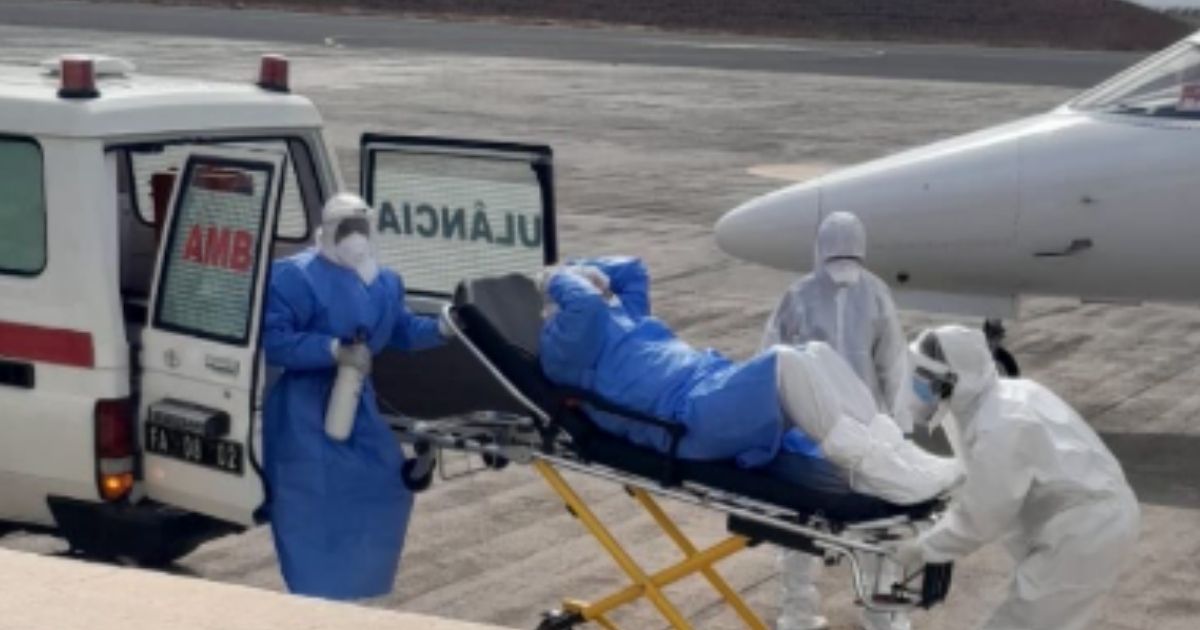
UPDATED 1.30 pm: WHO confirms new case in Switzerland linked to the ship as international contact tracing expands
A cruise ship linked to a deadly hantavirus outbreak is heading towards the Canary Islands, but the decision has opened a sharp dispute between Spain’s central government and regional leaders.
The MV Hondius, a Dutch-flagged expedition cruise ship, has been stranded off Cape Verde after several cases were linked to the vessel. Spain’s Health Ministry has said it will receive the ship in the Canary Islands on humanitarian and international-law grounds, following international health coordination. Reuters reported that medical teams would examine and treat passengers and crew on arrival.
Canary Islands president objects to docking
The strongest new development is political. Canary Islands president Fernando Clavijo has publicly rejected the planned docking, saying the regional government has not received enough technical information to reassure the public.
Clavijo has called for urgent talks with Spain’s Prime Minister Pedro Sánchez. Reuters reported that the regional government opposes allowing the vessel to dock in the archipelago because of concerns over public safety and a lack of clear technical criteria.
Spanish state broadcaster RTVE has reported that Tenerife could be the intended port, although final operational details may still depend on health and maritime authorities.
What is known about the outbreak
The World Health Organisation says three suspected hantavirus patients have been evacuated from the ship to the Netherlands. Earlier WHO reports had linked the outbreak to several deaths, but the latest update focuses on confirmed and suspected cases as investigations continue.
The vessel has been carrying close to 150 passengers and crew from multiple countries. Those remaining on board have reportedly been kept in isolation while medical teams manage the situation.
The case is unusual because it involves a cruise ship, several jurisdictions and passengers who have already travelled through different countries.
New confirmed case in Switzerland as contact tracing expands
The World Health Organisation said on Wednesday that Swiss authorities have confirmed a hantavirus case linked to the ship.
The patient, a passenger from the MV Hondius, sought medical care in Zurich after being alerted to the outbreak by the cruise operator. He is now receiving treatment in hospital.
According to the WHO, a total of eight cases have now been identified, with three confirmed through laboratory testing.
Health authorities have also confirmed that the virus involved is the Andes strain, one of the few types of hantavirus known to allow limited human-to-human transmission in close-contact settings.
The WHO said it is now working with multiple countries under international health regulations to trace contacts, monitor those potentially exposed and limit any further spread.
Andes strain raises concern
South African health authorities have identified the Andes strain of hantavirus in two linked cases. This detail matters because the Andes strain is one of the rare hantavirus types that can spread between humans through close contact.
Reuters reported that the strain was found in two people linked to the ship. Health experts stress that human-to-human transmission remains rare, but the finding explains why authorities are handling the case with caution.
What is hantavirus?
Hantavirus is usually linked to contact with infected rodents. People can become infected by inhaling particles from rodent urine, droppings or saliva.
Symptoms can become serious, especially when the virus affects the lungs. Treatment focuses on hospital support, oxygen and intensive care where needed.
Most hantavirus strains do not spread easily between people. However, the possible involvement of the Andes strain is why this outbreak is being treated differently.
Why Spain is involved
Spain says it has a duty to help under humanitarian and international obligations. The Canary Islands are geographically closer than mainland Spain and have major port and hospital infrastructure.
However, the regional government argues that local authorities need clearer information before any docking takes place. That tension has turned a health response into a political dispute.
The next steps will depend on medical assessments, ship movement, port planning and coordination between Spain, the WHO, European authorities and the Canary Islands government.
A health response under close watch
For now, this is not being treated as a wider public outbreak in the Canary Islands. The focus remains on the ship, its passengers and crew, and any people who may have had close contact with confirmed cases.
Even so, the case will be watched closely. It brings together public health, maritime law, regional politics and international responsibility at a moment when Spain’s islands are again at the centre of a global travel story.