 Lorraine Williamson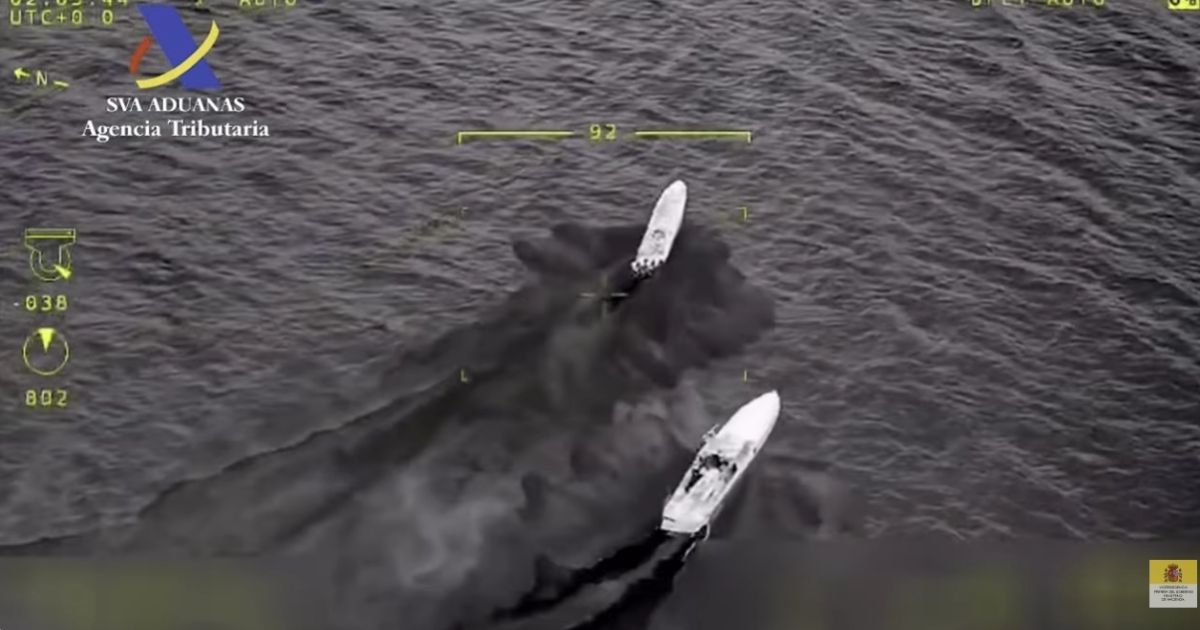
A major Cádiz narcolancha seizure has added fresh pressure to Spain’s long-running battle against drug trafficking on its southern coast after customs officers intercepted a speedboat carrying three tonnes of hashish following a pursuit at sea. Spanish tax agency officials said four people were arrested and later remanded in custody.
According to Agencia Tributaria, the operation was carried out by the Servicio de Vigilancia Aduanera, which detected the semi-rigid boat as it headed towards the Bay of Cádiz. When officers moved in, the vessel tried to flee, triggering a chase that ended with customs officers boarding the narcolancha at sea.
High-powered boat intercepted off the Cádiz coast
Officials said the boat was equipped with four 300-horsepower engines, a setup typical of the high-speed craft often used by trafficking networks operating in the Strait area and along the Andalucía coast. After the vessel was intercepted, officers found around three tonnes of hashish on board.
The four people on board were arrested on suspicion of offences against public health and smuggling prohibited goods. Hacienda said all four have since been sent to prison while the investigation remains open.
Why narcolanchas remain a major issue in southern Spain
Narcolanchas have become one of the clearest symbols of organised trafficking along Spain’s southern coastline. Their speed, shallow draft and power make them difficult to intercept, especially in areas with heavy maritime traffic and long stretches of coast. Cádiz has repeatedly been at the centre of this problem, with police, customs and Guardia Civil operations regularly targeting boats bringing drugs towards the Andalucian coast.
What keeps these stories in the headlines is not only the amount of drugs involved, but the persistence of the routes. Even when large quantities are intercepted, the wider pattern points to continued pressure on the Strait and Bay of Cádiz as key gateways for trafficking networks moving hashish into mainland Spain and onwards into Europe. That is why each seizure also tells a broader story about enforcement, demand and the resilience of smuggling structures in the south.
Another reminder of the scale of trafficking routes
This latest interception may not have the international logistics angle of some recent cocaine cases, but it is still significant. Three tonnes is a substantial haul, and the fact that the vessel was stopped only after a pursuit underlines the risks and resources involved in these operations. The continued use of heavily powered narcolanchas also shows that the trafficking model remains active despite years of tighter surveillance and political attention.
For readers in Andalucía, it is another reminder that the drugs trade is not an abstract issue happening elsewhere. It is being fought out in real time off Spain’s southern shores, often just miles from busy beaches, ports and residential areas.