 Lorraine Williamson
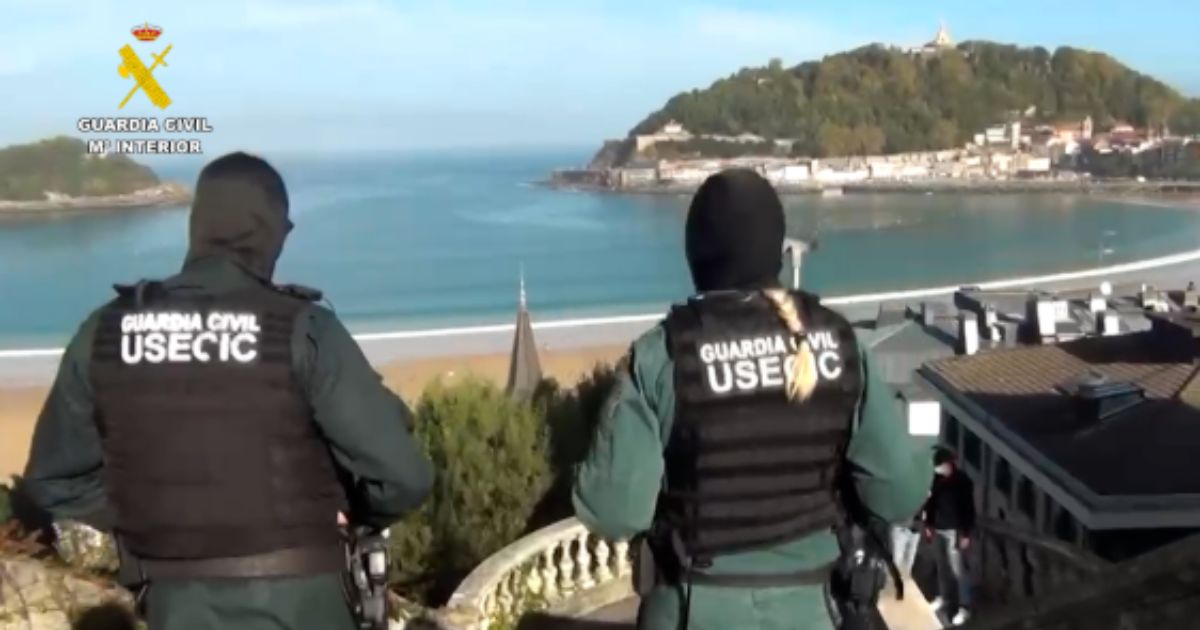
Four people have been arrested in terrorism-related investigations across Spain, including one in the Costa del Sol town of Fuengirola. The Guardia Civil says the suspects were involved in online radicalisation and extremist propaganda, with investigators uncovering material promoting violence and the alleged use of artificial intelligence to support recruitment and indoctrination.
The arrests were announced on Friday 20 November following operations in San Sebastián, in the Basque Country, Vilanova i la Geltrú near Barcelona, Fuengirola in Málaga province, and the autonomous city of Melilla. Three suspects were detained in the first set of investigations, while a fourth, described as a young man, was arrested in a separate counterterrorism operation in Melilla.
According to the Guardia Civil’s official statement, investigators believe the three suspects arrested on the mainland had become increasingly radicalised over several years through exposure to terrorist propaganda online. The material examined included content associated with Daesh, also known as Islamic State, and Hamas, which investigators say was being used to encourage extremist beliefs and terrorist indoctrination.
The authorities have not publicly identified the suspects or provided detailed information about the individual arrested in Fuengirola. Nor have they established in their announcement that the four detainees were operating together as a single organisation.
Artificial intelligence used in radicalisation
One of the most concerning aspects of the investigations is the reported use of artificial intelligence to develop and improve online radicalisation techniques. The Guardia Civil says suspects used AI alongside extremist multimedia material, although its announcement does not specify which applications were involved or precisely how the technology was deployed.
Investigators also identified videos in which suspects allegedly expressed support for jihadist ideology while displaying bladed weapons. Other material examined during the operations included content justifying violence and the execution of attacks, which authorities believe could encourage further radicalisation among people exposed to it.
The findings highlight how extremist propaganda is increasingly distributed through digital platforms, where videos, messaging services and other online material can reach audiences far beyond traditional recruitment networks. Artificial intelligence adds another potential dimension, although the Guardia Civil has not released sufficient technical details to establish the extent of its use in these particular investigations.
Separate arrest in Melilla
The fourth arrest took place during a separate Guardia Civil counterterrorism operation in Melilla, the Spanish autonomous city on the North African coast. Investigators accuse the young man detained there of actively spreading jihadist ideology through social media platforms, particularly those popular with younger users.
Police say he distributed substantial quantities of extremist multimedia material, raising concerns about its potential influence on young people who may be vulnerable to online recruitment. The Guardia Civil considers this type of propaganda especially dangerous because repeated exposure to messages supporting violence can contribute to the radicalisation of susceptible individuals.
The Melilla investigation forms part of the same announcement but was not described as a joint operation with the arrests in Fuengirola, San Sebastián and Vilanova i la Geltrú. The authorities have not disclosed whether any direct personal or operational links exist between the four suspects.
Fuengirola arrest brings investigation to the Costa del Sol
The detention in Fuengirola gives the investigation particular relevance to residents of Málaga province and the wider Costa del Sol. However, the Guardia Civil has not disclosed the suspect’s nationality, age, residential circumstances or alleged individual role in distributing extremist content.
There has also been no official announcement identifying a specific terrorist target in Fuengirola or suggesting that an attack was imminent in the town. The information released concerns suspected radicalisation, propaganda and offences linked to terrorism rather than a confirmed operational plot against local residents or businesses.
The distinction is important because counterterrorism investigations can involve several different types of alleged activity, from distributing propaganda and encouraging violence to recruitment or more direct operational support. The public information available in this case does not establish which specific allegations apply to the individual detained in Fuengirola.
Spain foils alleged pro-Russian cyberterror cell
Spanish intelligence and FBI assisted investigations
The Guardia Civil confirmed that cooperation with Spain’s National Intelligence Centre (CNI) and the United States Federal Bureau of Investigation (FBI) contributed to the success of the operations. The authorities have not explained the precise role played by either organisation or whether their involvement related to all four arrests.
Spain has maintained its national anti-terrorism alert at level four out of five since June 2015, reflecting a high assessed threat level. The Guardia Civil says its counterterrorism work includes investigating individuals and organisations suspected of providing material, financial or other support for terrorist activities, as well as those involved in propaganda and recruitment.
The latest arrests underline the continuing importance of monitoring online radicalisation, particularly where extremist organisations seek to reach younger audiences through digital content. Investigators have not announced further arrests or disclosed the suspects’ judicial status, and the allegations remain subject to investigation and any subsequent court proceedings.