 Lorraine Williamson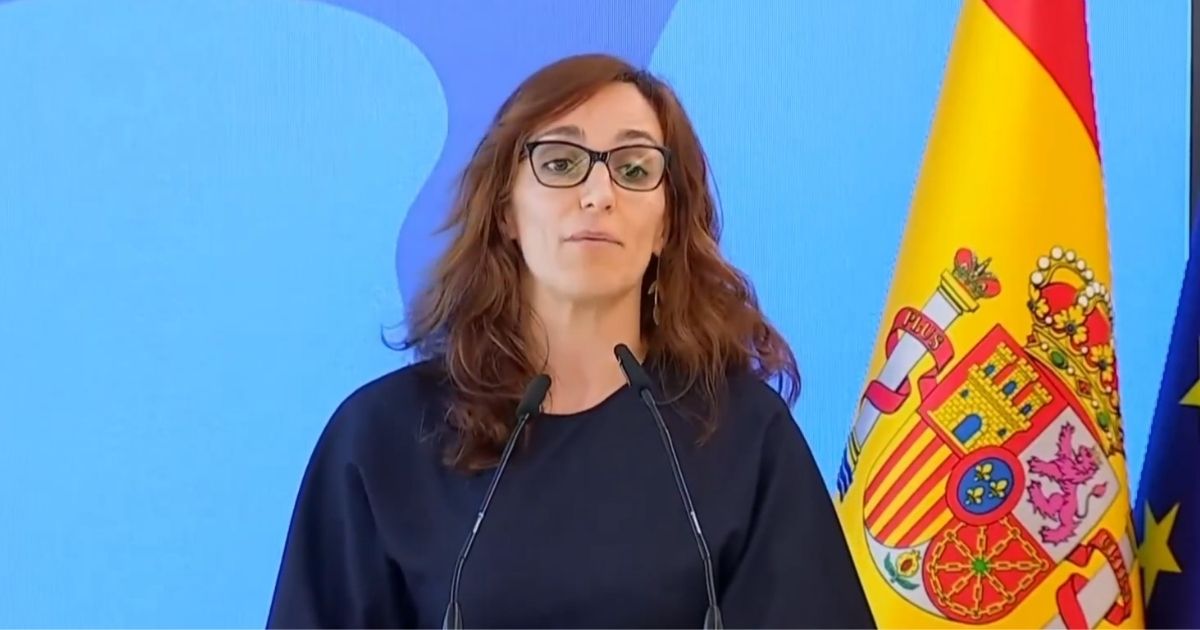
Spain has pushed back sharply after reports that the US administration wanted information about the euthanasia case of Noelia Castillo, turning a deeply sensitive Spanish case into an unexpected international row. The reaction from Madrid was swift, with Health Minister Mónica García accusing Donald Trump of fuelling an “ultra” agenda and defending Spain’s right to make its own laws on assisted dying.
The dispute centres on the case of Noelia Castillo, a 25-year-old Catalan woman whose request for euthanasia became the subject of a long legal battle. According to reporting in Spain, her father, backed by the conservative legal group Abogados Cristianos, tried for months to stop the procedure, but multiple judicial instances upheld her legal capacity and her right to proceed. El País reported that the euthanasia was ultimately carried out 601 days after it was first authorised.
Why the case has exploded again
The issue flared up this week after reports, first amplified via US conservative media and then picked up in Spain, suggested that the US Embassy in Madrid had been asked to gather information on whether vulnerable people had been properly protected in Castillo’s case. Spain’s Health Ministry said it had received no official communication, but the political reaction was immediate.
Mónica García responded by telling Trump to stop “feeding the ultra agenda”, while also attacking the idea of outside interference in a matter governed by Spanish law. Servimedia reported that she went further, accusing Trump of supporting human rights violations elsewhere while questioning a legal process in Spain that had already passed through courts and medical oversight.
A sovereignty issue as well as a moral one
For the Spanish government and many supporters of the euthanasia law, this is no longer only about one tragic case. It has become a question of sovereignty, disinformation and whether foreign political actors should weigh in on one of Spain’s most divisive social debates. El País reported that the case has been surrounded by false claims online, including allegations linked to abuse and organ trafficking, which Catalan authorities describe as part of a wider campaign of disinformation.
That helps explain why the response from Spain was so forceful. García’s message was not simply a defence of euthanasia in principle. It was also a defence of Spain’s institutions, from its courts to its healthcare professionals, and of the legal framework created when euthanasia was approved in 2021.
Why this matters in Spain now
The timing is politically awkward because Spain is already debating how euthanasia should work in urgent cases and whether delays in the process are undermining the law’s original intent. El País reported just last week that the Health Ministry is preparing changes to speed up the procedure in urgent situations and strengthen the role of nursing staff, showing that the law remains very much alive as a political and healthcare issue.
That means the Trump row lands at a moment when euthanasia is not a settled issue in Spain, even if the law itself is in force. The case of Noelia Castillo has become a symbol for both sides: for supporters, it is about autonomy and dignity; for opponents, it is about vulnerability and safeguards. The US angle has now added a fresh layer of political tension. This is an inference based on the current Spanish coverage and official reaction.
Spain’s message was clear
The core message from Madrid is that Spain considers this its own matter. García’s public response, echoed by other Spanish voices, was designed to shut down the idea that Washington should act as an external referee in a case already examined by Spanish judges and doctors.
Whether the row fades quickly or grows into a wider diplomatic talking point may depend on whether there is any formal US follow-up. For now, though, the case has already shifted from a painful domestic legal struggle into a broader argument about rights, politics and national autonomy.