 Lorraine Williamson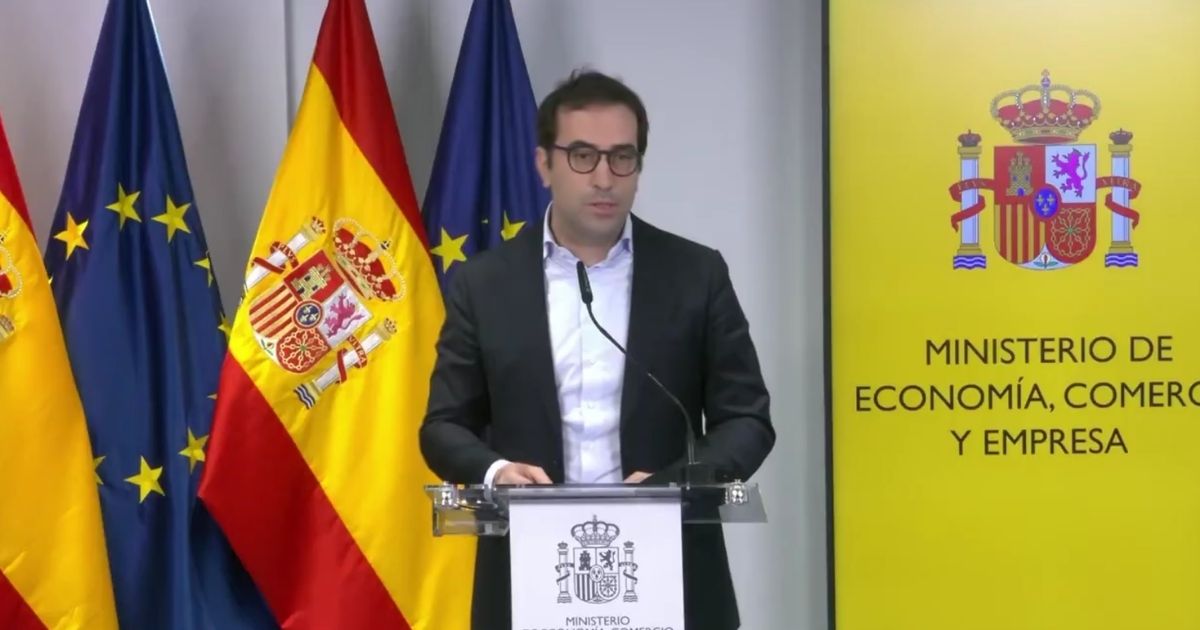
Spain’s government is preparing a new anti-crisis package, but this time the approach looks far more selective than the sweeping support seen during the energy shock of 2022. Ministers are signalling that any help will focus first on the sectors taking the earliest hit from rising fuel costs, especially road transport and agriculture, rather than rolling out blanket relief across the whole economy.
The shift matters because it shows how much the economic and political landscape has changed. Back in 2022, Europe responded to the fallout from Russia’s invasion of Ukraine with large-scale interventions, from fuel discounts to tax cuts and broad subsidy schemes. Now, with another geopolitical crisis pushing oil higher, Spain is making clear that it is not minded to simply repeat that formula.
Targeted help, not a repeat of 2022
Economy Minister Carlos Cuerpo said this week that the government will introduce “specific” and mainly fiscal measures for sectors most exposed to the rise in fuel prices. RTVE reported that the clearest priority areas are the farm sector and road haulage, both of which are especially vulnerable when diesel costs move sharply higher.
At the same time, the government is trying to manage expectations. According to El País and Europa Press, ministers are ruling out, at least for now, a fresh version of the old 20-cent-per-litre fuel discount or a broad VAT cut on food. The message from Madrid is that the current response will be narrower, more flexible and more proportionate to the real impact on prices and activity.
That is a notable political choice. It suggests the government wants to be seen as responsive without reopening the expensive emergency playbook that defined the last major energy crunch.
Why Spain is being more cautious this time
The reason is not hard to see. Reuters reported today that Europe is entering this latest energy shock with far less room for broad financial cushioning than it had a few years ago. Public debt is higher in many countries, borrowing costs remain more painful, and EU fiscal rules leave less space for giant intervention packages unless the crisis worsens significantly.
Spain is in a somewhat stronger position than some of its neighbours, but it is still operating in a tighter environment. That helps explain why ministers are talking about a focused package rather than a general rescue plan for every household and business.
It also explains the tone. The government is not yet presenting the situation as a full-blown domestic emergency. Instead, it is trying to stay one step ahead of the inflation risk while avoiding a panic response.
The fuel question is back at the centre of the debate
The immediate pressure point is the price of oil and the knock-on effect on fuel. Spain has already backed an International Energy Agency proposal for the largest coordinated release of strategic oil reserves in the organisation’s history, in an effort to steady global markets as the conflict in the Middle East drives crude prices higher. Reuters reported that Energy Minister Sara Aagesen confirmed Spain’s support on Wednesday.
That international dimension matters because Spain cannot control the global oil market on its own. What it can do is try to soften the domestic impact if higher crude feeds through into transport costs, food distribution and inflation.
The risk is already being watched closely. El País reported that the government expects inflationary pressure to intensify in March and April if the current energy shock persists.
Who could be affected first?
Transport is one of the obvious pressure points. Rising fuel prices hit haulage firms quickly, and that then feeds through to supply chains and delivery costs. Agriculture is similarly exposed, not only because of direct fuel use, but because energy costs ripple across production, storage and logistics.
That is why these two sectors have moved to the front of the queue. Europa Press reported that ministers have promised “special attention” to the most affected areas, with farming and road transport singled out in particular.
There may also be a social protection element if the situation worsens. El País said the government is studying steps to shield vulnerable households from basic utility cut-offs, although no detailed package has yet been approved.
What the government is not saying yet
For now, there is still no final list of measures and no formal approval date. That leaves some uncertainty around timing and scale.
What ministers have done is sketch the boundaries. No broad fuel subsidy. No blanket VAT reduction on food at this stage. And, for now, no sign of a return to the kind of across-the-board shock absorber Spain used during the Ukraine-driven cost crisis.
That may frustrate households already worried about living costs. But politically, it allows the government to argue that it is acting early and pragmatically, rather than overpromising before the real size of the economic hit is clear.
A new test for Spain’s economic balancing act
The coming days should show whether this remains a contained fuel-price problem or turns into something wider. If energy costs stay elevated, the pressure will build for more visible relief. If markets settle, the government will hope that targeted support is enough to protect the sectors most exposed without reopening the fiscal floodgates.
For now, the key story is this: Spain’s anti-crisis measures are coming, but they are being designed for a narrower, tougher era. The question is whether that will be enough if the squeeze on fuel, transport and prices deepens.