 Lorraine Williamson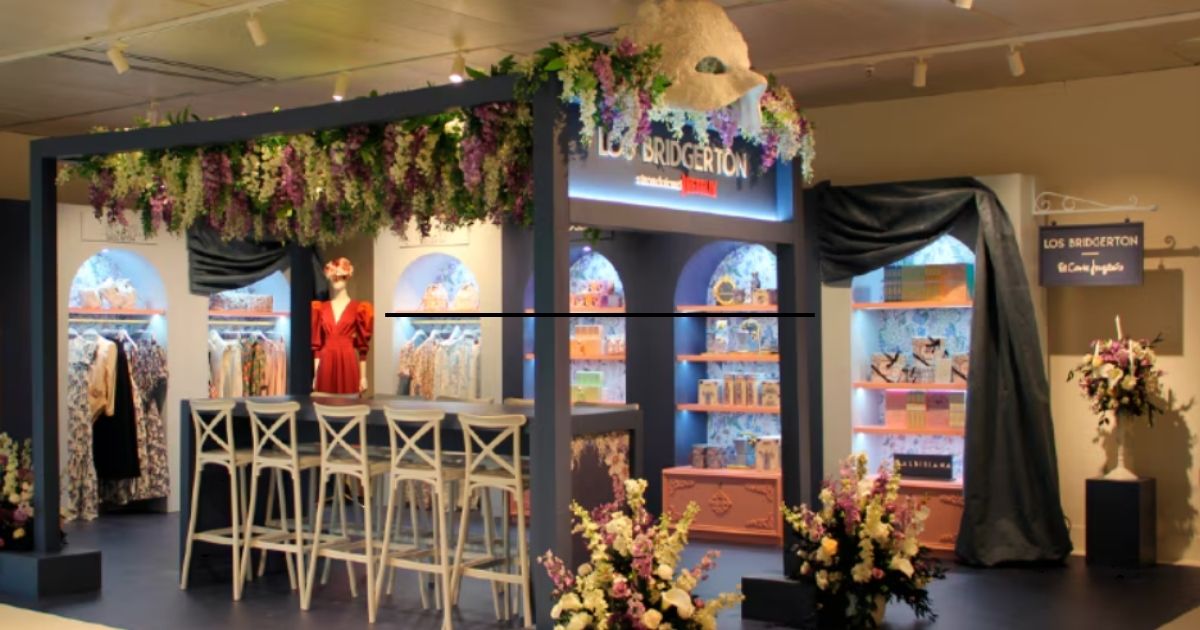
Spain didn’t need another trend built on nostalgia. Yet here we are: ruffles, pearl headbands, and pastel fans are back in the frame, not because of a royal wedding or a new designer, but because Netflix has turned a costume drama into a shopping prompt. The Bridgerton effect on Spanish retail is now visible on the high street — and the business logic behind it is brutally modern.
Instead of selling viewers a logoed tote bag, brands are selling a feeling: the romance, the rituals, the fantasy of stepping into a world where everything is curated, gilded and slow. In a fast, distracted economy, escapism has become a product category.
From TV obsession to “walk-in” fantasy
El Corte Inglés has leaned into the trend with a dedicated Los Bridgerton pop-up in Madrid’s Castellana store, running until 1 March, designed as an immersive set rather than a normal retail corner. A sister version is planned for Barcelona’s Plaza Catalunya store.
The idea is not subtle: you browse accessories and lifestyle items, but you also stop to take photos and play the part. The Corte Inglés announcement says the pop-up includes themed activities and a London trip giveaway linked to purchases — a neat loop that turns fandom into footfall and footfall into sales.
Cinco Días describes this as part of a wider shift in consumer behaviour: audiences want to interact with the worlds they watch, not just stream them.
The sweet spot: when dessert becomes theatre
If fashion is the obvious beneficiary, food is the clever one. Madrid patisserie Balbisiana is explicitly marketing itself as the official Bridgerton partner in Spain, with themed collections built around the fantasy of aristocratic tea culture.
This is where the economics get interesting. A cake or tea set is not a souvenir you feel guilty about buying. It’s an “occasion”. The product becomes an event you can post, share, gift — and repeat.
Why brands love this moment
The commercial appeal is simple: entertainment franchises deliver an audience with pre-loaded emotional attachment. Cinco Días notes that Netflix has pushed more strategic partnerships that go beyond classic merchandising, aiming for “authentic” fan experiences that can travel across sectors like fashion, gastronomy and homeware.
This is also why department stores care. When online shopping is faster and cheaper, physical retail needs theatre — and a recognisable story world is a ready-made stage set.
El Corte Inglés, for its part, is positioning the pop-up as a celebration of the fourth season, explicitly tying the in-store experience to the next Netflix release cycle.
Spain’s version of the costume-drama itch
Not every viewer wants British ballrooms forever. For anyone looking for a Spanish counterpart, there’s Manual para señoritas (international title Los Bridgerton | Balbisiana – Balbisiana Bakery), a Netflix period comedy-drama set around Madrid’s aristocratic world, built on etiquette, romance and social manoeuvring.
It’s a reminder that Spain doesn’t only import the fantasy — it can produce its own. And if the Bridgerton playbook is now “turn the series into a lifestyle”, Spanish productions could be next in line for the pop-up treatment.
What it says about culture in 2026
The Bridgerton effect in Spanish retail is not really about corsets or candlelight. It’s about a new kind of marketing, where streaming platforms blur into shopping, and fans are invited to step inside the story — briefly, expensively, photogenically.
Spain’s big retailers have spotted the opportunity early. The question is what comes after the Regency wave fades: more Netflix pop-ups, more branded “experiences”, and more entertainment worlds engineered to sell you something you can hold.