 Lorraine Williamson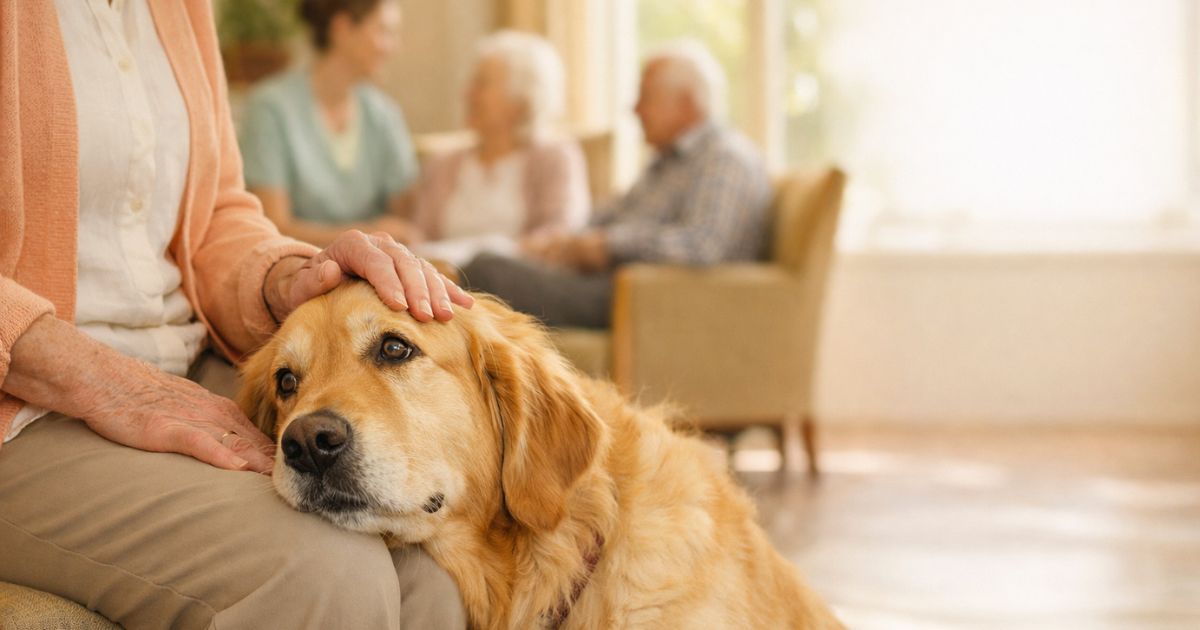
In a bright communal lounge in Cantabria, a golden retriever called Bali has become an unlikely catalyst. She pads between chairs, rests her head on a knee, and the atmosphere shifts. Residents who often sit quietly begin to speak, sometimes softly, sometimes with a sudden burst of detail and humour.
It is not magic. It is a structured, carefully managed approach to wellbeing that turns a simple interaction into a doorway back to connection.
A calm routine that helps people feel safe
Bali’s sessions take place at Fundación Asilo, a care home in Torrelavega, as part of Aulas Mémora, a national programme focused on healthy and dignified ageing. The work is monthly and deliberately small-scale: two groups of eight residents, chosen not only because they like animals, but because staff assess cognitive needs, social isolation risks and how well individuals are likely to cope.
The sessions follow the same rhythm each time. A welcome. A brief recap to activate memory. An explanation of the day’s activity. A greeting for Bali. Then a closing round where residents share what stayed with them.
For people living with dementia, predictability matters. A familiar structure reduces anxiety, making it easier to engage, respond and remain present.
“A bridge to memory, emotion and dignity”
For therapist Verónica González, the point is not simply that Bali is friendly. It is what the dog makes possible when words stall.
Residents might brush Bali’s coat, take part in gentle sensory exercises, or play guided games designed to stimulate recall and attention. It is physical contact, eye contact, shared focus and, crucially, permission to feel something uncomplicated for a while.
Saying goodbye can be the hardest moment. A session may last around an hour, yet it often feels brief when a genuine bond forms.
Not just Bali: why different animals can help different people
Bali may be the face of the project in Torrelavega, but the wider team also works with labradors and smaller animals such as rabbits and guinea pigs. For some residents, a smaller animal offers a softer form of interaction. It can be less stimulating, while still encouraging touch, attention and emotional response.
The aim is consistent: to create an environment where older people feel safe enough to participate, remember, and reconnect with the people around them. Staff describe these moments as small anchors — brief, meaningful interruptions to days that can otherwise blur into routine.
A national push to rethink ageing well
Aulas Mémora sits within Fundación Mémora, a foundation established in 2016 that grew out of experience supporting families through grief. That starting point shaped a wider philosophy: care at later stages of life should not be reduced to medication schedules and clinical outcomes. Dignity, emotional space and social connection are part of health, too.
Across Spain, the programme runs a broad mix of activities, from wellbeing talks to complementary therapies, with animal-assisted sessions as one strand. In Cantabria, Fundación Asilo is the first care home to adopt this approach, giving the project a particular weight locally.
When a real dog isn’t possible, Spain is testing alternatives
Not every setting can accommodate live animals. Elsewhere, care homes have experimented with robotic pets designed to prompt interaction and calm, particularly for people with Alzheimer’s.
These tools are not replacements for human care. But they underline a growing recognition in Spain’s eldercare debate: non-pharmacological support can improve quality of life, even when it comes in small, everyday forms.
Why it matters in Cantabria, and beyond
In Torrelavega, Bali’s arrival does not solve the big challenges facing eldercare. Loneliness, cognitive decline and understaffing do not disappear because a dog walks into a room.
What changes is the emotional weather of the place. A smile appears. A story returns. A resident looks up and stays engaged.
For families and care teams, that can be the difference between “going through the day” and genuinely living part of it.
Sources: EFE, Fundación Memora