 Lorraine Williamson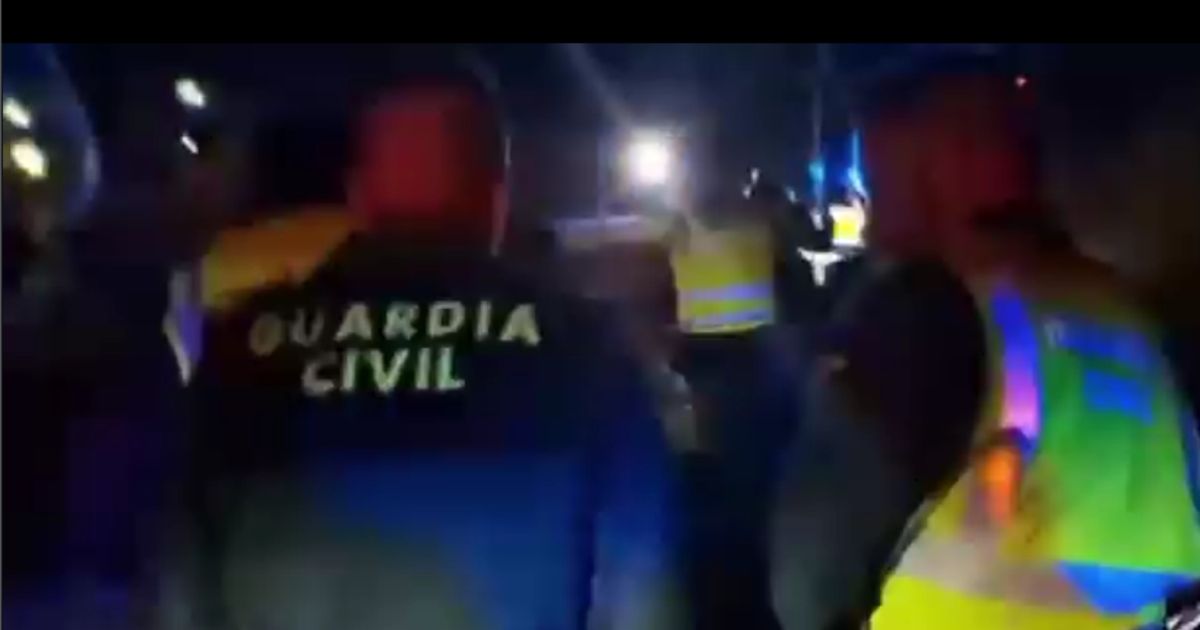
Spain is waking up to one of the country’s darkest rail tragedies in years, after two trains derailed near Adamuz (Córdoba) on Sunday evening. Families are now facing an agonising wait for confirmed passenger information, while emergency teams continue the painstaking work of identifying victims and supporting survivors.
What matters most right now is care, clarity and credible information. Authorities have been explicit on one point: the cause is not yet known, and any speculation is premature while investigators work at the scene.
Key facts so far
The latest widely reported official balance puts the toll of at least 39 people dead and 152 injured, with a significant number hospitalised in serious condition. These figures may still change as checks and identifications continue.
The incident happened at around 7.45 pm on Sunday, 18 January, when an Iryo service (6189) travelling Málaga–Madrid Puerta de Atocha derailed near Adamuz, entered the adjacent track, and triggered the derailment of a Renfe Alvia (2384) travelling Madrid–Huelva.
Timeline: how Sunday night unfolded
Around 7.45 pm (Sunday 18 January)
Adif reported that the Iryo train derailed on approach to the Adamuz area, invading the neighbouring line where the Renfe Alvia was running, with both trains subsequently leaving the tracks.
Evening into the night
Andalucia’s emergency response escalated quickly, with medical teams, rescue units and psychological support deployed. National and regional authorities also moved to crisis coordination mode as casualty figures rose through the night.
Early hours (Monday 19 January)
In Madrid, a reception and support operation was set up at Puerta de Atocha, with SUMMA 112, SAMUR, Cruz Roja and psychological support teams assisting passengers arriving by bus and relatives seeking information.
Official reaction: Andalucia, Madrid, and central government
Andalucia: Junta president Juanma Moreno spoke from the area during the night as the scale of the tragedy became clearer, while the regional emergency structure coordinated medical response and family support.
Madrid: The Community of Madrid placed its hospital network and SUMMA 112 resources at the disposal of Andalucia, and reinforced support at Atocha for arriving passengers and families.
Spain’s Transport Ministry: Minister Óscar Puente said the causes were not yet known and urged caution while the investigation begins, describing the situation as difficult to explain at this stage.
Last night, Pedro Sánchez tweeted the following on X: “Tonight is a night of deep pain for our country due to the tragic railway accident in Adamuz. I want to express my most sincere condolences to the families and loved ones of the victims. No words can alleviate such immense suffering, but I want them to know that the entire country stands with them in this extremely difficult moment. All emergency services are working in a coordinated manner without rest.”
Guardia Civil: identification and investigative work
Alongside the rescue and medical response, Guardia Civil teams are involved in scene security and victim identification work, with specialist forensic capability referenced in reporting as part of the identification process.
If you are trying to locate a passenger
If you are worried about family or friends who may have been on either service, use the official helplines and station support points first. Try to keep calls brief and factual so lines stay open for urgent cases.
Official contact numbers and help points
Emergency number (life-threatening situations): 112
Adif / Renfe family information line: 900 101 020
Some reports also list an additional Adif support number: 910 150 000
Iryo family information line: 900 001 402
Andalucia 061 (health emergency service) information line (reported for relatives outside Andalucia): 953 551 149
Where families are being supported in person
Authorities have indicated assistance points and psychological support at key hubs, including Madrid Puerta de Atocha, and stations linked to the affected routes.
If you can’t get through
Phone lines can become saturated in major incidents. If you cannot connect, try again at intervals and consider visiting the official support point at the relevant station if you are nearby. Avoid travelling toward the crash site unless instructed by authorities.
Some emergency messaging has encouraged passengers who are safe to notify relatives as quickly as possible (including via social media where appropriate) to reduce pressure on emergency lines.
Travel disruption and practical advice for passengers
This is a sensitive point, but it matters for thousands of travellers across Andalucia and Madrid: high-speed services on the Madrid–Andalucia corridor have been heavily disrupted, with suspensions and knock-on cancellations reported across the network while infrastructure checks and recovery work continue.
If you are travelling today:
Check your operator’s latest updates before leaving home (e.g., Renfe, Iryo, Ouigo, if relevant). Expect long waits at major stations, and bring essentials if you must travel. Where possible, postpone non-essential journeys.
What happens next
Investigators will now work through train data, infrastructure checks and eyewitness accounts. The priority remains victim identification, family liaison, and medical care for those still in the hospital. Spain’s rail network has built its reputation on safety and modernisation; that is precisely why authorities are being careful not to guess at causes before evidence is secured.
InSpain.news will update this report as soon as official casualty figures, passenger information arrangements, and transport restoration timelines are confirmed.
Sources: Adif, RTVE, Cadena SER