 Lorraine Williamson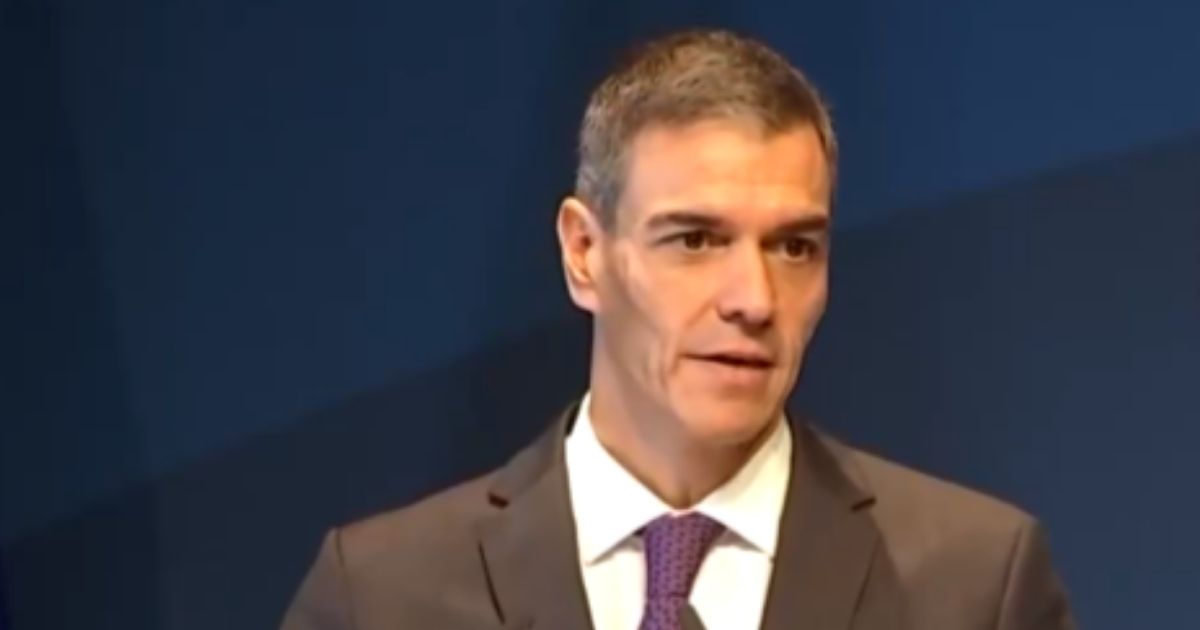
Spain’s prime minister has delivered one of his starkest climate warnings yet, accusing the European Union of making a “historic mistake” by softening its planned ban on new petrol and diesel cars after 2035. For Pedro Sánchez, the decision risks hollowing out the European Green Deal at precisely the moment climate impacts are becoming harder to ignore.
Speaking in Madrid, Sánchez framed the shift in EU car policy not as a technical adjustment but as a political retreat. In his view, Europe is sacrificing long-term stability for short-term pressure from industry and conservative governments.
Why the 2035 car ban matters
The European Commission’s recent clarification allows carmakers to continue selling combustion-engine vehicles beyond 2035, as long as they meet overall CO₂ reduction targets. While presented as a compromise to protect competitiveness, critics argue it weakens a clear signal to manufacturers and investors.
Sánchez was blunt. He rejected the idea that climate ambition is an economic burden, arguing instead that delay will prove far more costly. He also took aim at what he described as a growing culture of political shortcuts, where complex climate debates are reduced to slogans and online disinformation rather than evidence.
Spain´s auto 2030 plan
A climate pact shaped by fire and heat
The prime minister’s remarks came during the presentation of a new national climate agreement, drafted in the aftermath of last summer’s wildfires — the most severe Spain has faced since the 1990s. Although the pact still faces parliamentary negotiations, Sánchez made clear that parts of it will move ahead regardless of political consensus.
That stance reflects growing frustration within government. Extreme heat, drought and flooding are no longer abstract risks in Spain, but recurring emergencies affecting daily life, infrastructure and public health.
Measures already moving forward
Among the first initiatives is a nationwide network of climate shelters. Public buildings, including ministries and other state-owned premises, will open their doors during extreme heat events. Similar schemes already operate in regions such as Catalonia, the Basque Country and Murcia.
The government has also pledged extra funding for shelters in densely built neighbourhoods with little green space, where heatwaves hit hardest. Smaller towns are set to receive support too, with €20 million earmarked for wildfire prevention and new funding for flood-risk planning in municipalities with fewer than 5,000 residents.
Tackling climate disinformation head-on
Spain’s minister for ecological transition, Sara Aagesen, used the same event to announce the creation of a national panel of climate scientists. One of its priorities will be responding rapidly to false or misleading information, particularly during extreme weather events.
Spain has already aligned itself with UN-backed efforts to counter climate disinformation. Sánchez warned that the real danger is not online myths themselves, but their growing influence on mainstream political parties that once supported ambitious climate policy.
Climate change challenge
What the climate agreement covers
The draft pact is built around 15 thematic pillars and includes 80 measures, shaped by contributions from around 1,300 experts and civil society groups. Water management features prominently, with proposals on reuse, desalination and stricter planning in flood-prone areas.
Agriculture is another focus. The government wants stronger insurance schemes for farmers facing drought and extreme heat, alongside support for adapting crops to changing conditions. A dedicated section addresses coastal and marine systems, while a national green jobs plan aims to revitalise rural areas.
Spain´s infrastructure faces rising flood risk
A growing political divide
Despite its scope, the agreement faces an uphill battle. The opposition Partido Popular has declined to join talks, leaving the prospect of a broad political pact remote. Sánchez has used that refusal to underline what he sees as a widening gap between left and right on climate and energy policy.
He has also linked the debate to regional politics, pointing to the role of PP-led governments supported by Vox in shaping Spain’s climate response at local level.
Standing alone in Europe — by choice
Sánchez’s criticism leaves Spain relatively isolated within the EU. The shift on car policy was driven in part by Germany, where pressure from the Christian Democratic CDU has reshaped the debate on combustion engines.
For the Spanish government, that isolation is not a liability. Sánchez argues it places Spain on the side of those Europeans who continue to back the Paris Climate Agreement and a firm transition away from fossil fuels, even as opposition grows elsewhere.
Why this debate is far from over
As Europe reopens questions many thought were settled, Spain is positioning itself as a counterweight to climate backsliding. Whether that stance reshapes EU policy remains uncertain, but the message from Madrid is clear: delaying action now risks locking in higher costs, deeper damage and fewer choices later.
Source: El País