 Lorraine Williamson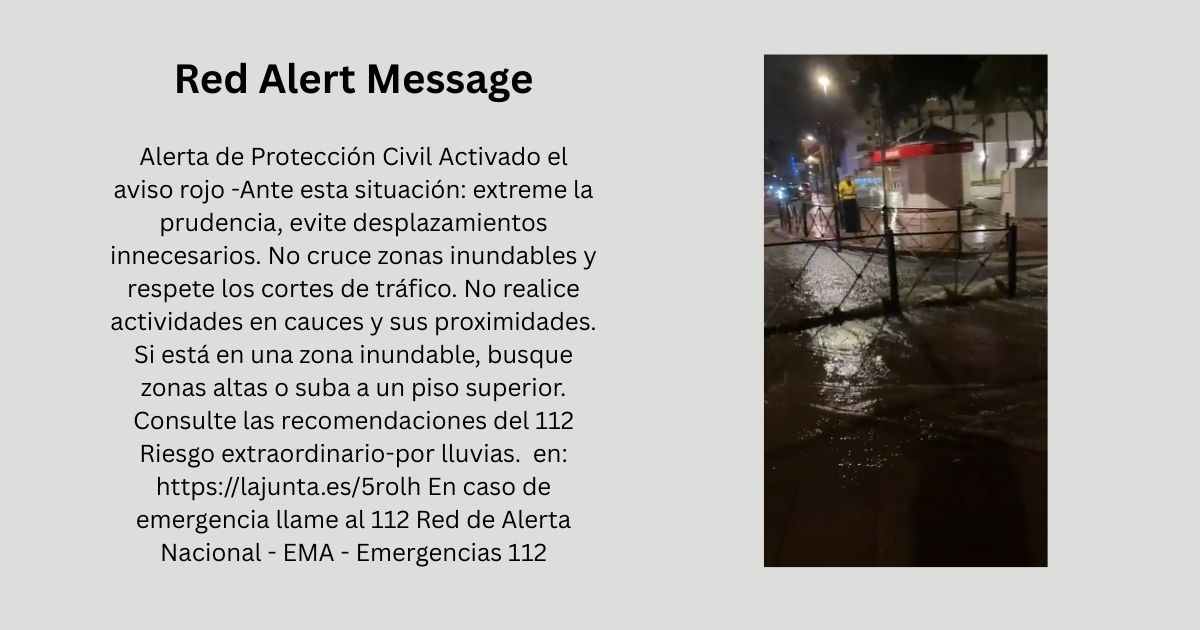
Last night, the Málaga red alert storm didn’t arrive politely. It announced itself with thunder so loud my house in Marbella felt as if it was shuddering. Then the warning hit our phones. Red alert!
Outside, the rain came down in sheets. My daughter tried to drive to the port, but she couldn’t even make out the roundabout at the entrance. Visibility was that bad. Roads turned slick and unpredictable in minutes.
On the way home from work, my husband was hit on a roundabout by another driver who simply carried on. He was shaken, but unhurt. In a storm like that, you realise how quickly “ordinary” danger stacks up.
The alert that changed the mood across the coast
Spain’s ES-Alert system isn’t background noise. When it triggers, it’s designed to cut through everything. On Saturday night, it went out to residents across the Costa del Sol and the Guadalhorce area as the weather warning escalated to red.
The forecast behind that decision was stark: up to 120 litres per square metre in 12 hours in the most exposed zones. The point wasn’t just heavy rain. It was what that rain does when it hits fast: flash flooding, overwhelmed drainage, and rivers rising before you’ve finished your first cup of tea.
Why the Guadalhorce became the headline
If the coast felt tense, the Guadalhorce valley carried the real fear. This is where intense rainfall upstream can turn into a sudden surge downstream, with little warning for people living close to the waterline.
In Cártama, the Guadalhorce rose dramatically overnight, reaching historic levels. Roads were cut, neighbourhoods struggled with flooding, and local authorities urged residents in risk areas to stay alert and avoid unnecessary journeys. Even in a province that knows winter storms, this was a night that demanded respect.
Marbella’s reality: water in the streets, trees coming down
Marbella was among the places hit hardest by sheer volume. Emergency services dealt with flooding in streets, homes and premises, while storms brought down trees and left parts of the town difficult to reach.
In San Pedro Alcántara, the council advised residents in ground-floor homes in a known critical spot near the mouth of the Guadaiza to leave temporarily as a precaution. It wasn’t drama. It was risk management, delivered early enough to matter.
Málaga Airport: diversions during peak travel season

@Inspanje
While roads flooded, the airport story played out in the sky. Málaga Airport confirmed 24 flights were diverted due to the weather, disrupting arrivals at one of the busiest times of the year.
For families landing for Christmas week or returning after the holidays, diversions were more than an inconvenience. They rippled into late-night transport, packed taxi ranks, missed connections, and tired children in terminal cafés at 2.00 am.
The twist nobody expected: the reservoirs climbed again
And then there’s the Andalucia paradox. The same rain that wrecked travel plans also refilled the province’s water bank.
After the downpour, Málaga’s reservoirs recorded a notable jump in stored water. After years of drought anxiety, any meaningful rise is politically and emotionally charged. It’s a reminder that water security here is increasingly shaped by extremes: long dry spells, then intense bursts that arrive too fast to absorb cleanly.
What this storm says about life on the Costa del Sol
Storms like this expose the weak points we don’t think about on blue-sky days. Overbuilt floodplains. Hard surfaces that push water downhill fast. Drainage that copes—until it doesn’t.
They also demonstrate how modern emergencies are experienced now: not just through the weather itself, but through the technology that warns you about it. That phone alert is becoming part of winter life in southern Spain, and learning how to react matters.
When ES-Alert sounds: a calm plan that helps
Stay put if you can. The biggest risk often comes from movement—driving into standing water, walking near swollen riverbeds, or trying to “nip out quickly” while conditions shift.
Avoid low-lying routes and underpasses, even if they look passable. In fast rain, what seems shallow can hide a deeper current or a stalled vehicle.
If you live near a river, stream or rambla, take the warning literally. Move cars to higher ground early. Keep torches charged. Know which neighbour might need help if lifts fail or stairs flood.