 Lorraine Williamson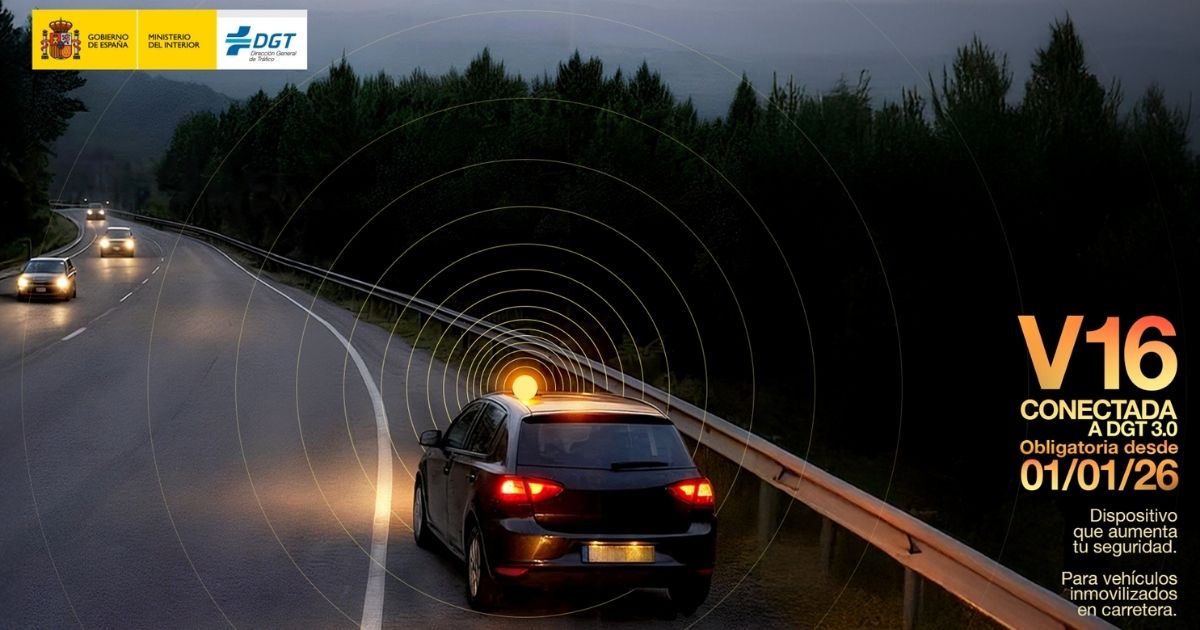
If you keep emergency triangles in your boot “just in case”, Spain’s traffic authority has a blunt message: the rules are about to change. From 1 January 2026, the V16 emergency beacon, which drivers resident in Spain have been hearing about, becomes the only legal way to warn other motorists when a vehicle is immobilised on the road.
The shift is designed to keep people safer at the roadside. Instead of stepping out and walking into live traffic to place triangles, drivers can activate a beacon in seconds and stay closer to the vehicle.
What the V16 is — and what it replaces
The V16 is a small yellow warning beacon that emits a 360-degree flashing light for at least 30 minutes. It’s designed to be kept in the glovebox and, in an emergency, placed preferably on the roof so it’s visible to approaching drivers.
From 1 January 2026, the connected V16 will replace traditional warning triangles as the single legal device for signalling a stopped vehicle in Spain.
V16 emergency light rules explained
Why “connected” matters
This isn’t just a flashing light. When activated, the V16 connects to the DGT 3.0 platform and transmits the vehicle’s location in real time, creating what DGT calls “virtual visibility” as well as physical visibility.
In plain terms, the alert can reach traffic management systems and be shared with other road users via information services and navigation providers. The aim is earlier warning for approaching drivers, especially in poor visibility or fast-moving traffic.
Battery life and visibility range
DGT says the beacon must include a battery or power source with a minimum life of 18 months, whether rechargeable or not.
In favourable visibility conditions, the light beam can be seen from up to 1,000 metres. If the device isn’t physically visible due to terrain or traffic, DGT says the “virtual” alert is intended to compensate.
Privacy: are you being tracked?
DGT’s guidance is clear: the V16 does not track you while you drive. It only transmits a location when it is activated, and it does not send personal data or vehicle data.
It also does not classify whether you’ve had an accident or a breakdown, and it is not the same as an emergency call system. Its purpose is to signal that a vehicle is immobilised — nothing more.
What about tourists and foreign-registered cars in Spain?
Spain is the first country to make a connected beacon mandatory from 2026, and that has raised a predictable question: what happens to visitors driving foreign-registered vehicles?
DGT says vehicles registered in other countries travelling in Spain under “international circulation” are compliant if they use warning triangles or an equivalent device required by their home rules. In other words, the 2026 obligation is aimed at vehicles registered in Spain.
Buying one: not every “V16” sold is legal
This is where drivers can get caught out. DGT warns that not all beacons marketed as “connected” are approved, and it publishes a list of certified makes and models.
If you’re buying in the final days of 2025, the safest approach is to cross-check the model against DGT’s certified list before you pay.
Fines: ignore the viral claims
Social media has been full of dramatic figures, including claims of fines “up to €30,000”. DGT has publicly labelled that claim false.
The actual penalty for not carrying the V16 is treated as a minor offence, with a fine of €80 — the same amount that applied for failing to carry triangles.
The simple takeaway
For drivers in Spain, the deadline is straightforward: by 1 January 2026, make sure you have a certified, connected V16 beacon in the vehicle you’re driving. It’s a small purchase, but the goal is big: fewer people exposed to danger at the roadside, and quicker warning for everyone else.
Source: DGT