 Lorraine Williamson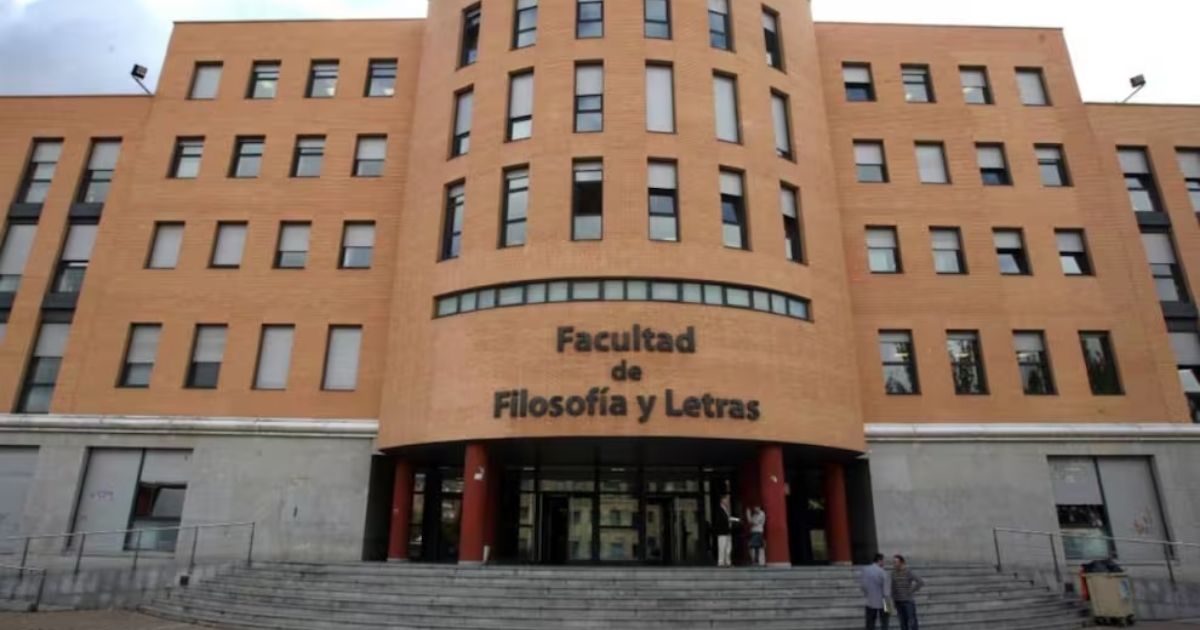
The decision to allow a student-organised antifascist lecture at the University of Valladolid has triggered threats, intimidation, and police intervention, raising wider concerns about academic freedom on Spanish campuses.
What unfolded last week was not an abstract debate about ideology. It became a test of whether universities can still function as spaces for open discussion without fear.
A routine approval that escalated quickly
The controversy centres on Dunia Etura, dean of the Faculty of Philosophy and Letters. She authorised the use of a university lecture hall for a student-led event examining why fascist ideologies should not be normalised in academic settings.
Such approvals are typically administrative. However, this one proved anything but.
Within days, Etura began receiving anonymous phone calls, legal threats and formal complaints accusing her of committing “hate crimes”. Messages warned that opponents would return “as many times as necessary”, a phrase she later described as deliberately intimidating.
Tensions spill onto campus
As the lecture date approached, the atmosphere around the faculty building grew visibly tense. Fascist stickers appeared on walls shortly before the event. Groups gathered outside, some dressed in black, whom faculty leaders said had no intention of participating in debate.
Around an hour before the lecture began, the situation escalated further.
Concerned about attempts to block the event, Etura contacted authorities. On the afternoon of 16 December, police were deployed both in uniform and plain clothes. Officers identified between 12 and 15 individuals who attempted to enter the building with the explicit aim of disrupting the lecture. Several had travelled from outside Valladolid.
Police presence allows lecture to proceed
The police operation prevented any interruption, and the lecture went ahead as planned. No incidents were reported.
According to the dean, the security measures were not a response to the topic of the event itself, but to the climate of pressure surrounding it. The presence of officers, she said, was necessary to ensure the university could operate normally.
“This is about democracy, not ideology”
In a letter circulated to students and staff — and later made public — Etura rejected claims that the issue was a clash between left and right.
She framed it instead as a defence of democratic norms.
Universities, she wrote, exist to foster knowledge, reflection and disagreement, but only within peaceful and democratic limits. Attempts to ban lectures or intimidate organisers, she warned, undermine that foundation.
Blocking one event is rarely the end of the story. Those who succeed once, she argued, often move on to deciding what may be taught, who may teach, and which voices are permitted. Spain’s own history shows how quickly such boundaries can shift.
A call for collective responsibility
Etura said she chose to publish her letter deliberately, forcing the university community to take a clear position. Academic freedom, she argued, is not just a right but a shared responsibility.
There must be space for differing political views on campus. What cannot be accepted, she added, are demands to silence others or treat fascist movements as ordinary democratic options.
Normalising such ideologies blurs the line between democracy and authoritarianism.
Mixed reactions among students
Student responses have been divided. Some expressed shock that a university lecture required police protection at all. Others openly backed the dean, arguing that her actions were necessary under the circumstances.
A smaller group criticised the tone of her letter, suggesting it crossed into political advocacy. Even so, many acknowledged that preventing lectures through intimidation has no place in a university.
Far-right sentiments on the rise in classrooms according to teachers
Why this matters beyond Valladolid
The incident has resonated beyond a single faculty building. It highlights growing tensions on campuses across Europe, where debates around extremism, free speech and security increasingly collide.
For Etura, the lesson is stark. Universities remain spaces for free thought only if that freedom is actively defended — especially when doing so becomes uncomfortable.
Source: El País