 Lorraine Williamson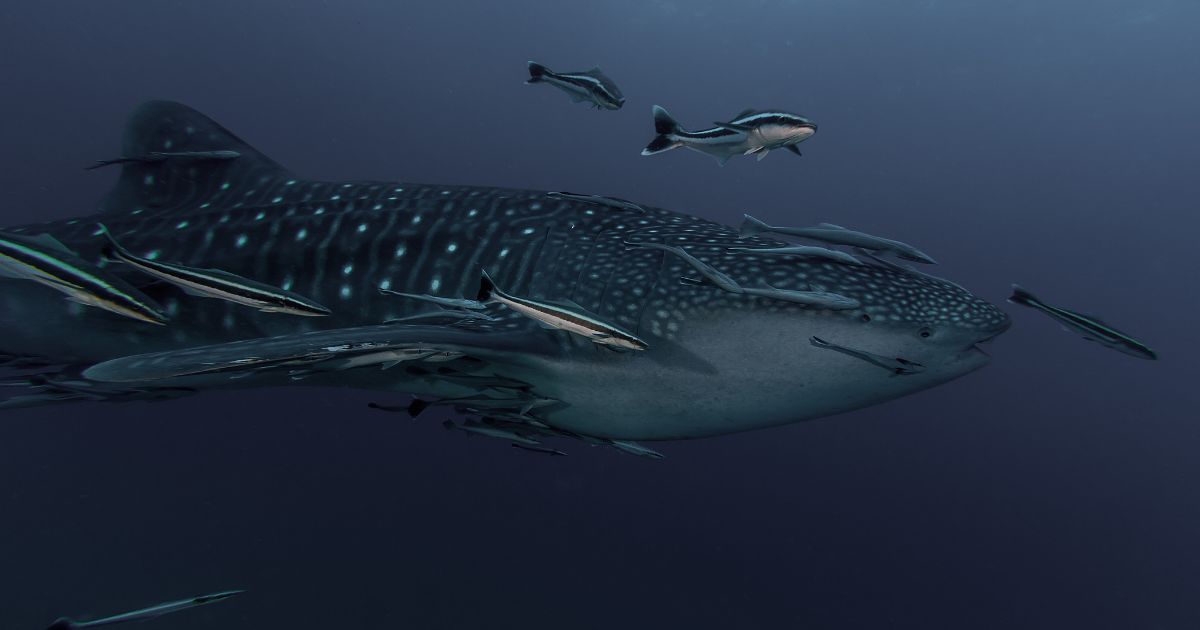
The tropical fish Strait of Gibraltar story is no longer just a curiosity for divers. Spanish researchers say the Strait and the nearby Alboran Sea are now showing clear biological signals of long-term warming, with warm-water species turning up more often than they used to.
It is being described as “tropicalisation”: a gradual shift in marine communities as heat-loving species expand northwards. The Strait is warming more slowly than other parts of the Spanish Mediterranean, but scientists say the ecological fingerprints are starting to show.
A hotspot where two seas collide
The Strait of Gibraltar is not a normal stretch of coastline. It is a transition zone where Atlantic and Mediterranean waters meet, mix, and exchange, creating a natural observation point for changes in marine life.
That makes the region especially useful for tracking early-stage ecosystem shifts. When species composition changes here, researchers treat it as a meaningful signal, not a one-off anomaly.
What the scientists are seeing
A recent IEO-CSIC analysis has documented new fish records between 2017 and 2025 in Spanish waters, including the Strait of Gibraltar–Alboran Sea demarcation. In that area, the new arrivals show a clear preference for warmer conditions than many established native species.
Researchers report more than 20 species appearing in the Strait/Alboran listings that were not previously included in regional inventories, pointing to an ongoing shift rather than isolated sightings.
Two headline species: whale shark and lionfish
The whale shark (Rhincodon typus), the world’s largest fish, is among the standout observations mentioned in reporting around the study. It is typically associated with warmer waters, and its presence in southern Spanish waters is treated as notable rather than routine.
More concerning is the lionfish (Pterois miles). It is a predatory tropical species that has been spreading through parts of the Mediterranean and is widely regarded as invasive because it can disrupt local food webs where natural controls are limited.
It is not “the sea warms, then tropical fish arrive”
IEO-CSIC stresses that Mediterranean change is not uniform. Their work argues that warming alone does not explain every new arrival, and that other forces can drive shifts in records and range expansions.
In fact, the same analysis notes that in the Levantine–Balearic demarcation, the pattern is different: despite substantial warming, the evidence for straightforward tropicalisation is not as clear, because new records can include species from cooler waters or newly identified species, not simply tropical newcomers.
Climate change, shipping, and the “extra push” factor
Climate change remains the core driver, because warmer baseline temperatures make it easier for warm-water species to survive further north. However, researchers also highlight human activity as a plausible amplifier.
International shipping is one example, because species can move unintentionally through mechanisms such as ballast water, while heavy maritime traffic increases ecological pressure in a corridor that is already one of Europe’s busiest sea routes.
What this could mean for ecosystems and fisheries
Some species may remain occasional visitors. Others may become established, gradually reshaping local biodiversity and altering predator–prey relationships in ways that matter for juvenile fish survival and long-term stock health.
For fisheries, that can translate into unpredictable impacts: changes in species availability, shifting seasonal patterns, and potential knock-on effects if invasive predators gain ground. This is why scientists keep returning to the same conclusion: monitoring needs to be continuous, not episodic.
Why the Strait matters next
If the Strait of Gibraltar is an early-warning corridor, the next phase is about detail: which species are simply passing through, which are breeding, and which are displacing natives in ways that will be felt along the coasts of Andalucia and beyond.
For residents, divers, and fishers around Tarifa, Algeciras, and the wider Campo de Gibraltar, it is a reminder that climate signals are not only measured in graphs and forecasts. Sometimes they arrive at the end of a line, or glide past underwater, changing what “normal” looks like in the space between two seas.
Quick reader Q&A
What does “tropicalisation” mean?
A shift in marine communities as warm-water species expand into areas that were previously too cool.
Is the Strait warming faster than the rest of Spain?
Researchers say warming in the Strait is slower than in some other Mediterranean zones, but ecological changes are now being detected.
Why is the lionfish a concern?
It is a predatory invasive species that can disrupt local fish communities where natural predators are limited.