 Lorraine Williamson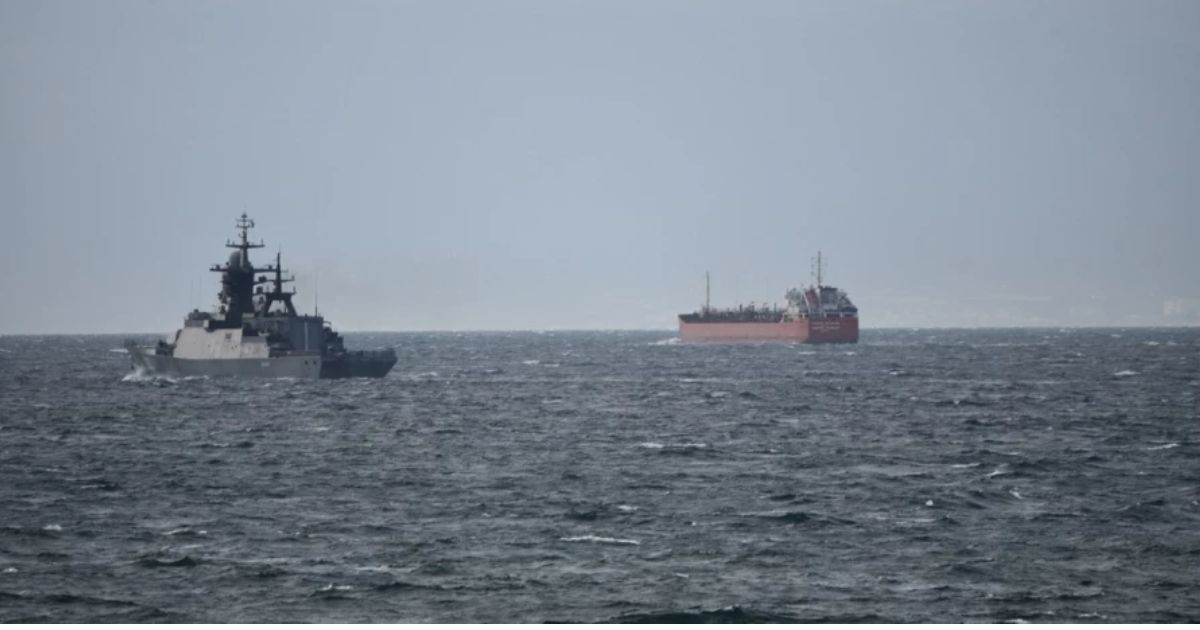
Spanish Navy tracks Russian ships sounds like a flashpoint headline. In practice, it is usually the opposite: a measured, procedural job designed to prevent surprises in some of Europe’s most sensitive waters.
Over the past week, the Spanish Navy carried out a standard monitoring operation as three Russian-flagged vessels transited areas of strategic interest to Spain. According to information released via Spain’s defence command structure, the tracking covered the Alborán Sea, the Strait of Gibraltar and, later, waters off the north-west coast near Galicia, before the ships continued towards French responsibility zones.
A familiar patrol pattern in the Alborán Sea
The first phase of the operation fell to the BAM Audaz, a Spanish Navy offshore patrol vessel deployed in the Alborán Sea and the Strait of Gibraltar since December as part of Spain’s standing “presence, vigilance and deterrence” activities.
In this case, Audaz shadowed the Russian destroyer Severomorsk as it navigated through the Strait and into the Mediterranean, maintaining a safe distance while keeping the ship under observation. This kind of shadowing is routine when foreign naval vessels pass close to national areas of interest, particularly in high-traffic corridors where military and commercial routes overlap.
Once that transit was completed, Audaz returned to its broader patrol posture in the Alborán, which defence-linked reporting says includes attention to Spain’s North African territories such as the Chafarinas Islands, where Spain maintains permanent Army detachments.
A second sighting: corvette and merchant heading into the Atlantic
A second Russian-flagged grouping was then detected moving westbound via the Strait of Gibraltar: the corvette Boikiy accompanied by the merchant ship General Skobelev. Audaz again took up the close monitoring role as the pair crossed into the Atlantic routes.
The Strait is not merely a geographic bottleneck. It is a constant test of maritime awareness: dense commercial shipping, naval movements, and the proximity of multiple jurisdictions compress decision-making time. That reality helps explain why Spanish authorities emphasise calm professionalism and continuity rather than drama.
Local reporting around Gibraltar also described a separate “three-flag” moment in the same waters, underlining how quickly the Strait can become crowded with competing naval presences, even when no incident follows.
From the Galician coast to French waters
Days later, the Russian convoy was sighted again near Galicia. At that point, the Spanish Navy’s patrol ship Centinela took over the tracking, maintaining surveillance until the vessels moved on into French waters.
Defence-linked coverage states that the operation remained calm and incident-free, with the Russian ships complying with international maritime rules during the transit.
Why Spain does this, even when nothing “happens”
Spain’s message in these episodes is consistent: monitoring is a normal function of maritime security, designed to maintain what navies call situational awareness. In practical terms, it means identifying, tracking, and reporting movements so decision-makers have an accurate picture of what is passing through waters that matter to national security and international trade.
The reporting chain is also part of the deterrence logic. During these missions, Spanish vessels provide continuous updates to the maritime surveillance operations centre in Cartagena (often referenced as COVAM in Spanish defence coverage), feeding a real-time operational picture.
This sits within Spain’s broader standing framework of maritime “presence, vigilance and deterrence”, run through the armed forces’ operational command structure. The point is not to escalate, but to reduce uncertainty in contested times—particularly as European navies have faced sustained Russian naval activity around the continent’s sea lanes since the start of the war in Ukraine.
The legal line: passage versus provocation
It is also worth separating “tracking” from “intercepting”. International law allows warships to transit international waters, and even to pass through territorial seas under certain conditions. Monitoring, when conducted safely and professionally, is how coastal states protect their interests without creating a confrontation where none exists.
In short, the visible presence of Spanish patrol ships is as much about reassurance and readiness as it is about signalling to any foreign navy that Spain is watching its approaches.
Sources: EuropaPress, EuropaSur, InfoDefensa