 Lorraine Williamson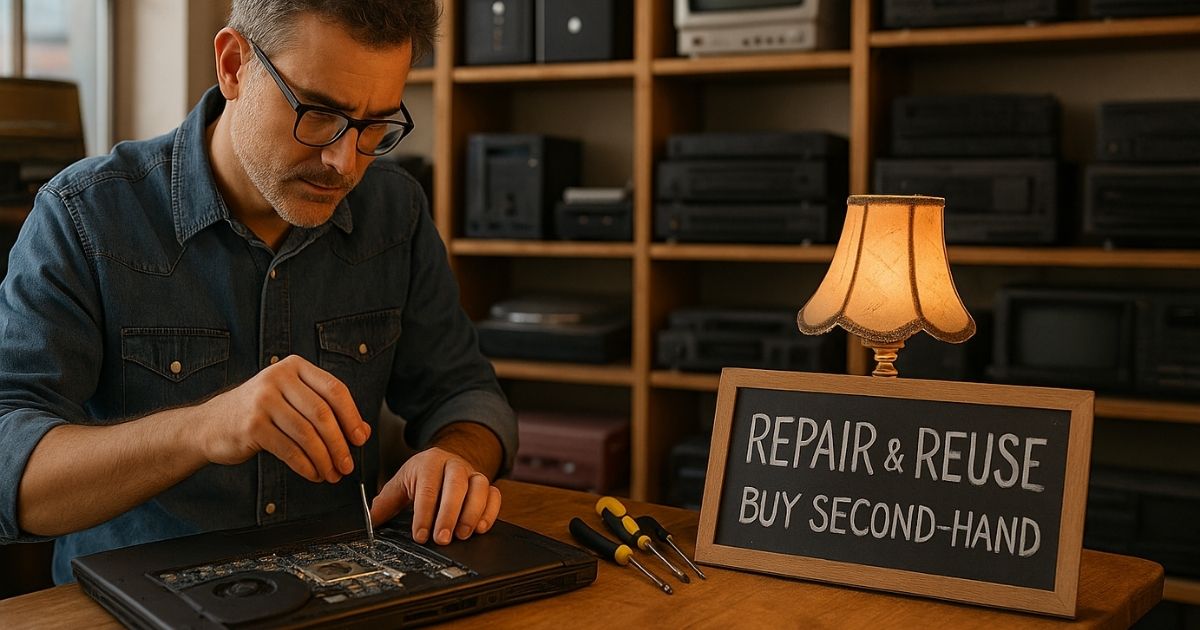
The Black Friday countdown has become a fixture in Spain’s pre-Christmas calendar, yet the annual discount race is beginning to face a quiet but determined rival. While major retailers push ever-shorter flash sales and promise next-day delivery, a growing section of Spanish consumers is moving in the opposite direction — stepping back from impulse buying and choosing to repair, reuse or resell instead.
This shift, rooted in climate awareness and rising living costs, is giving new energy to Spain’s circular-economy movement. It has also strengthened an alternative campaign that takes centre stage each November: Repara Friday, supported by the environmental organisation Amigas de la Tierra.
A nationwide map of repair — and a different kind of bargain
At the heart of Repara Friday is Alargascencia, an online map listing more than 1,200 repairers and second-hand businesses across Spain. It brings together bike shops, laptop technicians, tailors, cobblers, furniture restorers, vintage games traders, and countless second-hand clothing and toy stores. Instead of quick deals, the platform promotes a longer-lasting form of value: the chance to extend the life of something you already own.
Alargascencia reflects a growing debate in Europe around how to counter throwaway culture. Spain, facing rising waste volumes and renewed interest in sustainable living, has become a fertile ground for this shift.
Craftsmanship that outlives the trend cycle
Across the country, small workshops are proving that repair is not nostalgia — it’s a viable future. In Madrid, José Manuel Ruth has turned a childhood love of puzzles and Lego into a thriving computer-repair workshop, Talleres del PC. He compares device care to car maintenance: regular tune-ups keep laptops running and prevent unnecessary replacements. “We’re attached to our devices,” he says. “But we forget they need care too.”
A few kilometres away, Rubén Céspedes restores century-old lamps in a family shop now in its third generation. The pieces he refurbishes — some crafted by his grandfather — highlight a striking contrast with modern production. “These lamps weren’t made to break,” he says. “They were made to last.” He notes that more young people are now choosing repairs, a sign he believes points to a cultural shift.
Second-hand markets thriving from Valencia to Córdoba
The shift towards repair and reuse is visible well beyond Madrid. Along the Mediterranean, specialist electronics shops in Valencia and Huelva have built loyal followings by refurbishing devices that might otherwise be discarded. Further north, Zaragoza’s retro-gaming scene is thriving thanks to independent stores such as Stargames, where vintage consoles sit alongside modern titles waiting for a second life. Meanwhile, in cities like Logroño and Córdoba, furniture workshops are drawing people who prefer restoration over replacement.
Across the country, this renewed appreciation for craftsmanship is feeding a wider boom in second-hand shops. Clothing, toys, books and small household items are increasingly traded with the expectation that they’ll circulate again, rather than end up as waste.
When second-hand becomes a family routine
One of the busiest hubs of this shift is Kid to Kid, a Madrid shop where baby clothes, toys and books are refurbished for resale. Manager Paulo Costa says the misconception that “second-hand equals worn out” no longer holds. Many items arrive barely used. “Everything here is carefully selected and in excellent condition,” he explains.
Shoppers like Carolina Mijancos, heavily pregnant and choosing toys for her toddler, say the appeal is both ethical and practical. She plans to resell the doll once her daughter outgrows it. “If something is still in great shape, why waste it?” she says. “It’s better for the environment — and for your wallet.”
Others, like Juan Pérez from Málaga, treat reuse almost as a family ritual. He buys puzzles and books, returns them when finished, and browses for seasonal decorations. His wife searches for clothing. “Nothing goes to waste,” he says. “Someone else always gets to enjoy it.”
Why conscious buying is gaining ground
For Amigas de la Tierra, the current interest in repair is both environmental and social. Reducing new purchases lowers emissions and waste, but it also supports local craft and independent businesses. The organisation argues that genuine change requires not only consumer habits but policy reforms: a stronger right to repair, pressure on manufacturers to avoid planned obsolescence, and economic incentives for sustainable production.
Repara Friday is not an anti-shopping campaign; it simply reframes the idea of value. Rather than filling a basket with discounted goods, it invites consumers to consider the lifespan of what they already own — and the impact of extending it.
Is Green Friday the better alternative to Black Friday?
The organisation driving the movement
Founded in 1979, Amigas de la Tierra forms part of the global Friends of the Earth network, one of the largest environmental groups in the world. In Spain, its work spans climate and energy policy, agriculture, natural resources, waste reduction and economic justice.
Through education and advocacy, it pushes for a fairer and more sustainable society. Repara Friday and Alargascencia sit at the practical end of that mission, giving people real tools to live more sustainably.
What this shift says about Spain today
The growing appetite for repair suggests a deeper transformation taking place in Spain. As budgets tighten and climate awareness grows, more people are questioning fast-turnover shopping and rediscovering craftsmanship, local trade and second-hand culture. The movement is still small compared with Black Friday’s vast marketing machine, but each year it becomes more visible — and harder to ignore.
If the surge in repair shops and second-hand markets continues, Spain may not only challenge disposable consumerism but carve out a more resilient, circular model for the future.
Source: El País