 Lorraine Williamson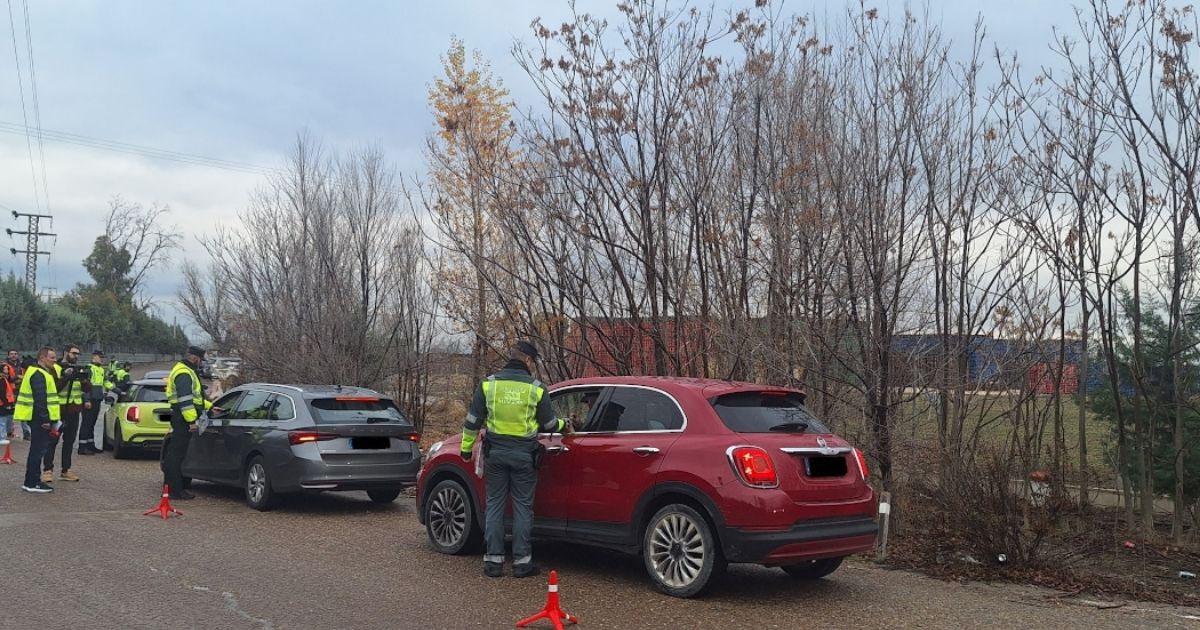
As Spain heads into the busiest social period of the year, traffic police are stepping up enforcement on an unprecedented scale. Until Sunday, 21 December, officers will carry out more than 35,000 alcohol and drug tests every day across the country in a nationwide campaign aimed at preventing serious and fatal road accidents.
The initiative, led by the Dirección General de Tráfico (DGT), comes as official figures continue to link alcohol and drugs to a significant share of deadly crashes on Spanish roads — particularly during weeks filled with family gatherings, meals and celebrations.
Checks at any time, on any road
Unlike seasonal campaigns of the past, this operation has no predictable pattern. Controls are taking place on urban streets, interurban roads and motorways, at all hours of the day and night.
The Guardia Civil’s Traffic Group, alongside local police forces that choose to participate, will set up roadside checkpoints wherever risk is highest. The aim is simple: to reduce the number of drivers who take the wheel after drinking alcohol or consuming drugs, even in small amounts.
Alcohol remains a major factor in fatal crashes
According to the DGT, alcohol was present in 28% of traffic accidents with fatalities in 2024, making it the second most common contributing factor after distraction. In total, 273 fatal crashes last year were linked to alcohol — an increase of 27 cases compared with 2023.
Even more concerning is the broader toxicology data. Nearly half of all drivers who died on Spanish roads in 2024 tested positive for alcohol, drugs or psychoactive medication, either alone or in combination. While this represents a slight improvement on the previous year, the long-term trend shows a 7.2% increase in positive toxicology results compared with a decade ago.
“The only safe limit is zero”
Presenting the campaign in Madrid, provincial traffic chief Cristóbal Cremades stressed that awareness alone is not enough. While Spanish society has become more conscious of drink-driving risks, the figures show that enforcement remains essential.
The DGT continues to underline a clear message: the only safe alcohol level when driving is 0.0%. Even amounts that fall within current legal limits can impair reaction time, judgement and coordination — particularly when combined with fatigue or medication.
This zero-tolerance rule already applies to under-18 drivers, following reforms to Spain’s Traffic and Road Safety Law.
A lower alcohol limit on the horizon
At the same time, Spain’s parliament is debating a proposal to lower the general alcohol limit for all drivers to 0.10 mg/l of exhaled air, aligning national law with recommendations from the World Health Organisation and European road safety bodies.
Countries such as Sweden and Norway adopted this threshold decades ago. The results were striking: fewer people drove after drinking, fatal accidents fell, and overall road safety improved significantly. Spanish authorities see this as a potential turning point, though no final decision has yet been taken.
Why this matters now
December is consistently one of the most dangerous months on Spain’s roads. Short journeys after meals, late-night returns from celebrations and a false sense of familiarity all increase risk.
With this campaign, the DGT is betting on visibility and unpredictability to change behaviour. The message is not just about fines or points on a licence. It is about preventing tragedies that, year after year, follow the same pattern — and remain entirely avoidable.