 Lorraine Williamson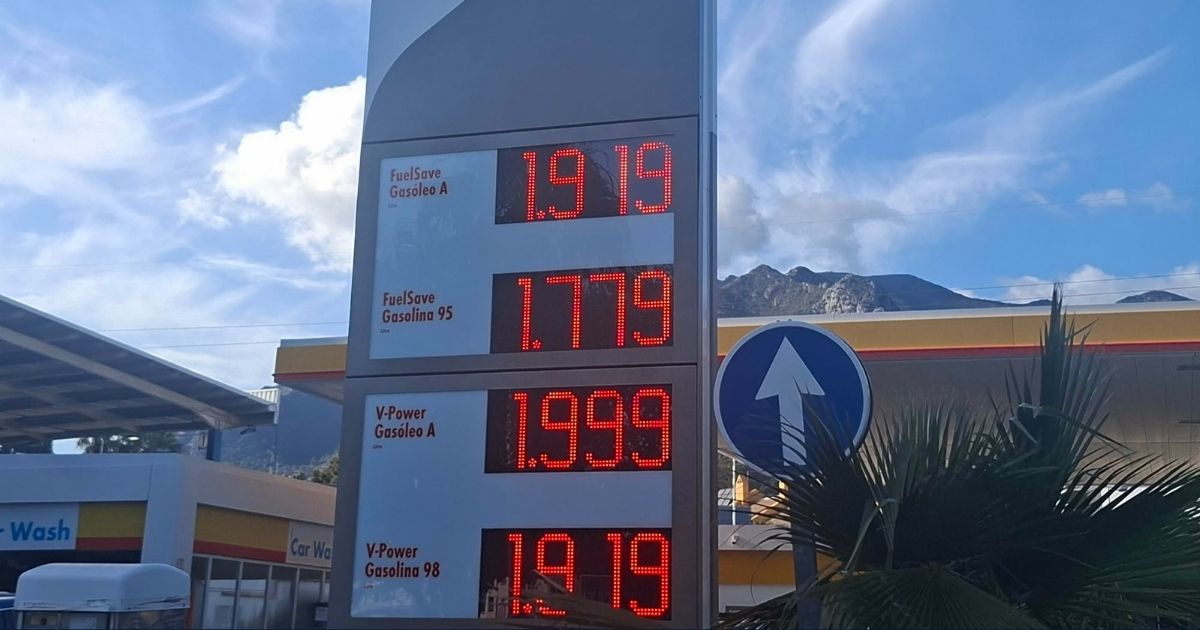
Spain is stepping up fuel price monitoring as volatility in global energy markets raises concerns over what drivers could pay at the pump in the coming days. The government said on Wednesday that the CNMC will increase the frequency of its fuel-price information to weekly from next week, as part of a wider effort to reinforce supervision, transparency and coordination across the energy markets.
The move comes after the government linked the war in Iran to sharp instability in energy prices. La Moncloa said one of the first impacts of the conflict had been strong volatility in energy markets, adding that this was being passed on rapidly to prices at petrol stations.
What the government says will change
According to La Moncloa, the agreement was reached by ecological transition minister Sara Aagesen, economy minister Carlos Cuerpo and CNMC president Cani Fernández. The aim, it said, is to reinforce the regulator’s supervisory work, improve transparency and help ensure good practice in price formation.
The most practical change for consumers is the publication schedule. The CNMC already monitors electricity, gas and fuel markets on a daily basis, but the government says information on fuels will now be published weekly in order to strengthen transparency and make price and margin data easier for consumers to follow.
That does not mean Spain is capping or freezing prices. It means the authorities want closer public visibility over how petrol and diesel pricing evolves if market pressure continues.
Why the wording matters
This is an important distinction, because pump prices do not always move in lockstep with global oil markets. In fact, some forecourts were showing little change or slight falls on Thursday morning after the initial surge despite the renewed international volatility. That suggests motorists are not yet seeing a uniform rise everywhere, even if the broader market backdrop has become more unstable.
So this is better understood as a watch-this-space story rather than proof of an immediate nationwide spike. The government is signalling concern, increasing scrutiny and preparing for the possibility that international pressure could feed through more clearly if disruption persists.
A cost-of-living issue as much as an energy one
Fuel prices matter far beyond the forecourt. If higher oil costs persist, they can ripple through household budgets, deliveries, transport and business costs. That is why a technical announcement about market supervision carries wider significance. It suggests the government sees this as a consumer issue, not simply a regulatory one. This is an inference based on the timing and content of the announcement.
La Moncloa also said the CNMC has already strengthened information flows with the ministries of economy and ecological transition through the daily sending of updated data, with special attention on electricity, gas and fuels. It added that the regulator remains in close contact with market operators in order to monitor the situation and detect any irregular behaviour or signs of practices that could affect the proper functioning of the markets.
What motorists in Spain should take from this
For now, the clearest takeaway is not that drivers should expect an instant jump at every petrol station. It is that Spain is moving into a period of closer scrutiny as international energy volatility grows.
If oil-market tension eases quickly, the effect on consumers may remain limited or uneven. If it continues, motorists are likely to hear much more about pump prices in the days ahead. Either way, the government has made clear that fuel pricing is now being watched more closely.