 Lorraine Williamson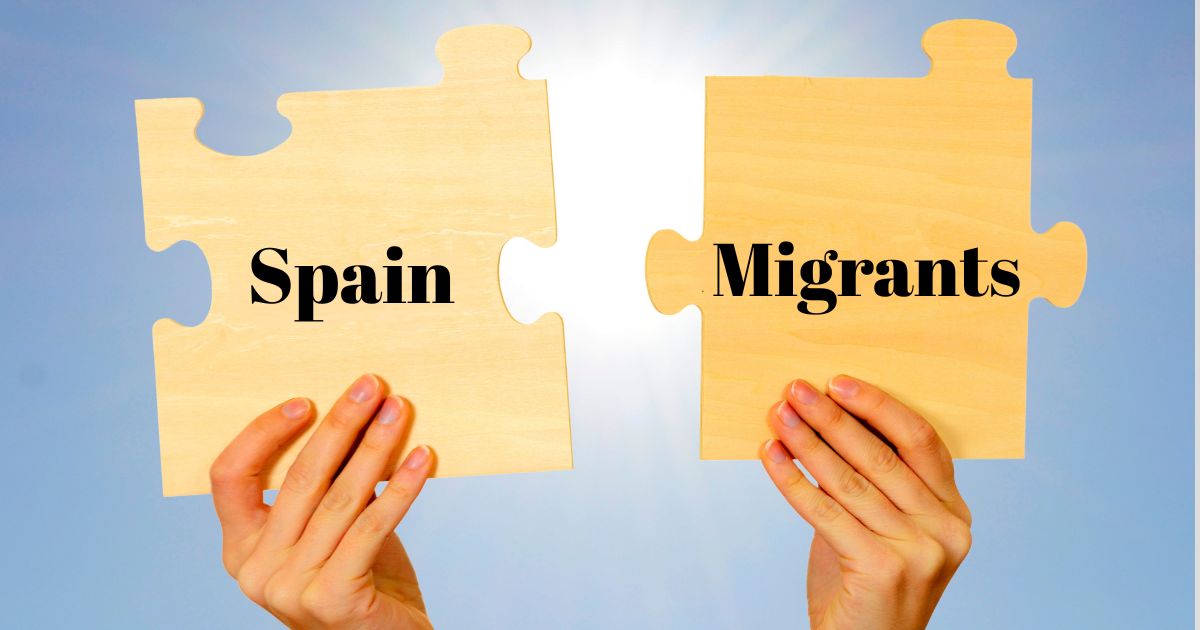
Spain’s government is pressing ahead with a sweeping measure to bring hundreds of thousands of undocumented people into the legal economy, after days of political and online backlash.
In a social media video, Prime Minister Pedro Sánchez defended the Spanish migrant regularisation plan as a matter of dignity and justice, arguing that many of those affected are already “part of Spain” through work, family life and local communities.
The initiative, launched by the Council of Ministers on 27 January, begins an extraordinary regularisation process for foreigners who are already living in Spain. The government says it is designed to give legal certainty to a long-standing reality and reduce vulnerability linked to irregular status.
Who could qualify, and what the government is proposing
Official briefings indicate the scheme is aimed at people who can prove they were in Spain before the end of 2025 and who meet basic legal requirements. The government’s published Q&A states that the permit granted would enable work across Spain and in any sector. It would initially be valid for one year, after which applicants would move into the ordinary immigration framework.
The Moncloa summary sets out key eligibility points, including an evidence requirement for residence in Spain and a clean criminal record.
Timing matters. Multiple reports, including government-linked documentation, point to an application window expected to open in early April and run until 30 June 2026, with decisions targeted within roughly three months.
Why Spain is doing this now
Spain’s argument is economic and practical as much as moral. In regions with large foreign-born workforces, unions and migrant support groups say the policy could reduce exploitation and off-the-books labour in sectors that rely on migrant workers, including hospitality, construction and care.
The plan also sits in a wider European context where immigration has become a political flashpoint. Sánchez’s framing is that Spain will not solve irregularity by pretending it does not exist, and that regularisation is a tool to increase contribution, tax compliance and social stability.
The politics: support, criticism and the misinformation problem
The policy’s roots lie in a long-running citizen-led push for extraordinary regularisation, backed by hundreds of organisations and campaign networks, and previously admitted for debate in Congress via an ILP route.
But it has also triggered sharp criticism from the right, particularly around pressure on housing and public services. International attention has added fuel. Sánchez has also responded publicly to claims that the move is “electoral engineering”, rejecting the idea that human rights and basic legal status should be treated as a campaign tactic.
One risk officials and unions are already flagging is opportunism. With the process not yet formally open, labour organisations warn migrants not to pay intermediaries for “fast-track” access and to rely on official sources only, as rumours and scams spread quickly when legal status is at stake.
What readers should watch in April
The next practical milestone is the final approval and publication path that triggers the application period. Until the scheme is formally activated, prospective applicants will need to focus on documentation that proves presence and continuous residence, and to avoid anyone charging money for information or paperwork “guarantees”.
For Spain, the bigger test will be administrative capacity. A short window, high demand, and the need for fast decisions will put pressure on local registration services and the immigration office network. That is where a policy designed to reduce vulnerability can either become a model of legal certainty or a bottleneck that feeds frustration.
Key dates and verification advice
Government-linked documents point to an application window expected to run from early April to 30 June 2026, with the residence-and-work authorisation initially valid for one year.
Until then, the safest approach is to follow only official updates from Moncloa and the Ministry of Inclusion, and to treat paid “offers” with extreme caution.
Sources: La Moncloa, Gob.es, RTVE