 Lorraine Williamson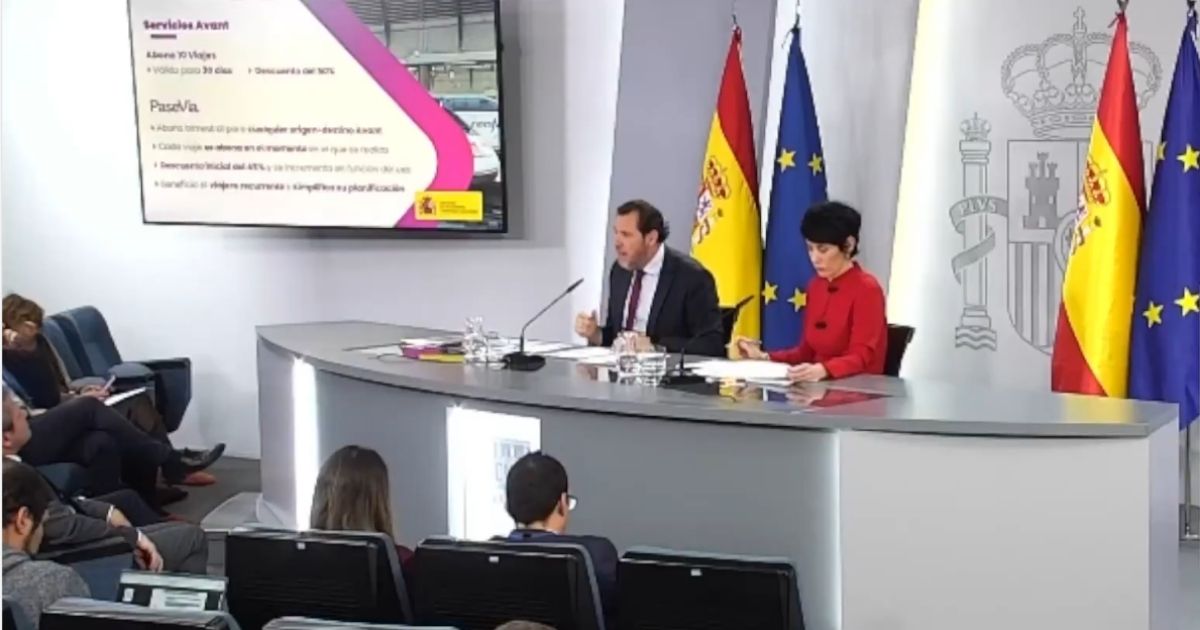
If you rely on public transport in Spain, the short version is reassuring: the discounts already in place are staying. The government says the current subsidies will continue through the first half of 2026, keeping fares well below what regular travellers used to pay.
But this isn’t just a rollover. Several new perks are being layered on top, aimed at commuters using Cercanías, passengers on Avant, and those travelling on Media Distancia. The biggest change is a new monthly season ticket, the Abono Único, launching on 19 January.
Transport minister Óscar Puente has framed the subsidies as a cost-of-living measure that can cut fares dramatically for frequent users. In some cases, he argues, the annual savings run into the thousands.
Who gets free travel — and who keeps discounted passes
Families remain at the centre of the scheme. Children up to 15 will continue to travel free on Cercanías, Media Distancia, state-run buses, and many local or regional public transport networks. For parents juggling school runs, clubs and weekend trips, that free travel is likely to be one of the most valuable parts of the package.
For young people aged 15 to 26, the discounts remain strong, but the details can vary depending on where you live. In broad terms, young travellers keep access to a low-cost monthly pass on Cercanías, plus high discounts on Media Distancia, state buses and local transport. Some regions set slightly different age boundaries for youth passes, so it’s worth checking the small print locally.
Adult passengers aren’t losing out, either. Reduced fares continue across Cercanías, Media Distancia, state buses and urban networks, with multi-journey tickets still discounted. Avant passes keep their existing discount level for everyone, which matters for anyone commuting between nearby cities.
Local and regional networks: the “minimum discount” continues
For metro systems, municipal buses and regional travel cards, the state will keep supporting discounts rather than leaving it entirely to local budgets. The baseline offer is a 20% reduction on regional and municipal season tickets, and regions are not required to contribute for travellers to benefit.
That means big-city commuters should still see at least a minimum discount on everyday travel in places such as Madrid and Barcelona. The youth and children’s discounts are also maintained, with under-15s travelling free and young people receiving major reductions.
Some areas go further. In parts of Spain where public transport policy has been used aggressively to encourage ridership, public transport remains free — including in the Canary Islands and the Balearic Islands, where the cost and geography make connectivity a daily issue, not a luxury.
Cercanías: contactless travel gets rewarded
One of the most practical changes is on Cercanías, where a new Kronos contactless system is designed to make commuting smoother. Instead of buying or topping up traditional tickets, passengers will be able to check in and out with a bank card, and the system will track journeys automatically.
The incentive is built into the price. From your fifth journey, a 40% discount is applied, and by the time you reach ten journeys, you are effectively paying the equivalent of a ten-trip ticket. It’s also intended to work for more than one person using the same payment method, which could suit families travelling together.
Media Distancia: better return fares and a €7 cap for accessible seating
For Media Distancia, the changes focus on making routine intercity travel less punishing. The discount on return journeys increases from 7% to 20%, a noticeable jump for people who regularly travel out and back the same day.
There’s also a specific measure for accessibility. Passengers travelling with an H seat—intended for people with disabilities—will have a maximum fare of €7, helping to cap costs that can otherwise add up quickly for frequent travel.
Avant: new products for frequent travellers
Avant keeps its familiar headline discount, but 2026 adds fresh ticket types aimed at people who commute often. A new ten-journey ticket will be valid for 30 days, offering a 50% discount and giving regular travellers a simpler way to budget.
Alongside that, a “day pass” style system is being introduced, where the price drops the more you travel. The discount starts at 45% and can rise as high as 72%, effectively rewarding the kind of heavy usage typical of work commutes and regular family travel.
Abono Único: the new monthly pass launching 19 January
From 19 January, passengers can opt for the Abono Único, described as a single monthly season ticket covering multiple services. It costs €60 a month for adults and €30 for under-26s, and is valid on regional rail services such as Cercanías and Media Distancia, plus long-distance state-run buses.
The key point is what it’s designed to cover: state-backed rail and government-operated bus routes. Local networks like city metro systems and municipal buses sit under different authorities, so the Abono Único won’t automatically replace your local travel card.
What this means for day-to-day life in Spain
The policy direction is clear: Spain is trying to keep public transport affordable while nudging passengers towards simpler, more automated systems. For commuters, that could mean fewer ticketing headaches and better value if you travel often enough to trigger the higher discounts.
The real test will be in January. If the Abono Único feels genuinely straightforward—and if the contactless Cercanías system works reliably—it could make public transport the default option for more people, not just the cheaper one.
Sources: Huffington Post, El País, RTVE, RENFE, Transportes