 Lorraine Williamson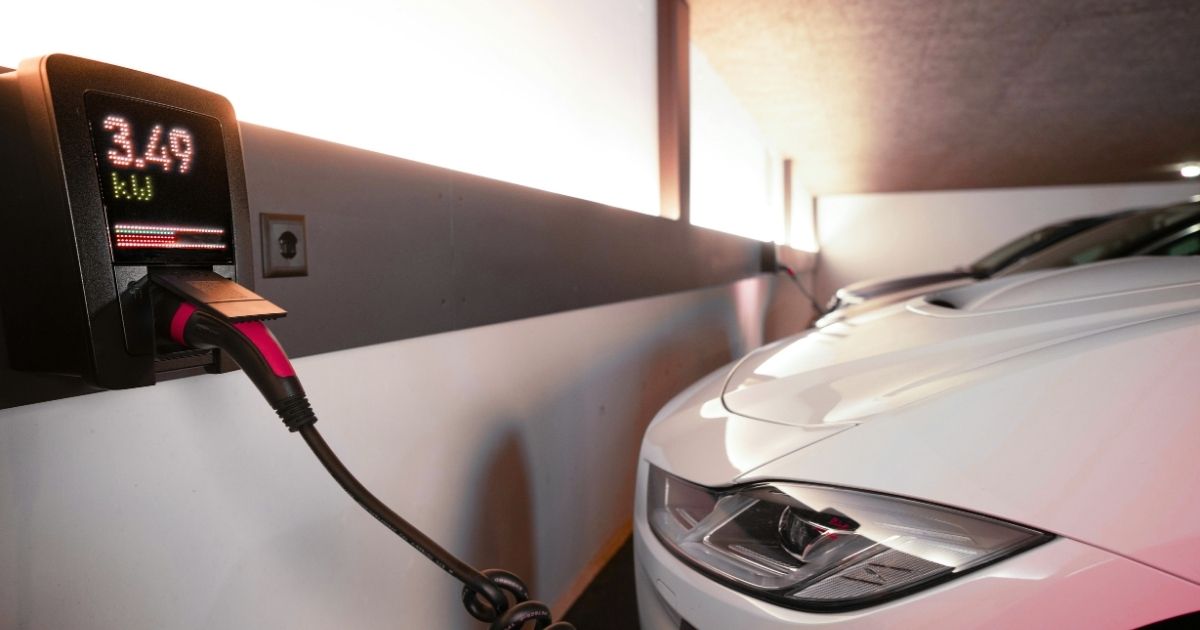
Spain’s government wants electric cars to be cheaper, charging points to be everywhere, and Spanish-made EVs to lead Europe. That is the ambition behind the Spain Auto 2030 Plan, presented by Prime Minister Pedro Sánchez.
Yet behind the upbeat language and billion-euro figures, uncomfortable questions remain. Can electric cars really be affordable for ordinary families? Is Spain’s charging network ready? And is the energy system strong enough to cope if millions do switch to electric?
A national plan with a heavy price tag
The Spain Auto 2030 Plan is framed as a public–private partnership designed to protect jobs, modernise industry and accelerate electrification. The government says it is about “everyone benefiting”, not just early adopters or higher earners.
At its core is money—a lot of it. The plan brings together new subsidies for buyers, fresh investment in charging infrastructure and further support for the automotive supply chain. This sector accounts for close to 10% of Spain’s GDP and around two million jobs.
Spain is already Europe’s second-largest vehicle manufacturer. The government argues that electrification is not optional, but essential if that position is to be protected into the next decade.
Can electric cars really be “affordable”?
The most headline-grabbing element is the new Auto+ Plan. From 2026, €400 million will be set aside for direct subsidies to help people buy electric vehicles, on top of the €1.7 billion already channelled through earlier Moves schemes.
Pedro Sánchez insists that this is about avoiding a green transition that prices out middle- and working-class households. He argues that lifetime costs for electric cars are already around 10% lower than petrol or diesel models, rising to 40% once subsidies and tax incentives are included.
The government also predicts a wave of electric models priced below €25,000 from next year. That claim will be watched closely. For many families, even €25,000 remains a stretch, especially amid high housing costs and rising everyday expenses. The question is whether subsidies truly close the gap, or simply soften a price that is still out of reach for many.
Faster aid, but will it be enough?
One significant change is how subsidies will be managed. Unlike previous schemes, the Auto+ Plan will be run centrally rather than by regional governments. The aim is faster payments and less bureaucracy.
The government points to the Reinicia Auto+ scheme, launched after the DANA storms, where 95% of approved aid reportedly reached applicants within a year. That efficiency will be crucial. Long delays have been one of the biggest frustrations for EV buyers under earlier programmes.
Still, faster subsidies do not answer the bigger question: how many people can realistically afford to buy an electric car in the first place, even with help?
Charging points: progress or persistent gaps?
Infrastructure remains the most common concern among drivers. The Spain Auto 2030 Plan promises a new Moves Corridors programme, backed by €300 million, aimed at filling so-called “shadow zones” on roads with poor charging coverage.
The government says Spain now has more than 40,000 public charging points over 43 kW, a rise of over 50% this year. More than €600 million has already gone into charging infrastructure through various Moves schemes, funding over 140,000 public and private points.
That sounds impressive on paper. In practice, drivers still complain about broken chargers, long waits and uneven regional coverage. Rural areas and long-distance routes remain particular pain points. The plan pledges simpler permits and a single national website for chargers, but the real test will be whether chargers are reliable, visible and actually available when needed.
The energy question nobody likes to answer
There is another issue rarely discussed in detail: electricity supply. If millions of vehicles plug in, especially overnight, can Spain’s grid cope without driving up prices or increasing dependence on imports?
The government links the Auto 2030 Plan to broader climate and energy strategies, including renewables and decarbonisation. Critics argue that electrifying transport without fully addressing grid capacity, storage and peak demand risks shifting problems rather than solving them.
For households already struggling with energy bills, the promise of cheaper driving only holds if electricity remains affordable. That assumption is far from guaranteed.
Industry, jobs and a Spanish electric future
Beyond consumers, the plan is about industry. Another €580 million will be added in 2026 to the PERTE VEC programme, on top of more than €3 billion already committed. The aim is to secure Spain’s place in battery production, recycling and the entire electric vehicle value chain.
Gigafactories in Sagunto, Figueruelas and Navalmoral de la Mata are held up as proof that Spain can move from assembling cars to designing and producing next-generation vehicles. Ministers speak of a “virtuous circle” linking innovation, SMEs and strategic autonomy.
Few dispute the importance of this shift. The debate is about pace, cost and who ultimately pays.
Optimism from ministers, scepticism on the street
Sara Aagesen, Minister for Ecological Transition, described this decade as decisive, warning that today’s choices will shape future generations. Industry Minister Jordi Hereu called the plan one of Spain’s most strategic industrial transformations.
Their confidence contrasts with public hesitation. Misinformation about electric cars is a problem, as the government argues. But so are genuine concerns about affordability, infrastructure and energy resilience.
Spain Auto 2030 sets out a bold vision. Whether it becomes a turning point or another ambitious plan that struggles with reality will depend on what drivers experience on the road, not what is promised from the podium.