 Lorraine Williamson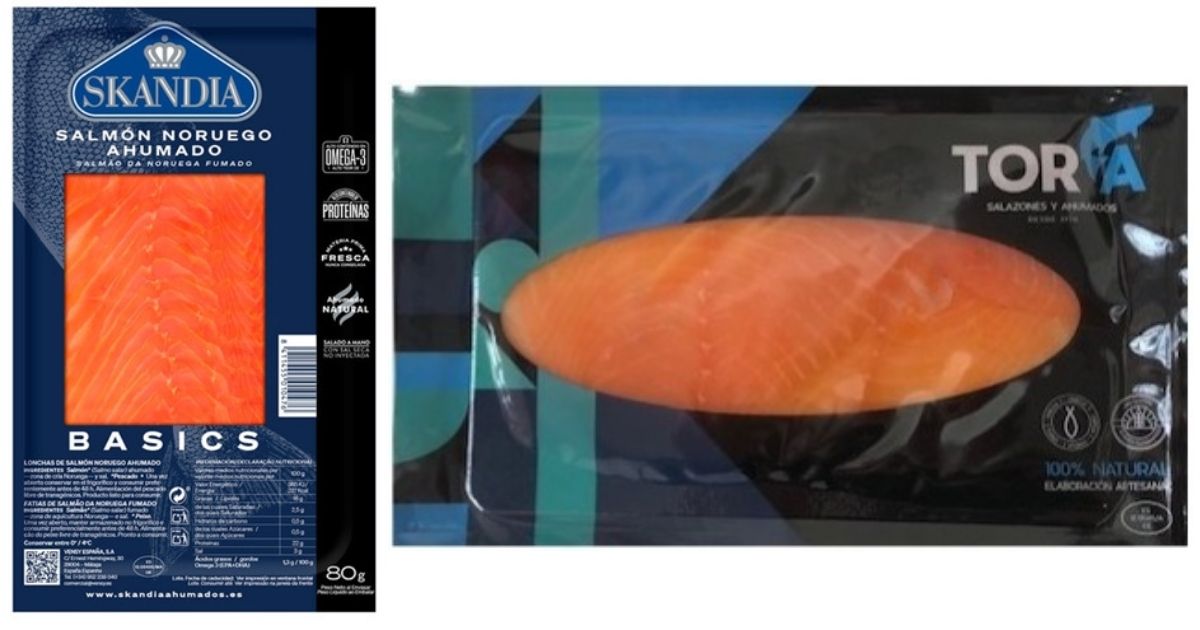
Spain’s food safety authorities have issued a second smoked salmon listeria warning in less than 24 hours, widening concern for shoppers after one alert was expanded this morning and another was added later in the day. The key message from AESAN is simple: if you have any of the affected products at home, do not eat them.
The first alert was published on 31 March at 4.30 pm after Andalucía notified AESAN of the presence of Listeria monocytogenes in Skandia smoked salmon, lot 361214. On 1 April at 10:30 pm, AESAN expanded that same alert, saying the affected lot had also been sold under other brands and presentations. Then, at 3.00 pm on 1 April, a separate alert was issued for Tora smoked salmon after notification from Murcia.
The first alert has now widened beyond one brand
What began as a warning about one 80g Skandia product has become broader. AESAN now says lot 361214 was also sold as Gourmet and Carrefour smoked salmon. For Skandia and Gourmet, the affected expiry dates are 10 April and 13 April 2026. For Carrefour, the affected product is a 2 x 180g format with an expiry date of 9 April 2026. AESAN says these products have been distributed across almost all of Spain.
That matters because shoppers may no longer be looking only for the Skandia name. The wider issue is the lot number and the specific presentations AESAN has listed, not just the label on the front of the pack.
The second alert involves a different brand and different lots
The newer alert concerns Tora smoked salmon. AESAN says the confirmed affected product is Salmón ahumado precortado S/P 200g, lot S2603543, with expiry date 7 April 2026. It adds that several other Tora products and lots are being treated as suspicious because they were produced under the same conditions. Those include formats of 500g, 200g, 100g and 80g, as well as other Tora smoked salmon presentations and one salmon-in-sunflower-oil product.
Unlike the expanded Skandia-linked alert, AESAN says the Tora products were initially distributed in the Valencian Community and the Region of Murcia. That makes the second alert more geographically limited for now, although food alerts can widen as traceability work continues.
Are the two alerts connected?
At this stage, AESAN has not said the two alerts are part of the same contamination incident. They have different reference numbers, different notifying regions, different brands, different lot numbers and different product descriptions. One came via Andalucía and now covers several brands tied to lot 361214. The other came via Murcia and concerns Tora lot S2603543, plus related suspicious lots.
Both alerts involve smoked salmon and Listeria monocytogenes, but there is no official confirmation yet that they come from the same producer, factory or contamination source.
What shoppers in Spain should do now
AESAN’s advice is clear. Anyone who has any of the affected products at home should not consume them. If someone has already eaten one of the affected lots and develops symptoms compatible with listeriosis, including vomiting, diarrhoea or fever, AESAN says they should go to a health centre. The agency also highlights extra caution in pregnancy and reminds consumers to take care to avoid cross-contamination with other foods.
For readers, this is one of those moments when checking the fridge properly matters more than scrolling past the headline. Two alerts in two days do not automatically mean a national food scare is spiralling, but they do mean consumers should pay close attention to brands, lot numbers and expiry dates rather than assuming a smoked salmon packet is safe because it carries a different supermarket label.
The details worth checking before dinner
If you are checking products at home, the names to watch are Skandia, Gourmet, Carrefour and Tora. The most important identifiers are lot 361214 for the expanded first alert and lot S2603543 for the confirmed Tora alert, along with the additional Tora lots AESAN has listed as suspicious. With the first alert now stretching to almost the whole country and the second focused initially on Murcia and the Valencian Community, this is firmly a practical consumer story rather than a niche regional warning.