 Lorraine Williamson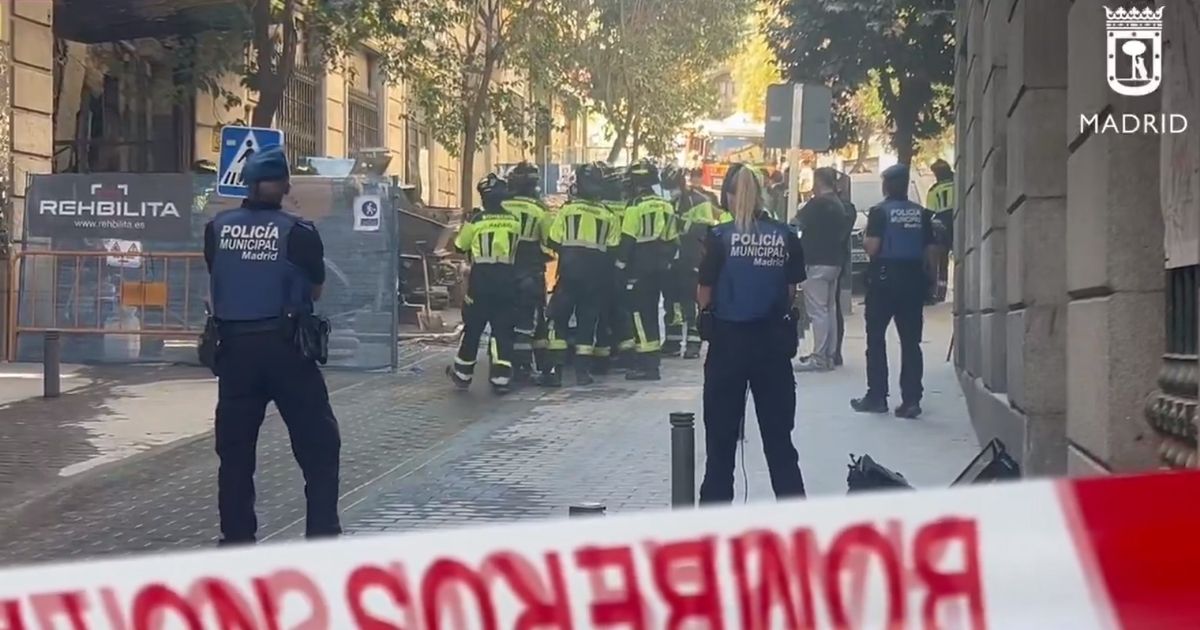
Madrid was left reeling on Tuesday after a building undergoing renovation collapsed in the city’s historic centre. Four workers were killed, leaving a deep scar on the capital. The tragedy struck on Calle de Vergara, just a short walk from the Teatro Real, where the sound of music is more common than the echoes of disaster.
At around 3.00 pm, the structure suddenly gave way, sending up a huge plume of dust blanketing the surrounding streets. Eyewitnesses described the noise as “like an explosion”. Within minutes, emergency crews flooded the area, blocking access to the street and securing nearby buildings as residents watched in disbelief.
Firefighters risked everything amid the wreckage
For Madrid’s firefighters, it was one of their most perilous rescue operations in years. With the remains of the building dangerously unstable, they worked in tense silence, using specialised equipment to cut through debris and reach those trapped below.
Each minute was a battle against time and danger — shifting rubble, falling beams, and the constant risk of further collapse. Yet they pressed on, determined to recover the workers who had been renovating the building when it gave way.
Tragically, their efforts confirmed the worst fears. Four people — identified by El País as Moussa Diallo, another worker also surnamed Diallo (believed to be a relative), Jorge, and Laura — were found dead. All had been carrying out renovation work inside the property when it suddenly crumbled. The final victim was recovered only after rescuers managed to reach the deepest part of the ruins.
National leaders express grief and gratitude
Spain’s Prime Minister, Pedro Sánchez, was among the first to publicly express his condolences following the devastating news. Posting on X late on Tuesday night, he wrote:
“Un sentido abrazo a las familias, amigos y compañeros de las cuatro personas fallecidas en el derrumbe del edificio en el centro Madrid y que han sido localizadas esta noche. Todo nuestro cariño y solidaridad en estos difíciles momentos.
Y, una vez más, gracias a todos los servicios de emergencia que han trabajado sin descanso, como hacen siempre.”
His message, translated as “A heartfelt embrace to the families, friends and colleagues of the four people who died in the building collapse in central Madrid. All our love and solidarity in these difficult times. And once again, thank you to all the emergency services who worked tirelessly, as they always do,” captured the nation’s grief — and its admiration for those who risked everything to save others.
Investigation underway into what went wrong
As Madrid mourns, attention is turning to how such a catastrophe could have happened in the heart of the capital. Authorities have launched an urgent investigation into possible structural or maintenance failures. The building, which was being converted into a hotel, had not been fully renovated for years despite its prime location and historic significance.
Experts suggest that weaknesses in the building’s foundation or outdated structural elements could have played a role. Until the cause is clear, the area remains sealed off and neighbouring properties are being assessed for safety.
A city united in grief and gratitude
As flowers and candles appeared near the cordoned-off street, Madrid’s residents expressed both sorrow and admiration — sorrow for the lives lost, and admiration for the firefighters who risked their own in the desperate search for survivors.
City officials have praised the “extraordinary professionalism” of the emergency teams who worked through the night under dangerous conditions. For many in Madrid, their bravery has become a small point of light in a day marked by darkness.
The search for answers continues
The collapse has left lingering questions that go beyond one building. How could a structure in the heart of Spain’s capital fail so catastrophically? Could it have been prevented? Investigators now face the urgent task of uncovering what caused the tragedy. This is not only to deliver justice for the victims, but to prevent another disaster in a city where history and modern life sit side by side.
For Madrid, the shock remains raw. Yet amid the grief, there is a shared determination that those who died will not be forgotten. Moreover, their loss will lead to safer, stronger foundations in the city they helped to build.