 Lorraine Williamson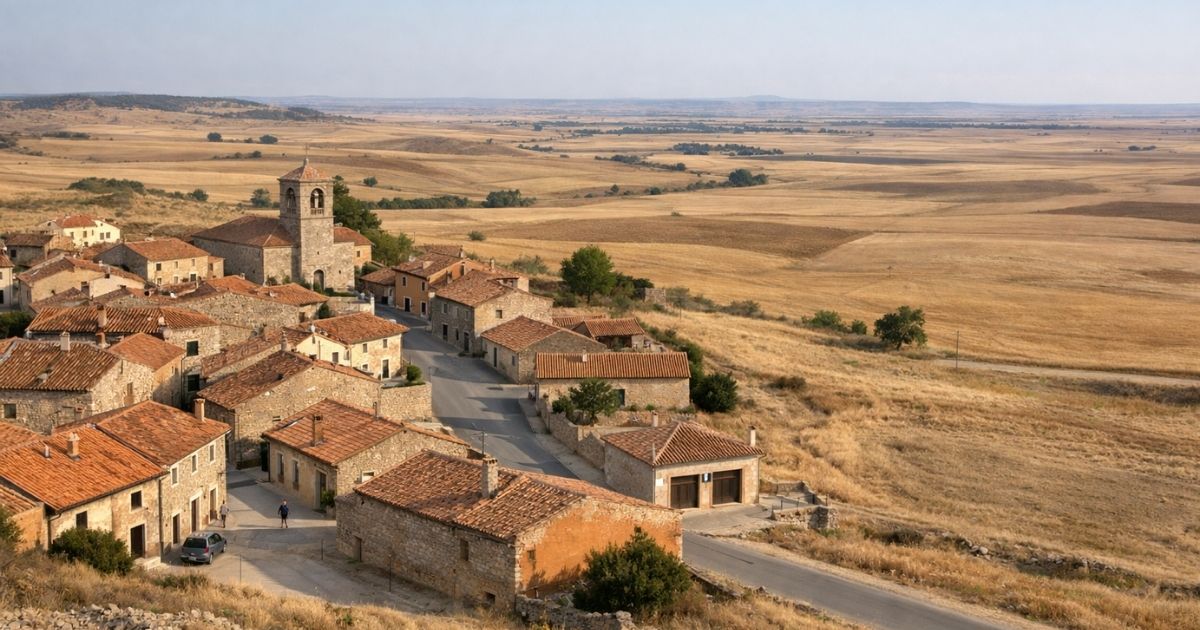
Living in Castilla y León can feel like Spain with the volume turned down. Big skies, wide landscapes, and property prices that still look like a different decade. But the bargain comes with strings attached — and for many buyers, the real cost isn’t the mortgage. It’s distance, ageing communities, and the slow disappearance of services.
Fresh analysis from Spain’s public broadcaster shows the scale of the imbalance. Castilla y León covers close to a fifth of Spain’s land area, yet holds a small share of its population and economic weight.
Why homes are cheaper here
The region’s long population decline is the main reason prices remain comparatively low. RTVE notes that many areas have extremely low population density, especially across the western provinces and border districts, where providing everyday services is hardest.
In simple terms: fewer buyers, less competition, slower markets.
That doesn’t mean there’s no demand. Cities such as Valladolid, Salamanca, Burgos, and León tend to be more stable — universities, hospitals, and jobs make them magnets in a way small villages can’t match.
The trade-off buyers discover late
The risk for newcomers is assuming quiet equals easy.
In many rural areas, the problems aren’t scenic. They are practical. Schools merge or close. GP access can mean long drives. Shops vanish. Public transport becomes limited to a timetable that doesn’t fit working life. RTVE highlights a deepening imbalance between older residents and younger age groups, with some municipalities lacking children altogether.
For anyone thinking of living in Castilla y León full-time — especially with family — this is the point that needs weighing before a viewing trip becomes a purchase.
Work is the real demographic lever
The OECD puts it more bluntly: the region risks falling into a “talent development trap”, with young people — particularly graduates — leaving for better opportunities. Persistent outmigration, combined with limited skilled job creation, makes it harder to reverse the trend.
Remote work looks like a solution on paper. In practice, it depends on connectivity and services. A recent El País report from Soria underlines how patchy mobile coverage still shapes daily life in parts of the “empty Spain” interior.
Tourism helps — but it isn’t a rescue plan
Castilla y León has a strong heritage pull: pilgrimage routes, historic cities, and food-and-wine tourism. That can keep rural guesthouses, restaurants, and small businesses alive. But tourism rarely replaces the year-round jobs that stop young families from leaving. The OECD argues that targeted investment in services, skills, and infrastructure matters more than one-off campaigns.
A practical “before you buy” checklist
If you’re tempted by the space and the price, the sensible question is not “how cheap is it?” It’s “how liveable is it for my life?”
Before committing, check:
-
year-round access to healthcare and pharmacy services
-
school provision if relevant
-
internet and mobile coverage at the exact address
-
winter driving reality in your chosen area
-
the nearest town with supermarkets, admin services, and repair trades
The bottom line
Living in Castilla y León can be a brilliant fit for people who want calm, culture, and value — and who are comfortable planning around distance. It is less forgiving if you need daily convenience, fast services, or a local peer group your age.
The region’s future depends on whether it can keep (and attract) working-age residents. Until that shifts, cheaper homes will remain both the headline attraction and the warning sign.