 Lorraine Williamson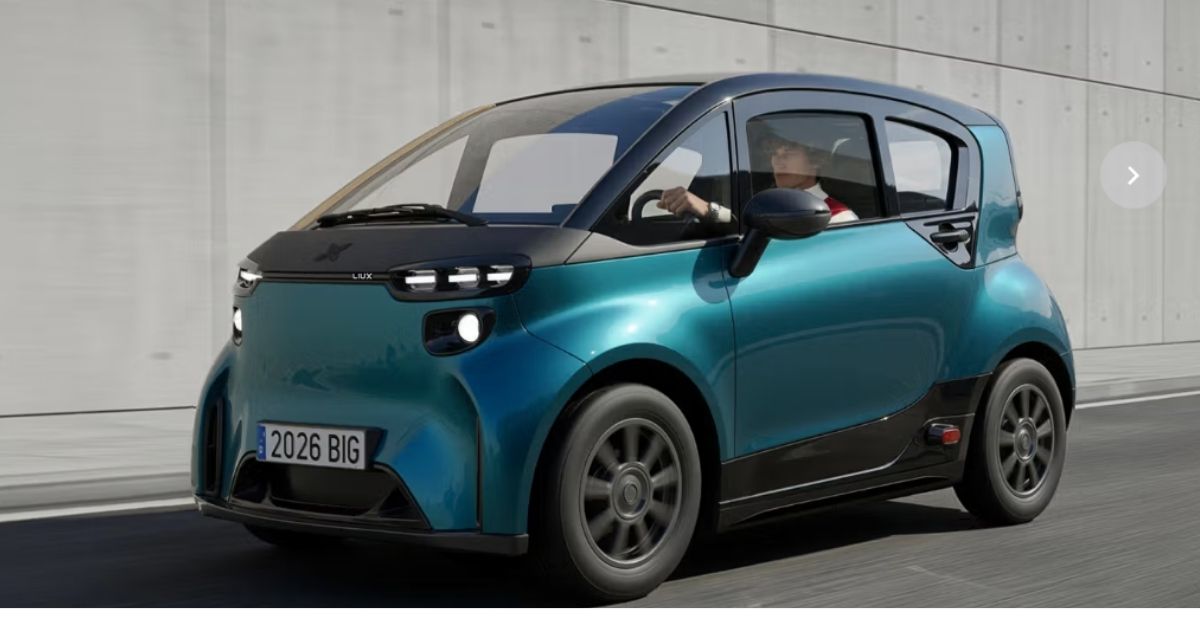
The Liux flax fibre car is not trying to beat Tesla. It is trying to do something Spain has not seen in decades: a new domestic brand opening its own factory and building a vehicle designed for the realities of city life — tight streets, tight parking, and tighter budgets.
Liux has started operations at a new site in Azuqueca de Henares (Guadalajara, Castilla-La Mancha), bringing together offices, R&D, and an assembly line in a 6,000 m² facility. The investment plan is €30 million over five years, with production expected to scale from an initial run rate towards 15,000 units a year at maximum capacity.
A factory opening at a tense moment for Europe’s car industry
The timing matters. Europe is buying fewer new cars than before the pandemic, and its manufacturers are under pressure from cheaper Chinese electric vehicles and rising costs. Spain remains a major European producer, but the wider market is in flux.
Liux is pitching its factory as a bet on a different future: smaller vehicles, lighter materials, and simpler manufacturing, aimed at the daily commute rather than the long-range road trip.
The Liux BIG: a two-seater built for the city
The first model is the Liux BIG, a compact two-seater in the L7e light-vehicle category. It is 2.7 metres long — the kind of size that turns “impossible” parking into something closer to normal.
Liux says the BIG’s body uses a recyclable flax/linen-fibre biocomposite, cutting manufacturing emissions compared with conventional builds. El País Motor describes the “linen car” concept as central to the brand’s sustainability pitch.
Spain Auto 2030 Plan: affordable electric cars or costly gamble?
Range and battery options: two packs, modular approach
Liux plans two battery options:
-
15 kWh (around 175 km range)
-
20 kWh (around 230 km range)
Those figures are also shown on Liux’s own configurator, which positions the BIG as a short-to-medium daily vehicle rather than a motorway cruiser.
Jobs and local supply: why Castilla-La Mancha is paying attention
The factory has been presented locally as a jobs and skills story. Cadena SER reports an initial capacity of around 5,000 units per shift, with expansion plans and job creation expected as the line scales.
For Castilla-La Mancha, it is also a reputational win: not just assembling somebody else’s model, but hosting a new Spanish brand trying to make its mark.
The question hanging over it all
Liux’s ambition is clear. The hard part is execution: turning an appealing prototype into reliable, affordable production — at a time when the European car market is volatile, and consumers are price-sensitive.
If the company can deliver on volume and price, the Liux BIG could become something rare in today’s EV market: a small car that feels built for ordinary urban life, not for status.