 Lorraine Williamson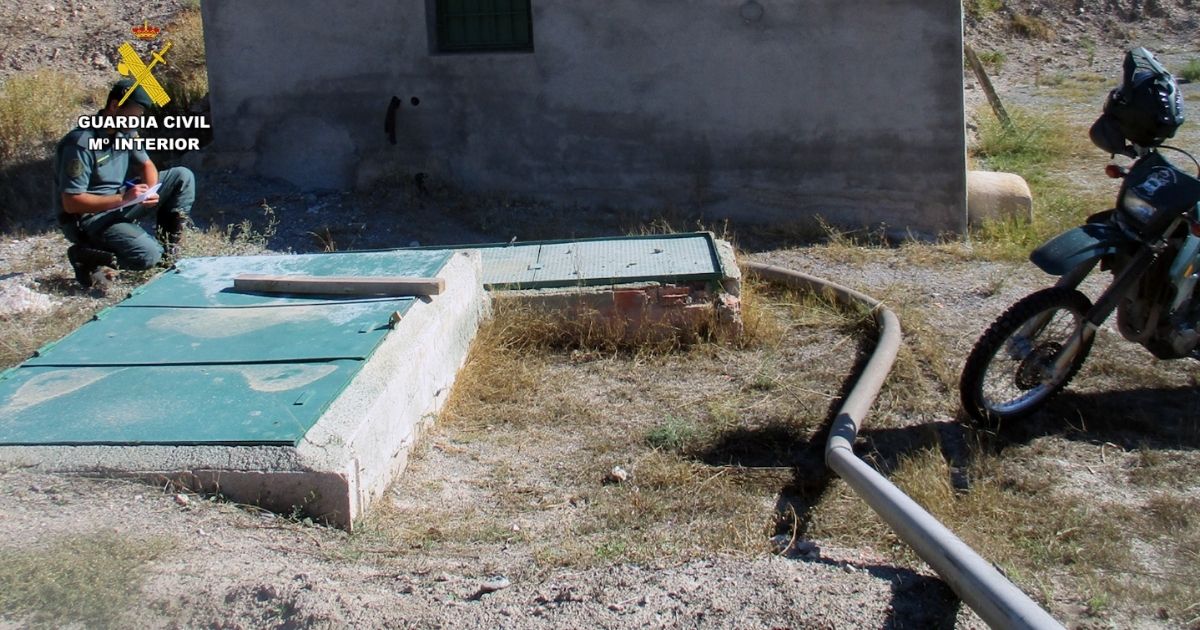
Spain’s drought politics often focus on reservoirs and restrictions. But much of the real battle is happening underground — in pipework, pumps and boreholes that quietly turn public water into private profit. Illegal water wells in Spain is now a national enforcement story after the Guardia Civil said it has uncovered 941 unauthorised water-capture and storage infrastructures across the country.
The findings come from Operación Zahorí, a year-long push led by SEPRONA (the Guardia Civil’s environmental unit) alongside Citizen Security officers, aimed at protecting the public water domain and vulnerable ecosystems.
A hidden network: wells, boreholes and makeshift transfers
Between October 2024 and September 2025, officers inspected both surface and groundwater use nationwide. They say the illegal infrastructure they detected fell into a familiar pattern: wells dominated the list (60%), followed by boreholes (24%), ponds/reservoirs (4%), and other systems such as unauthorised diversions or artificial transfers (12%).
In plain terms, this is not just a handful of rogue holes in the ground. It is an ecosystem of improvised engineering designed to extract water unnoticed — or to make legal extraction look smaller than it really is.
The legal consequences are escalating
The Guardia Civil says 31 people are under investigation, and the operation identified 29 suspected criminal offences, largely linked to the illegal diversion of public water, as well as alleged environmental crimes and land-use planning violations. Alongside that, officers recorded 1,684 administrative infringements, many related to breaches of water regulations.
SEPRONA’s technical assessments estimate damage to the public water domain at more than €270 million, factoring in environmental impacts on flora and fauna in affected areas.
Why illegal extraction hits harder during drought
Spain’s water system is built on competing needs: homes, tourism, agriculture, industry and ecosystems. When rainfall is scarce, unlawful extraction does not simply “take extra” — it can tip a stressed basin into collapse.
Authorities warn that these practices contribute to the depletion of rivers, lagoons and wetlands, while putting additional pressure on aquifers, the underground reserves that often recover slowly even after wet years.
This is why illegal water wells in Spain are no longer treated as a minor rural compliance issue. It is increasingly framed as environmental damage with economic consequences.
Doñana remains a flashpoint — but the problem is nationwide
Some of the investigations took place around Doñana National Park and its surrounding forested belt in Huelva, an area long associated with groundwater overexploitation. Regional reporting says eight individuals were investigated there as part of the wider national operation.
The Guardia Civil also flagged individual cases that show how varied water fraud can be: from unapproved boreholes to tampering with legal systems using bypasses that avoid accurate meter readings, and the conversion of dry farmland into irrigated land without authorisation.
What this means for landowners, farmers and businesses
For most people, the takeaway is not alarm — it is caution. Enforcement is clearly tightening, and the line between an “irrigation shortcut” and an offence is narrowing.
If you own rural land, run agricultural operations, or rely on private water infrastructure, the safest assumption for 2026 is that inspections will be more frequent, paperwork requirements stricter, and penalties harsher. The Guardia Civil’s message is that technical reports will be used to assess the seriousness of alleged offences and support prosecutions.
A clampdown driven by scarcity
Spain is not just finding illegal wells. It is signalling a shift: water is becoming too politically and economically valuable to be left to informal arrangements.
Operación Zahorí reads as a warning shot — and a hint of what comes next as drought pressure continues and conflicts between users intensify.