 Lorraine Williamson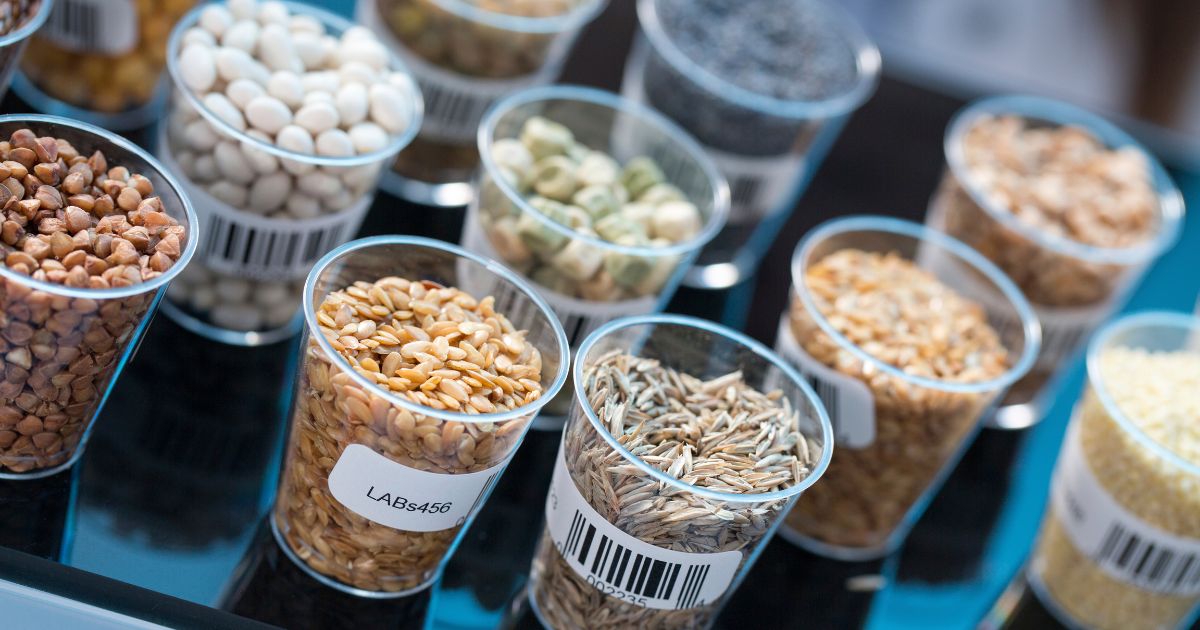
In a chilled room outside Pontevedra, the Galicia seed bank revival looks deceptively simple: thousands of small jars, each holding a variety that once fed families, shaped landscapes, and then slipped out of everyday farming. More than 3,000 local cereals and legumes sit at controlled temperature and humidity, preserved by the Misión Biológica de Galicia (MBG). The point is not nostalgia. It is insurance: against pests, plant disease, and a climate that now punishes uniform crops.
For decades, modern agriculture pushed in the opposite direction. Standardisation brought yields, predictability and easy transport. It also narrowed the genetic toolkit. The Food and Agriculture Organisation has warned that much of the diversity farmers once relied on has been lost as local varieties gave way to genetically uniform crops.
Why variety matters more than ever
Seed banks can sound like museums. The MBG argues the opposite: a crop system built on “sameness” breaks faster when conditions shift. One pathogen can flatten a dominant variety, as Ireland learned in the 19th century when potato blight collided with dangerously narrow genetic diversity. That lesson helped change minds in the late 1970s, when MBG researchers began collecting older varieties still kept by farmers across Galicia.
The logic is practical. If one maize line fails, another can replace it. If summers run hotter or wetter, breeders can cross hardier genes into vulnerable crops. And if disruption hits supply chains, locally adapted seeds become a form of food security rather than a curiosity.
A seed bank that wants to empty its shelves
One jar in the collection holds the Bágoa Atlantic pea, stored at around 4°C under controlled humidity. In the vault, it functions as a genetic reserve. In the fields of nearby Cotobade, it becomes something else entirely: a crop with a future.
That shift depends on growers willing to gamble on plants that do not behave like supermarket staples. Farmer Antonio Cavada, who began farming after a corporate career, has turned his land into a working laboratory of old and local varieties, grown biodynamically and without chemical inputs. His experience is also a warning: heritage crops can be fragile, labour-intensive and hard to move. Some split in heavy rain. Some, like Galicia’s delicate white strawberries, resist transport altogether.
And yet, that is precisely the appeal. For Cavada, seeds are cultural heritage, not just agriculture. They carry flavour, place and memory, and they deserve protection in the same way a language or a literary tradition does.
From research plots to Michelin plates
Chefs have become unlikely allies in this story. Javier Olleros, of Culler de Pau on the Ría de Arousa, approached MBG to understand what “Galicia” tastes like when you stop cooking with generic varieties. He wanted local ingredients with real identity, including a Galician pea with the sweet, juicy intensity that made a Basque variety famous as “green caviar”. MBG’s collection had what he was looking for.
The partnership matters because it creates demand. When restaurants pay for distinctive produce, farmers gain a reason to plant it. It also pushes back against a food system dominated by a narrow range of commercial seeds designed to perform best alongside specific chemical inputs. Olleros calls it a kind of resistance.
The comeback of Galicia’s black oat
Another rediscovery begins in old literature: avea moura, a black oat linked to Galicia’s past and, in one theory, spread across Europe via Viking routes. Researcher Bernardo Ordás tracked references, then hunted for surviving plants. He found little in the field. A final lead took him to Spain’s national backup collection in Madrid, where earlier researchers had deposited samples in 1981.
Ordás’ argument is blunt: it makes no sense to let a crop fade away if it offers resilience—antioxidants, cold hardiness, disease resistance—and needs fewer pesticides. Reviving it, though, requires more than science. It needs growers, buyers and everyday products that make the oat part of modern life again. That has started. Culler de Pau uses it in ferments and dairy work. A Galician rural cosmetics producer has also used avea moura in skincare formulations alongside local plant extracts.
Spain’s last line of defence: Madrid and Svalbard
MBG can “lend” seeds back to the land. Spain’s national centre, the Centro Nacional de Recursos Fitogenéticos (CRF) in Madrid, plays a different role: it stores duplicates from collections across the country, dried to low moisture, sealed, and held at around -18°C to keep samples viable for decades.
From there, some duplicates can travel to the Svalbard Global Seed Vault in Norway, the world’s deep-freeze backup for genebanks. Crop Trust says the vault now safeguards well over a million seed samples, stored as insurance for future food supplies.
Spain began depositing material in Svalbard in recent years, through INIA-CSIC and partners. Official updates have described deposits of more than 1,000 Spanish seed samples in 2022, followed by further contributions. In the El País Semanal report, researchers also warn that Spain has still sent only around 1,200 samples in total—roughly a small share of CRF’s permanent collection—leaving too much exposed if disaster, neglect or simple underfunding hits at home.
The quieter threat: neglect
Climate change makes the headlines. Funding rarely does. Yet seed banks do not run on cold air alone. Staff must test germination, monitor viability, and regenerate samples when ageing reduces performance. The El País Semanal report notes that since 2017, Spain has lacked a dedicated national budget line for the seed-bank network, forcing centres to “make do” year to year. That is a risky way to manage national food heritage.
If this work feels abstract, it should not. A seed jar is not just plant material. It is a record of what grew where, what survived, and what people selected over generations. Lose the seed, and you lose options. Keep it alive—on farms as well as in vaults—and you widen Spain’s chances of coping with the next shock.
Keeping Galicia’s crops alive in the real world
The most hopeful detail in this Galicia seed bank revival is also the hardest: the seeds only truly survive when people plant them. The science exists. The flavours exist. The question is whether Spain funds the unglamorous work, so that “backup” does not become “last resort”.
Seed bank in Spain brings old fruit and vegetables back from oblivion