 Lorraine Williamson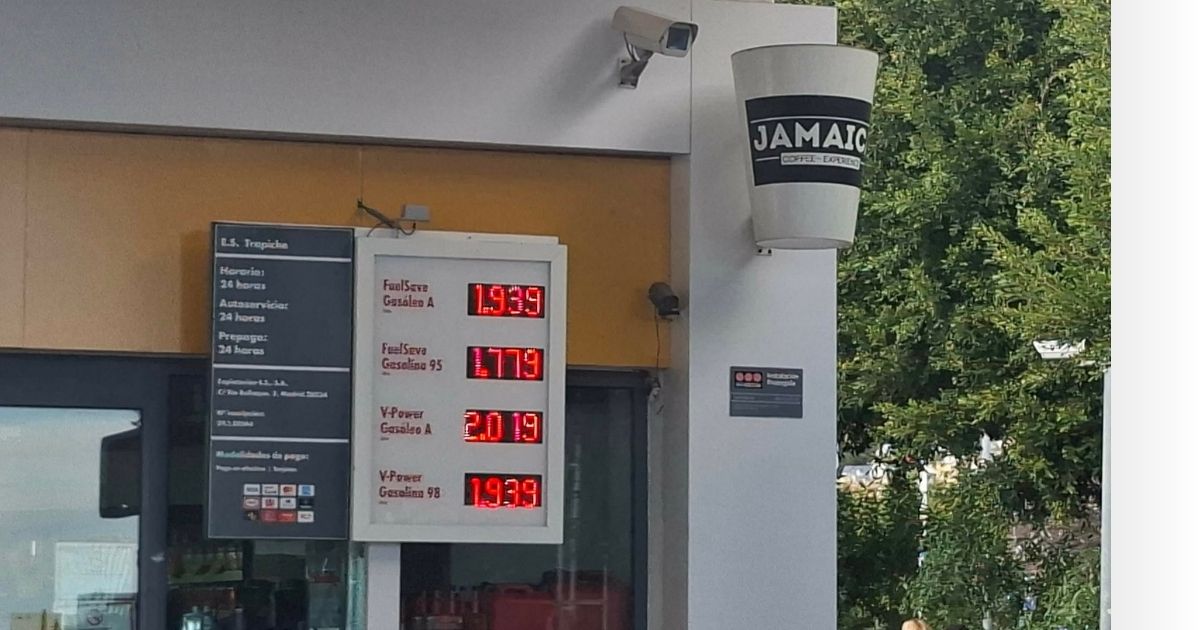
Fuel prices in Spain are climbing again, and while the national average remains below the €2-a-litre mark, some drivers are already seeing diesel cross that line at the pump.
A photo taken at a petrol station on Tuesday showed Gasolina 95 at €1.779 a litre, standard diesel at €1.939 and premium diesel at €2.019. It is a sharp local example of what many motorists fear could spread more widely if the current upward trend continues.
Nationally, the official picture is still lower than those pump-board prices. The latest European Commission Weekly Oil Bulletin puts Spain’s average at €1.487 per litre for Euro 95 petrol and €1.441 for diesel as of 2 March, both up week on week.
That gap matters. National averages show the broader direction of travel, but they do not always reflect what drivers are paying in real time at busy roadside stations, premium-brand forecourts or high-demand areas. That is why the local Costa del Sol prices feel so striking. They are not yet the national norm, but they show how expensive refuelling has already become in some parts of Spain.
Why prices are moving up again
The immediate backdrop is renewed pressure in the energy market. Recent reporting in Spain has linked the latest rise in fuel costs to tensions affecting oil and diesel markets, with warnings that motorists could feel the impact more sharply in the days ahead.
For many households, even a relatively small increase soon adds up. In a country where the car remains essential for daily life in many coastal, rural and suburban areas, higher pump prices quickly hit commuters, families, tradespeople and delivery drivers.
The difference between averages and reality
This is where official tools become useful. Spain’s Geoportal Gasolineras allows drivers to compare station-by-station prices across the country, making it easier to see whether the local forecourt is broadly in line with the market or charging well above it.
And that is the key point behind the latest rise. The national average may still sit below €2 a litre, but some forecourts are already well beyond the psychological threshold for premium diesel, while standard diesel is pushing close in certain areas.
What motorists should watch now
The next question is whether this proves to be a short-term spike or the start of a more sustained rise. If oil-market pressure continues, the higher prices now being seen at selected stations could become more common. If tensions ease, the market may settle before the national average climbs much further.
For now, the takeaway is simple. Fuel prices in Spain are rising again. The national averages do not yet tell the full story, and for some drivers, the squeeze is already arriving at the pump.