 Lorraine Williamson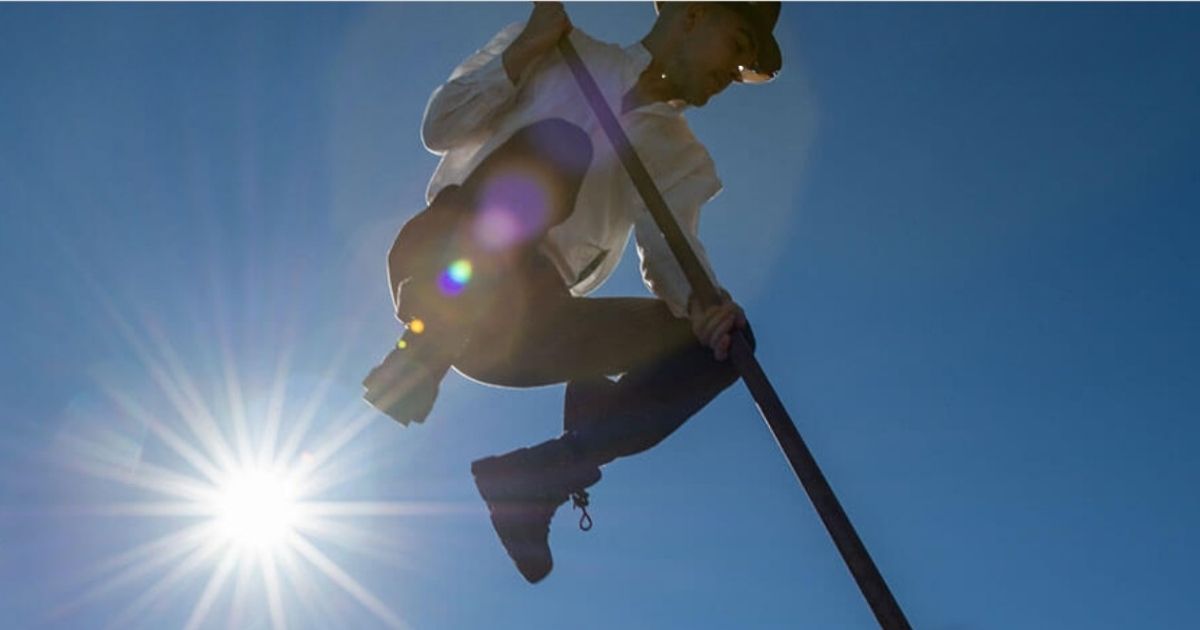
Across the Canary Islands, steep ravines known as barrancos have shaped daily life for centuries. Out of that harsh terrain came one of the archipelago’s most striking traditions: salto del pastor, a technique that uses a long wooden pole to move safely across rocky slopes, sudden drops, and difficult ground.
Official Canarian sources describe it as a unique traditional practice rooted in the islands’ pastoral life and linked to the archipelago’s earliest inhabitants.
What makes it remarkable is that it never disappeared. The Government of the Canary Islands recognises a dedicated Federación Canaria de Salto del Pastor, while official tourism material describes the practice as a living part of island heritage rather than a museum curiosity.
Born from necessity, not spectacle
Long before it was shown in demonstrations or cultural events, salto del pastor was a practical way of moving through difficult country. CanariWiki, a Government of the Canary Islands educational resource, says the technique consists of using the shepherd’s tool to walk and travel across uneven terrain with steep gradients and sudden changes in level.
That matters because the story begins with work, not performance. In places where detours could be long, dangerous or simply impossible, the pole allowed shepherds to descend and cross ground that would otherwise have slowed them down or put them at risk. Official tourism material from the Canaries says the technique was vital to pastoral life and later evolved into a heritage sport as well as a traditional skill.
A pole, a landscape and a learned technique
At first glance, the method can look deceptively simple. In reality, it relies on balance, judgement and training. The long pole, known by different names across the islands, becomes a tool for control rather than speed alone. A recent viral explainer cited by Cadena SER notes that the staff can measure between two and four metres, and that mastery depends on reading the slope and placing the tip precisely.
The practice also varies from island to island. Official Canarian and federation sources note that both the terminology and some local uses differ across the archipelago, which helps explain why salto del pastor feels less like a standardised sport and more like a tradition shaped by local geography.
Protected as heritage and sustained by clubs
Salto del pastor is not surviving by accident. The Canary Islands’ official tourism platform says the practice has been declared Bien de Interés Cultural by the regional government, recognising its value as part of the islands’ cultural heritage.
There is also a formal structure behind it. The Canary Islands Government lists the Federación Canaria de Salto del Pastor, and federation material highlights meetings, workshops and island events designed to keep the practice active and visible. That gives the tradition a modern framework while still respecting its pastoral roots.
From shepherding tool to sport and identity
Over time, the role of salto del pastor has widened. It is still associated with the mountain world that produced it, but it is now also practised in demonstrations, gatherings and training activities. Official and federation sources describe it as both a cultural practice and a physical activity with a strong community element.
That shift says something important about the Canaries themselves. In many places, old rural techniques vanish when the work that created them changes. Here, the opposite has happened. The islands have found a way to keep an old skill relevant by turning it into a marker of identity as well as a usable tradition. That is an inference based on its protected status, formal federation and continued public activity.
Why the tradition still resonates
Part of the appeal is visual. Salto del pastor looks dramatic because it is dramatic: a person moving over ravines and steep slopes with a long pole in terrain that most visitors would avoid. But its deeper appeal lies in what it represents. It is a reminder that island traditions were shaped by real landscapes and real needs, not invented later for tourists.
That may help explain why the practice still draws interest online and beyond the islands. Cadena SER reported in late 2025 that a video of salto del pastor went viral, introducing the technique to a wider audience and prompting fresh fascination with a tradition many people outside the Canaries had never seen before.
A tradition with a future in the barrancos
For travellers, Salto del pastor is one of those rare cultural stories that genuinely belongs to the place where it was born. It is tied to the barrancos, to the mountain paths, and to a way of reading the landscape that outsiders can admire but not easily imitate. For island communities, it is something more enduring: proof that heritage can stay alive when people continue to practise it, teach it and adapt it without emptying it of meaning.
That is why this is more than a curiosity from the Canary Islands. It is a living bridge between the archipelago’s past and present, carried forward one pole, one ravine and one generation at a time.