 Lorraine Williamson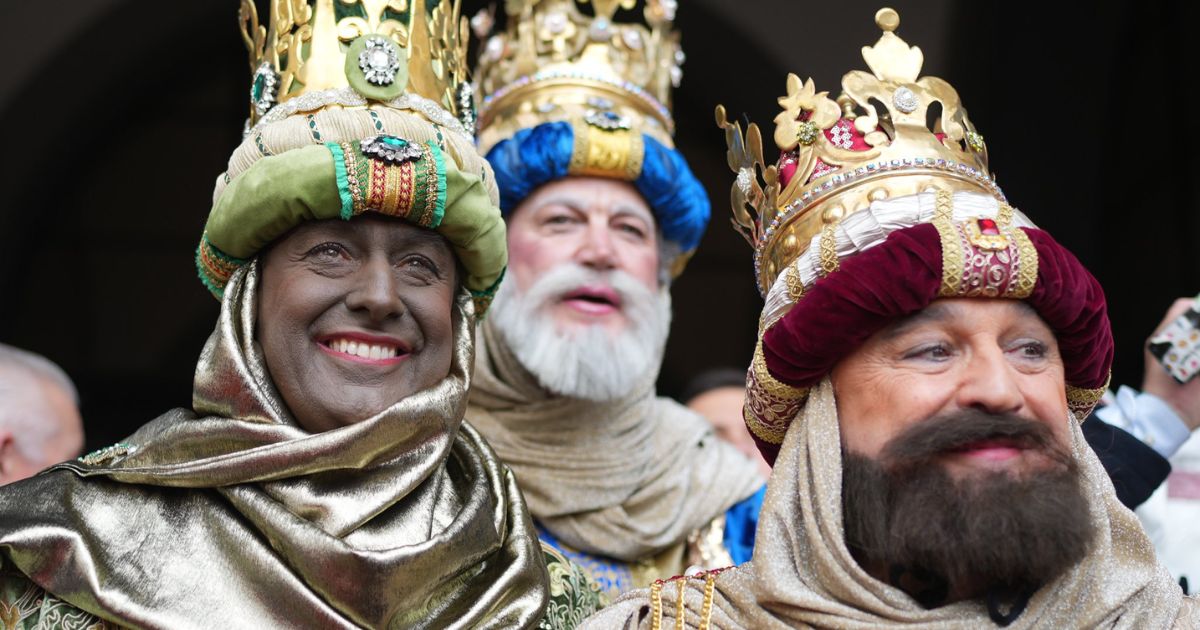
Seville’s Three Kings parade is designed to do one thing well: turn a cold January evening into childhood again. Yet on 5 January 2026, the city’s most cherished procession became something else too — a national argument about who gets to be seen in Spain’s public rituals, and who still doesn’t.
At the centre of it was Juanma Moreno, president of the Junta de Andalucia, who took the role of King Baltasar — and, as is still done in some places, appeared with darkened make-up. The reaction was immediate, loud, and divided.
A childhood honour — and a political flashpoint
In many Spanish cities, playing one of the Three Kings is not a casual fancy-dress moment. It is treated as a civic honour, often given to public figures and well-known locals, with serious organisation behind the scenes. In Seville, the parade is run by the Ateneo de Sevilla, which also stages formal presentations of the “royal court” in advance. a
Moreno’s own tone beforehand leaned into nostalgia and emotion. In a statement shared publicly and reported by Europa Press, he said he was ready to enjoy a “magical night”. After the parade, he described the experience as unforgettable.
But once the images circulated, the story stopped being about magic.
Why Baltasar is different
Baltasar carries a particular weight in Spain’s Christmas tradition because he is typically portrayed as the only Black king. Melchior and Caspar are almost always depicted as white, older men, which leaves Baltasar as the lone figure through whom “difference” is performed.
That is why campaigners argue this is not a minor detail. In their view, if Baltasar is the only visibly non-white role in a major public celebration, then how he is portrayed matters — especially for Black Spaniards and children who watch the parade and look for themselves in it.
What people shouted in the street
Coverage of the parade captured the messy reality: cheers, boos, and politics spilling into a family event. LaSexta reported chants aimed at Moreno’s government over healthcare, alongside the anger about blackface.
That mix is part of what made this moment travel. It was not simply a cultural debate playing out politely on opinion pages. It was public, audible, and happening while children waited for sweets.
“It’s tradition” — and the cities that already changed
Defenders of the Seville approach insist the parade is for children, not ideology. They argue that intent matters and that a local tradition is being judged harshly through a modern lens.
Critics respond that impact matters more than intent — and point to the fact that many cities have already adjusted without cancelling the celebration. El País noted weeks ago that places including Málaga have moved towards casting a Black participant as Baltasar to avoid precisely this controversy.
The argument, then, is no longer theoretical. Spain is already running two models side by side.
Seville’s bigger question: who gets to represent the city?
There is also a Seville-specific layer that gets missed in the shouting. The cabalgata is not just a council event. It is shaped by Ateneo’s traditions, its selection process, and the city’s sense of what the parade “is”.
That matters because representation is never abstract. It sits inside institutions, habits, and closed circles — the sort of social architecture that can feel invisible until the country suddenly argues about make-up on a January night.
The pressure now falls on organisers, not just politicians
Moreno’s presence amplified the story because he is not just any Baltasar. He leads a region, and his choices read as signals, whether he intends them that way or not.
The more lasting question is whether Seville’s organisers will adapt. El País reported that associations had urged Moreno not to darken his face and that the issue had already reached the Andalusian parliament in the run-up to the parade.
Seville’s cabalgata after 2026
If Seville changes course, it will not be because a tradition “ended”. It will be because Spain’s understanding of who belongs in its public symbols has shifted — and because, in 2026, that shift is increasingly hard to ignore.
Sources: La Sexta, Europa Press, El País, Ateneo de Sevilla